Key works“That's the Joint” (1980)
1973 → NOWCourtside Crawlers — The Long Read
Hip-HopHistoryThe whole story, Bronx to now
Boom Bap → Trap / 50 years in 1 page
It started at a small party in the Bronx in 1973. Half a century later, it sits dead center in the world's music. Run-DMC, Public Enemy, Nas, 2Pac, The Notorious B.I.G. — then Drake, Migos, Kendrick Lamar. The classic albums of every decade, the sound of every city, the labels, the producers, the beefs, the samples, all the way to Japan. This is the line from boom bap to trap, dug out with 415 artists, 307 YouTube videos and 324 photos.
Made by a crew from Morioka, Japan, who love US rap and the NBA in equal measure.
415Artists
307YouTube
324Photos
53Years
PROLOGUE / THE BLOCK
Prologue
Before It Was Music, Hip-Hop Was the Block
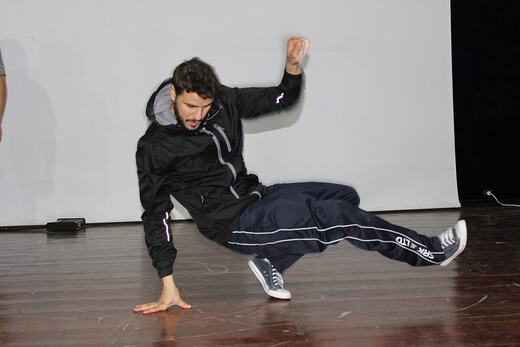
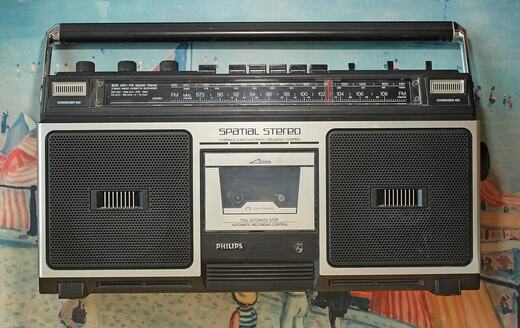
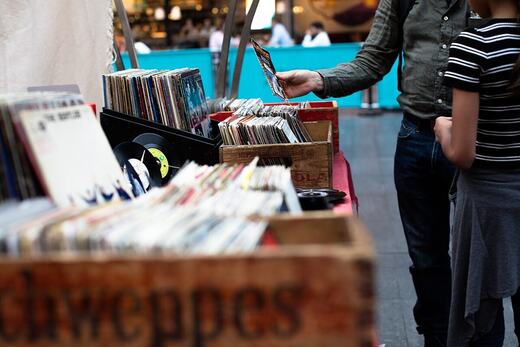
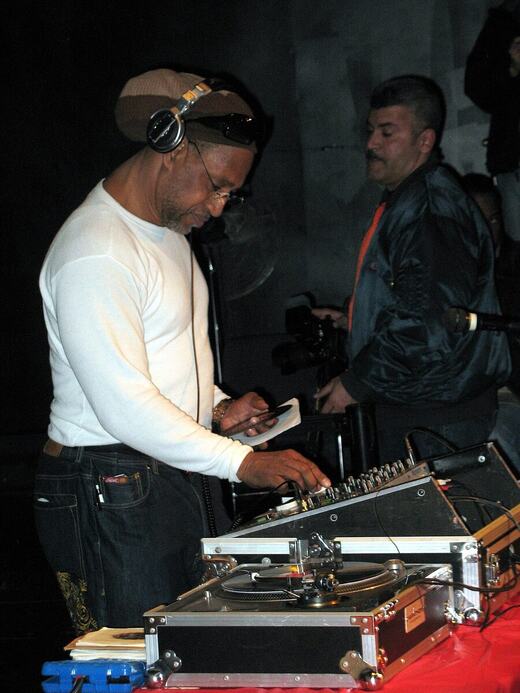
A lot of people think “hip-hop” just means rap, the music genre. That's not wrong, but trace it back to the source and the picture shifts. Hip-hop started out as the name of a whole culture: four forms of expression that grew up together on the same street corners, MCing (rap), DJing, breaking (dance) and graffiti (art on walls). A voice, a turntable, a body, a spray can. No money for instruments? Didn't matter. Every one of them could start with whatever you already had on hand.
The setting: the Bronx, New York, in the 1970s. Highway construction ripped neighborhoods apart, the factories left, and abandoned buildings went up in flames one after another. In a borough the whole country knew as “the burning Bronx,” kids reportedly went as far as tapping power from park streetlights just to spin records and throw parties. Make something fun out of nothing, using only what's there. That mindset became the backbone of hip-hop for half a century.
Sampling other people's records, mixtapes sold hand to hand, a teenager uploading bedroom recordings to SoundCloud and waking up a star: it all grows from the same root. Today's heavy trap low end and the dusty drums of '90s boom-bap branch off from the same street corner.
This page walks through those 50 years decade by decade, from the 1970s to the 2020s. Running through it is one big through-line: the shift from “boom-bap,” built on samples and breakbeats, to “trap,” built on drum-machine sub-bass and hi-hats. This isn't a nostalgia trip that just lines up old classics. It's written so you can connect the dots on one question: why does hip-hop sound the way it does right now? Every chapter comes with photos and YouTube clips, so hit play and hear it for yourself as you read.
TIMELINE
- 1973August 11: DJ Kool Herc throws a party at 1520 Sedgwick Avenue in the Bronx. It's remembered as the day hip-hop was born.
- 1979The Sugarhill Gang's “Rapper's Delight.” Rap cracks the US pop chart's Top 40 for the first time.
- 1982Grandmaster Flash's “The Message” and Afrika Bambaataa's “Planet Rock.” Rap that speaks on society, plus electronic beats from the TR-808.
- 1986Run-DMC's “Walk This Way” and the Beastie Boys' Licensed to Ill. Rap makes it into white America's living rooms too.
- 1988Public Enemy's It Takes a Nation… and N.W.A's Straight Outta Compton. The golden age begins.
- 1992Dr. Dre's The Chronic. West Coast G-funk takes over the country.
- 1993-94Wu-Tang, Nas's Illmatic, Biggie's Ready to Die. The East Coast's boom-bap peak.
- 1996-972Pac dies after a shooting on September 13; The Notorious B.I.G. is shot and killed on March 9 the following year.
- 2003T.I.'s Trap Muzik. Atlanta's trap gets a name.
- 2004Kanye West's The College Dropout. A star steps out from behind the boards.
- 2008Lil Wayne's Tha Carter III moves over a million copies in its first week. Kanye's 808s & Heartbreak opens the door to rap that sings.
- 2013Migos' “Versace.” The triplet flow and trap spread around the world.
- 2017Hip-hop/R&B becomes the most-listened-to genre in the US (Nielsen). Kendrick's DAMN. wins the Pulitzer Prize for Music the following year.
- 2019Lil Nas X's “Old Town Road” spends 19 straight weeks at No. 1 in the US (the longest run ever at the time).
- 2023Hip-hop turns 50. The Grammys roll out a massive tribute too.
- 2024-25Kendrick vs. Drake. “Not Like Us” takes two of the Grammys' top categories.
BIRTH / DAY ONE
1970s
August 11, 1973. Sedgwick Avenue.
Stretch the break. Hype the crowd on the mic. Put your name on a wall. How a handful of separate ways to have fun ended up sharing one name, and became a culture.
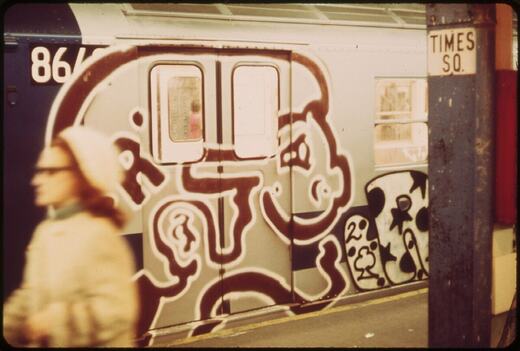
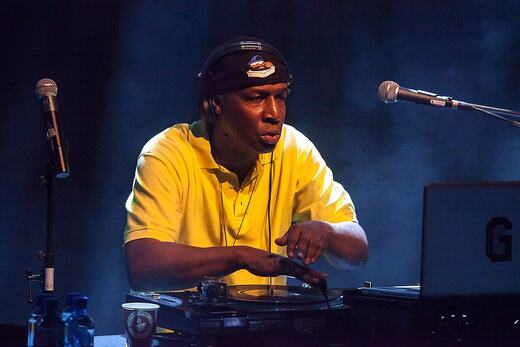
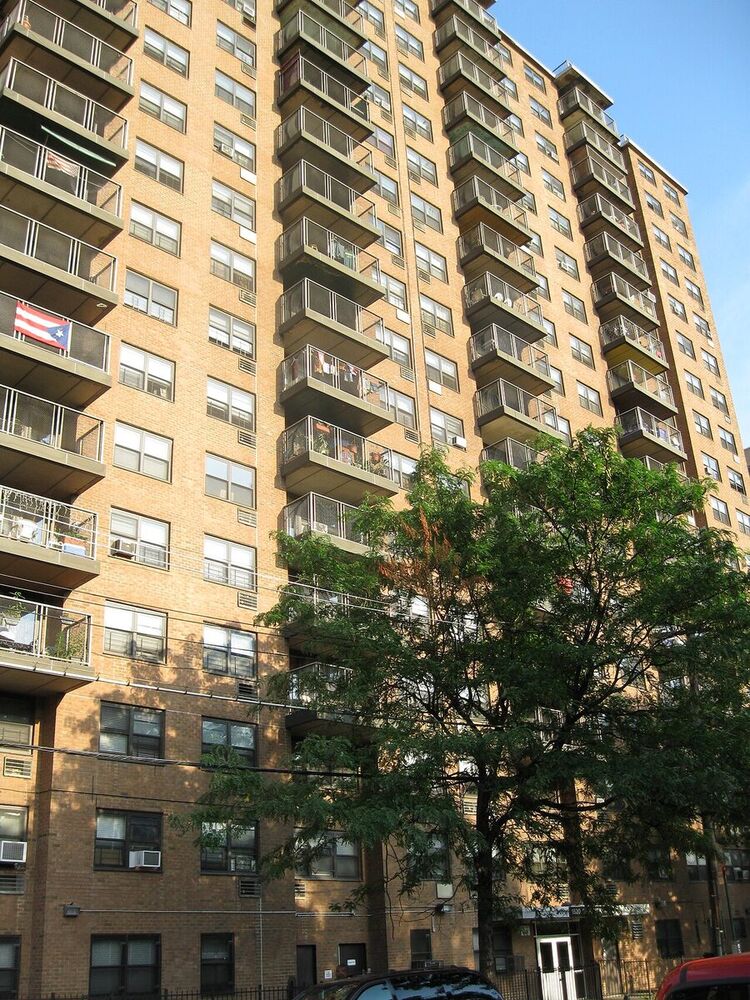
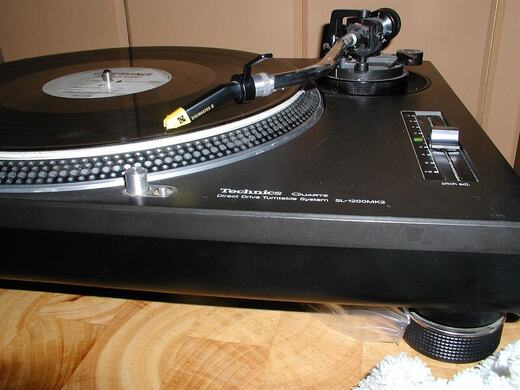
1973On August 11, DJ Kool Herc and his sister Cindy throw a back-to-school fundraiser party
25¢ / 50¢The reported cover charge: 25 cents for women, 50 cents for men
1979“Rapper's Delight” hits No. 36 in the US. The year rap became a product
The date most often named as the starting point is August 11, 1973. In the community room of an apartment building at 1520 Sedgwick Avenue in the Bronx, a young Jamaican-born guy named Clive Campbell (later known as DJ Kool Herc) worked the turntables at a back-to-school fundraiser his sister Cindy had organized. Admission: 25 cents for women, 50 cents for men. Years later, that night would be handed down as “the day hip-hop was born.”
Herc's invention was stretching out the “break.” Funk and soul records have short stretches where the vocals and melody drop out and it's just drums and bass. That's always when the dancers go hardest. Herc grabbed two copies of the same record, and the instant the break ran out on one, he dropped the top of it on the other, turning a few seconds of peak into something that went on and on. The technique was called the “Merry-Go-Round,” and it became the blueprint for the hip-hop beat. The kids dancing to the breaks were called b-boys and b-girls, and that's where breaking begins.
Herc brought something else from home, too: the sound system, stacked with massive speakers, and “toasting,” working the crowd on the mic. One of rap's ancestors is reggae DJ talk.
The man who took the craft up a level was Grandmaster Flash. He'd been studying electronics, and he came up with a way to mark his record labels so he could cue up exactly the spot he wanted, perfecting the “Quick Mix”: jumping back and forth between two records without ever losing the rhythm. Later, his protégé Grand Wizzard Theodore is said to have stumbled onto the sound of a record being rubbed back and forth by hand. Scratching was born.
Meanwhile Afrika Bambaataa, who had been in the thick of the gang wars, wanted to bring young people together through music instead of violence. In 1973, the year the organization itself gives as its founding date, he launched the “Universal Zulu Nation.” The party as a stand-in for the fight: hip-hop's “peace and unity” ethos has its roots right here.
Note: Bambaataa later faced a series of sexual abuse allegations and was expelled from the Zulu Nation in 2016. He kept denying them and died in April 2026 at 68. His contributions to the culture and the allegations against him both remain part of the record.
Notice that “rap” has barely come up so far. The early MC's job was to hold the mic next to the DJ, tell everybody to get on the floor, and introduce himself in rhyme. Bit by bit, that role broke off on its own and started building its own lyrics and flows. Even the word “hip-hop” is credited, at least in part, to Keith Cowboy of Grandmaster Flash & the Furious Five, who scatted “hip, hop” to a rhythm.
Names on the walls. Beats on the floor. Voices on the mic. Nobody asked for permission.
Then came 1979. Sylvia Robinson, founder of Sugar Hill Records, a small label in New Jersey, rounded up three young guys and put them in the studio. The result was the Sugarhill Gang's “Rapper's Delight.” She had a band replay the bassline from Chic's disco classic “Good Times” live, then laid rap over the top. In an era when radio expected songs to clock in around three minutes, the 12-inch ran about 15, an unheard-of length, and it still became a hit, reaching No. 36 in the US. Something born at Bronx parties went out into the world for the first time as a product that sells.
But to the rappers who were actually in the room at those Bronx parties, the song was also a hit made by outsiders. The real thing, coming straight out of the scene, wouldn't reach the whole country until a little later, in the 1980s.
Why the Bronx?
Why hip-hop was born in the Bronx and not some other city can't be separated from the wounds the borough carried. The expressway built between 1948 and 1972 (the Cross Bronx Expressway) displaced a lot of residents and split neighborhoods in two. In the 1970s, arson fires in abandoned buildings broke out one after another, and the blackout of July 13, 1977, brought looting. With New York City in a fiscal crisis, even school music budgets reportedly got cut.
Still, the people were there. Black families, Puerto Ricans, immigrants from Jamaica and elsewhere in the Caribbean. Kids with different roots lived in the same apartment buildings and hung in the same parks, and each brought their own music: funk, soul, Latin, reggae. You couldn't afford instruments, but with turntables and speakers you could get the whole neighborhood dancing for a night. Poverty was the mother of hip-hop's invention. And in a place where gang turf wars were everyday life, DJs throwing parties under the banner of “dance, don't fight” helped lay the groundwork for the culture to grow up as a celebration.
FOUR ELEMENTS / THE TOOLS
ARTISTS / 1970s10
Key worksThe Sedgwick Avenue party, August 11, 1973
2009 · 📷 Bigtimepeace (Wikimedia Commons user) / Public domainKey works“The Message” (1982)
2014 · 📷 Victor Frankowski / Southbank Centre / CC BY 2.0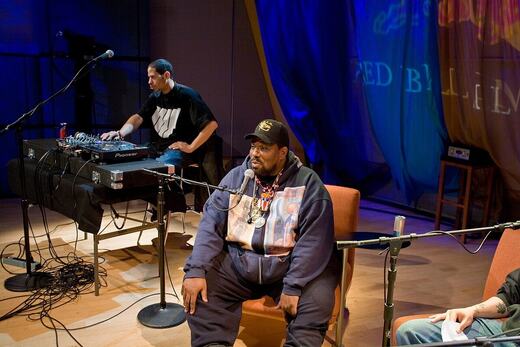
Key works“Planet Rock” (1982)
2009. The DJ in the background is someone else · 📷 docmonstereyes from USA / CC BY 2.0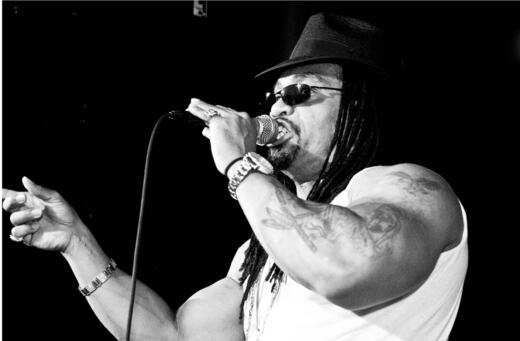
Key works“The Message” (1982), “White Lines” (1983)
2010 · 📷 Samantha Lauren (derivative work: Go… / CC BY 2.0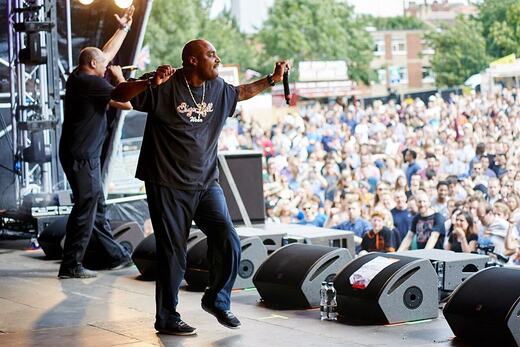
Key works“Rapper's Delight” (1979)
2015 · 📷 Tramlines Festival / CC BY 2.0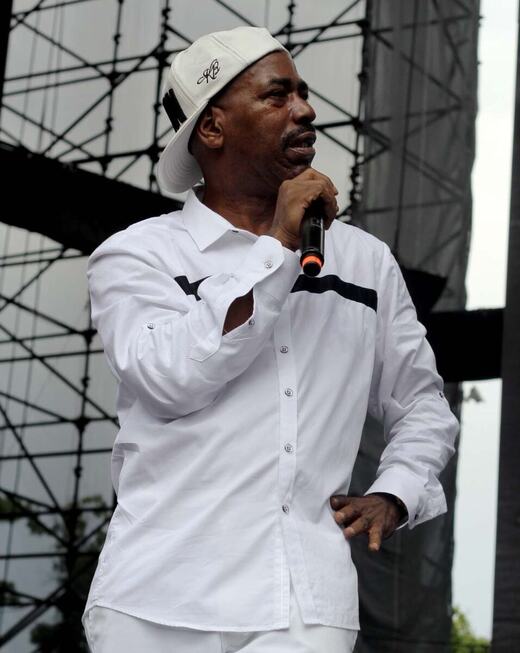
Key works“The Breaks” (1980)
2015 · 📷 Moe N Reed / CC BY-SA 4.0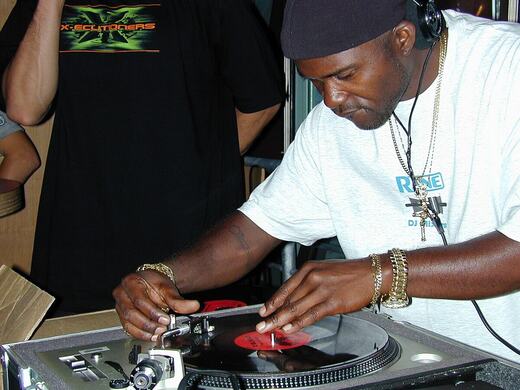
Key worksInventing the scratch
2002 · 📷 Flintmi (Flintmichigan) / CC BY 3.0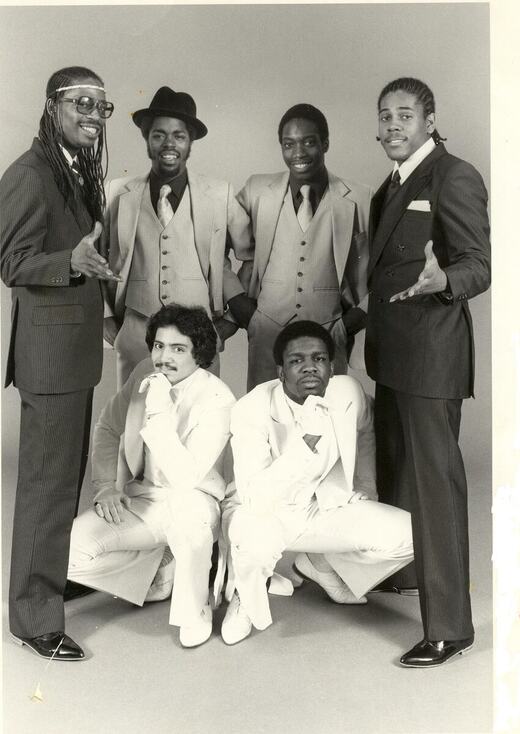
Key worksThe film Wild Style (1983)
📷 Easy AD / CC BY-SA 3.0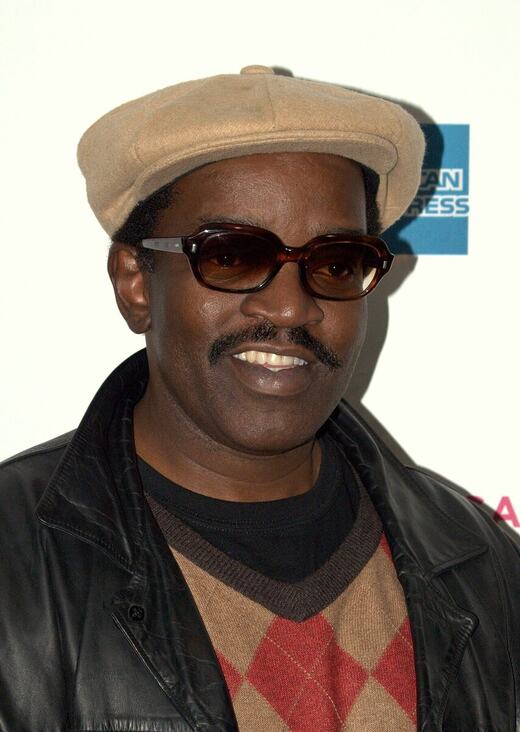
Key worksName-checked in Blondie's “Rapture” (1981)
2009 · 📷 David Shankbone / CC BY 3.0PLAY / 1970s–80s5
OLD SCHOOL → GOLDEN AGE
1980s
The Decade Rap Went from Fad to Art Form
Speaking on society. Shaking hands with rock. Landing on the FBI's radar. The sampler showed up in front of the turntables, and hip-hop got deep, fast.
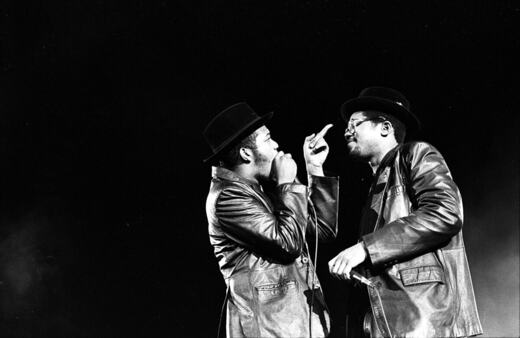
1982“The Message” turns rap into a way to tell the truth about the streets
1987The Beastie Boys' Licensed to Ill (released in 1986) becomes the first rap record to hit No. 1 on the US album chart
1988It Takes a Nation…, Straight Outta Compton and more: an all-time pileup of classics
In the early '80s, hip-hop was still being heard as “the new party music.” Kurtis Blow's “The Breaks” (1980) became the first rap record certified gold, and the records started moving beyond the Bronx. What flipped the script was Grandmaster Flash & the Furious Five's “The Message” in 1982. Crumbling buildings, days with no work, anger that could blow at any second. Not party hype, but rap that turned the reality of the streets into lyrics, and for the first time it grabbed serious attention.
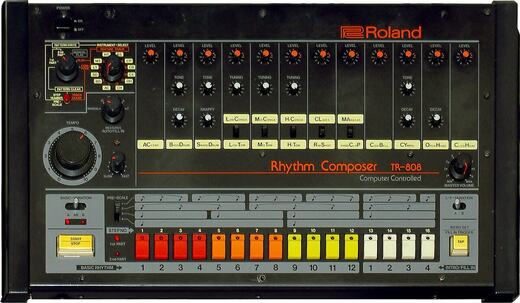
That same year, Afrika Bambaataa dropped “Planet Rock,” which built on the electronic sounds of Germany's Kraftwerk and ran Roland's TR-808 drum machine. The 808 flopped commercially when it came out, but cheap used units ended up flowing into the hip-hop scene. That machine's fat kick and low end became the skeleton of hip-hop's bottom end, a line that runs all the way to trap 40 years later. (More on that in the boom-bap-to-trap chapter further down.)
Run-DMC Shakes Hands with Rock
The crew that changed hip-hop's look in the mid-'80s was Run-DMC, a trio out of Queens. In an era when flashy stage outfits were the norm, they wore black leather jackets and Adidas, rode stripped-down drum-machine beats, and traded rhymes two MCs deep, practically yelling. Bringing their street clothes straight onto the stage, they locked in the street aesthetic for good. Their 1986 collab with Aerosmith, “Walk This Way,” was a smash at No. 4 in the US and opened the door for rap on MTV. “My Adidas” (1986) is credited as a pioneer of the artist–brand partnership.
Behind them were Run's older brother and manager, Russell Simmons, and producer Rick Rubin. In 1984 the two launched the label Def Jam. LL Cool J became its first star, and the Beastie Boys' Rubin-produced Licensed to Ill (1986) became the first rap album to top the US album chart.
The Golden Age Begins: Rakim and KRS-One
In 1987, Eric B. & Rakim released Paid in Full. Up to then, the dominant style was to shout your rhymes. Rakim went the other way: a low, cool voice, rhymes stacked across bar lines, words gliding over the beat. That was the moment rap went from talking on rhythm to a sophisticated verbal art. It's no exaggeration to say most rappers today are still working under the influence of his flow.
The same year, Boogie Down Productions came out of the South Bronx with Criminal Minded and turned rap into street documentary. At the center was KRS-One, who'd later be known as “The Teacher.” Their back-and-forth with rivals from Queens became the famous feud known as the Bridge Wars. Beef was already part of the game.
“Rap is Black America's CNN.” Chuck D said it, and turned rap into the news.
Public Enemy and N.W.A Turn Rage into Sound
1988 delivered landmark album after landmark album. Long Island's Public Enemy came swinging with It Takes a Nation of Millions to Hold Us Back: Chuck D's booming voice, Flavor Flav playing the clown, and roaring tracks from the Bomb Squad, led by Hank Shocklee, stacking samples layer on layer. Sirens, scratches, speeches, funk drums. That crammed, wall-to-wall loudness would change hip-hop production at the root. “Fight the Power,” made in 1989 for Spike Lee's film Do the Right Thing, is still sung today as an anthem of resistance and Black pride.
That same year, N.W.A came out of Compton on the West Coast with Straight Outta Compton. Ice Cube, Dr. Dre, Eazy-E. Their “gangsta rap” described the police brutality that was routine in their streets, and life surrounded by violence, in plain, unfiltered language, and it set off a firestorm. Over the track “Fuck tha Police,” the FBI went as far as sending a warning letter to the group's label. Even so (or rather, because of it) the album blew up across the country. The setup where adults feared hip-hop as “dangerous music” while young people embraced it with a passion got locked in right there.
The Sampler Changed How Beats Got Made
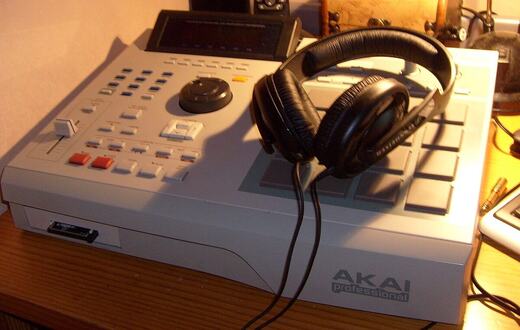
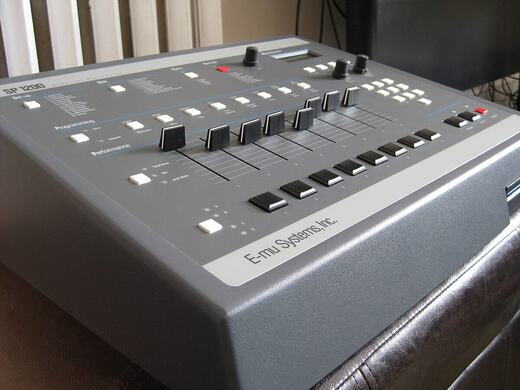
The other revolution of the late '80s was the spread of the sampler. With the arrival of the E-mu SP-1200 (1987) and the Akai MPC60 (1988), DJs could load pieces of records into a machine, rearrange them and bang them out on pads. Every sound on an old record became an instrument in its own right. The road to '90s boom-bap was paved, straight as an arrow.
Around the same time, the Native Tongues crew—De La Soul with 3 Feet High and Rising (1989), the Jungle Brothers, A Tribe Called Quest and more—showed a path that had nothing to do with gangsta. Humor, jazz, a hippie-ish brightness. They proved all over again that hip-hop had range beyond anger. Storyteller Slick Rick's “Children's Story” (1988) turned a rap song into a short story, too.
Movies and MTV Carried Rap Coast to Coast
Records weren't the only thing spreading '80s hip-hop. Wild Style and Style Wars (both 1983) preserved the feel of the Bronx scene in a feature film and a documentary, while Beat Street (1984) and Krush Groove (1985) put breaking and rap on screens in front of young people all over the world. Plenty of people say that's how kids in Japan first found hip-hop, too: through those movies and the dance boom.
On TV, MTV started playing rap after “Walk This Way,” and on August 6, 1988, the dedicated show Yo! MTV Raps premiered. One of its early hosts was none other than Fab 5 Freddy. The Source (launched in 1988) rated records from an angle the labels didn't get to pick. This was the decade hip-hop got its own media, a place to be talked about in its own words.
ARTISTS / 1980s47
Key worksRaising Hell (1986), “My Adidas”
December 1984, Long Beach · 📷 Ian Dryden, Los Angeles Times / CC BY 4.0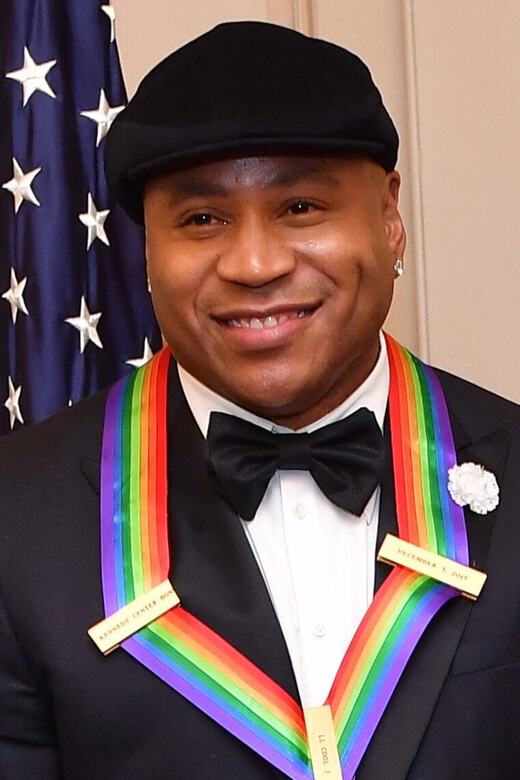
Key worksRadio (1985), Mama Said Knock You Out (1990)
2017 · 📷 U.S. State Department / Public domain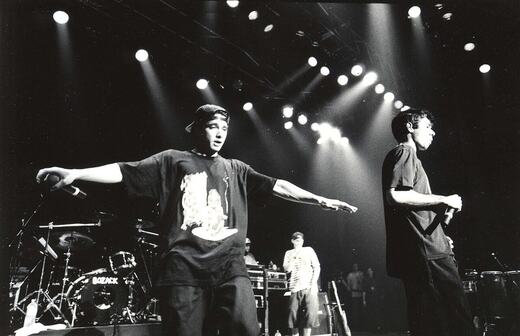
Key worksLicensed to Ill (1986), Paul's Boutique (1989)
1992, Club Citta, Kawasaki, Japan · 📷 Masao Nakagami / CC BY-SA 2.0Key worksIt Takes a Nation of Millions… (1988), “Fight the Power” (1989)
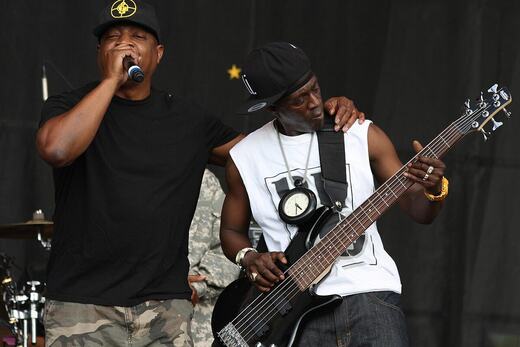
2014. Chuck D (left) and Flavor Flav · 📷 kowarski / CC BY 2.0Key worksPaid in Full (1987), Follow the Leader (1988)
2008 · 📷 Flowizm / CC BY 2.0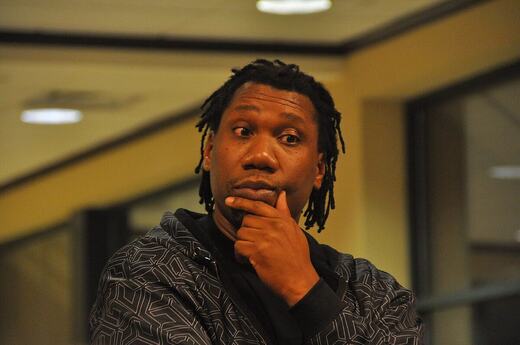
Key worksCriminal Minded (1987), Return of the Boom Bap (1993)
2009 · 📷 Luigi / CC BY 2.0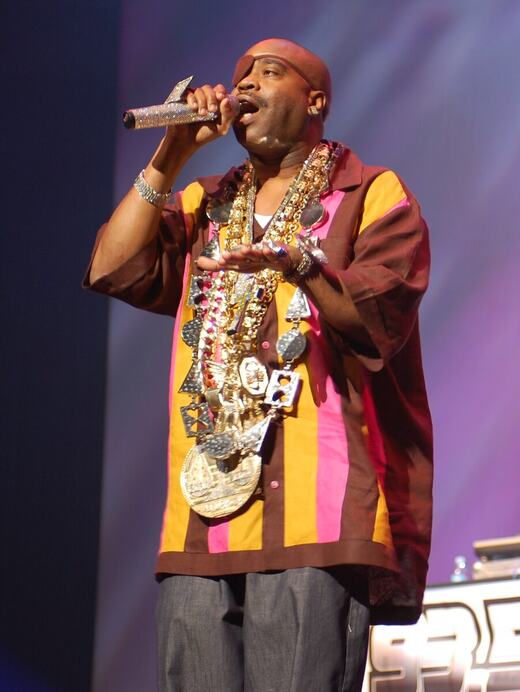
Key worksThe Great Adventures of Slick Rick (1988)
2009 · 📷 Brett Hammond / CC BY 2.0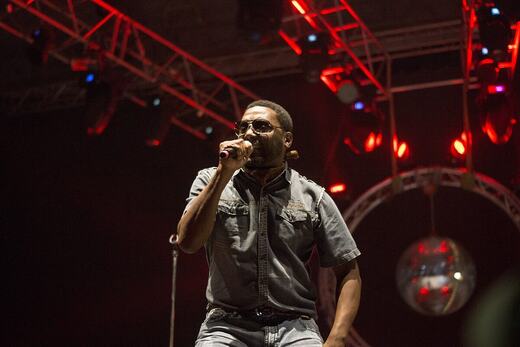
Key worksLong Live the Kane (1988)
2013 · 📷 RustyShack / CC BY 2.0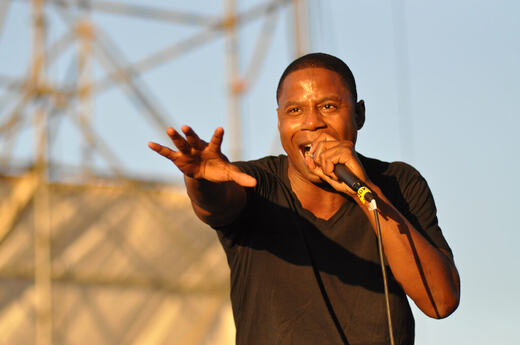
Key works“La Di Da Di” (1985)
2010 · 📷 Jason Persse from Brooklyn, USA / CC BY-SA 2.0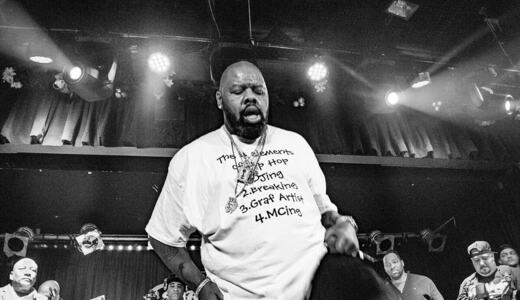
Key works“Just a Friend” (1989)
2016 · 📷 fuseboxradio (Flickr) / CC BY-SA 2.5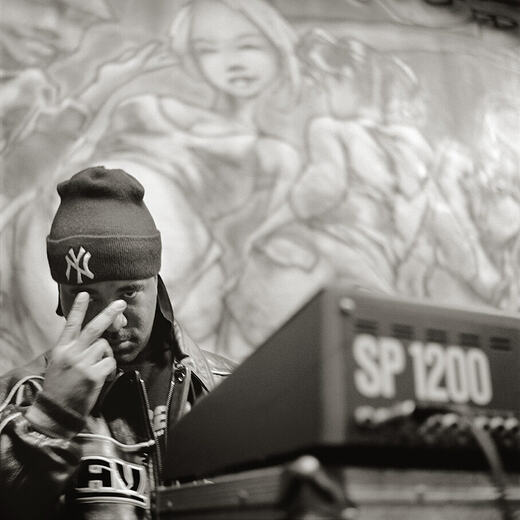
Key works“The Bridge” (MC Shan), Juice Crew's “The Symphony” (1988)
1999 · 📷 MikaV (Mika Väisänen) / CC BY-SA 4.0
Key works“Roxanne's Revenge” (1984)
2016 · 📷 fuseboxradio (Flickr) / CC BY-SA 2.0
Key worksHot, Cool & Vicious (1986), “Push It”
2013 · 📷 David Burke / CC BY 2.0
Key worksLyte as a Rock (1988), “Paper Thin”
1999 · 📷 Mika Väisänen (Mikamote) / CC BY-SA 3.0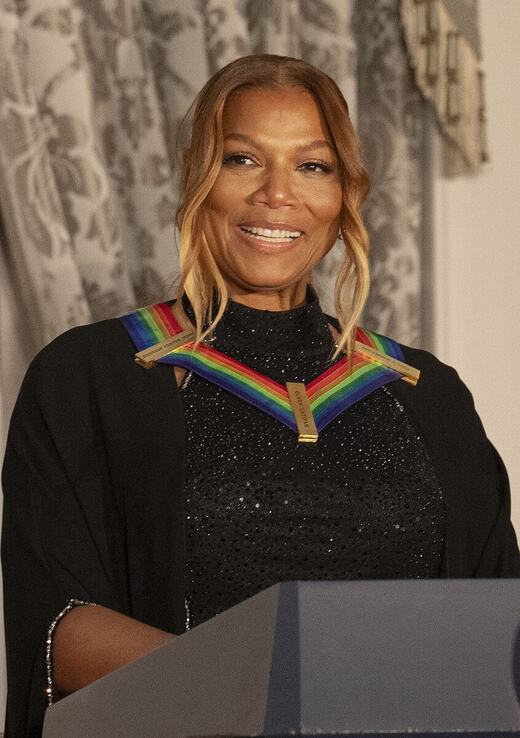
Key works“U.N.I.T.Y.” (1993)
2023 · 📷 Freddie Everett / U.S. Department of… / Public domain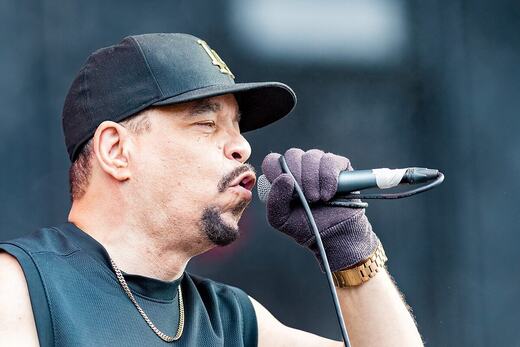
Key works“6 in the Mornin'” (1986), O.G. Original Gangster (1991)
2019 · 📷 Sven Mandel / CC BY-SA 4.0
Key works“P.S.K. What Does It Mean?” (1985)
2012 · 📷 swimfinfan / CC BY-SA 2.0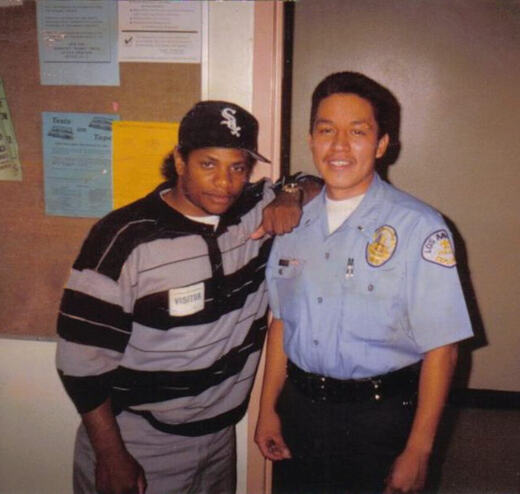
Key worksEazy-Duz-It (1988)
1993 snapshot with Edward Reyes of the LAPD (right) · 📷 Edward Reyes / CC BY 2.0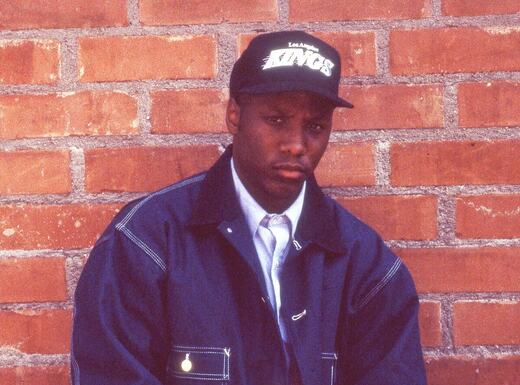
Key worksShock of the Hour (1993)
N.W.A, 1990 · 📷 Ithaka Darin Pappas / CC BY-SA 4.0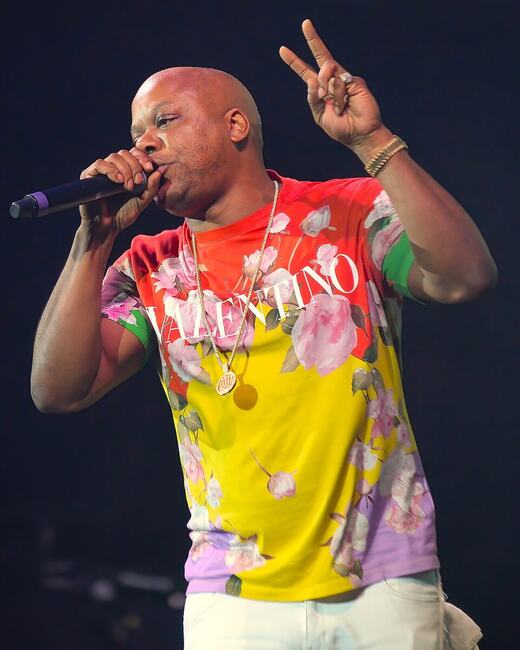
Key worksBorn to Mack (1987), Life Is… Too $hort (1988)
2023 · 📷 Rickmunroe01 / CC BY-SA 4.0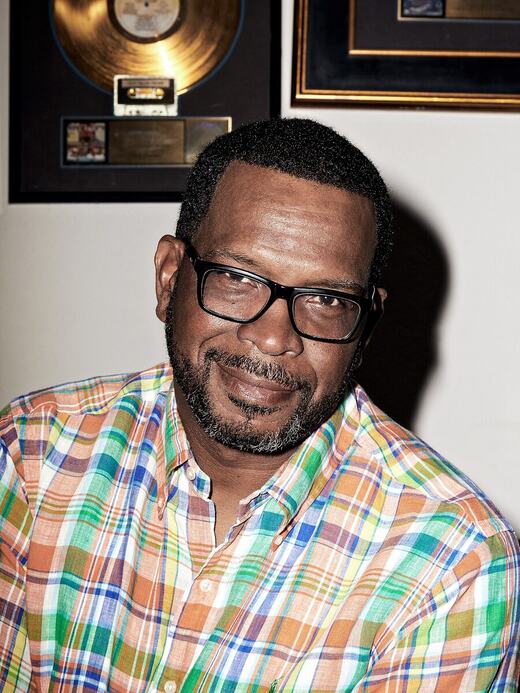
Key worksAs Nasty As They Wanna Be (1989)
Luke / 2 Live Crew, 2017 · 📷 David Cabrera / CC BY-SA 4.0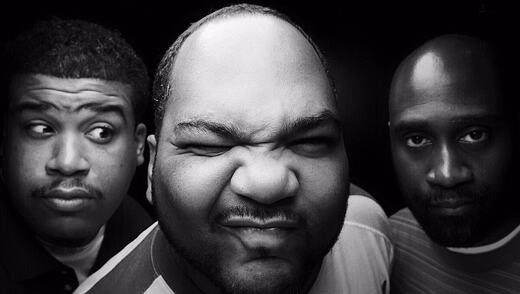
Key works3 Feet High and Rising (1989)
2004 · 📷 Matti Hillig / CC BY-SA 3.0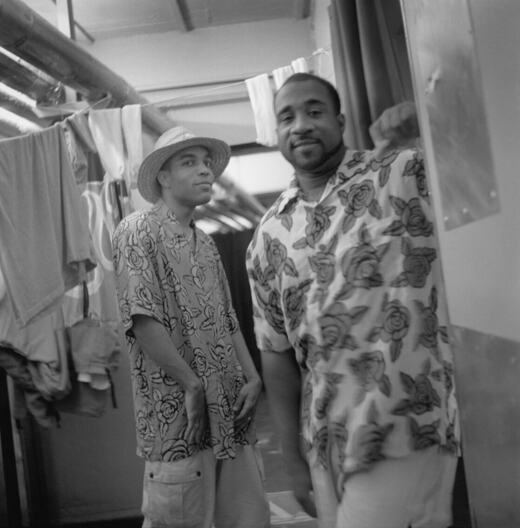
Key worksStraight Out the Jungle (1988)
1999 · 📷 Mika Väisänen (Mikamote) / CC BY-SA 3.0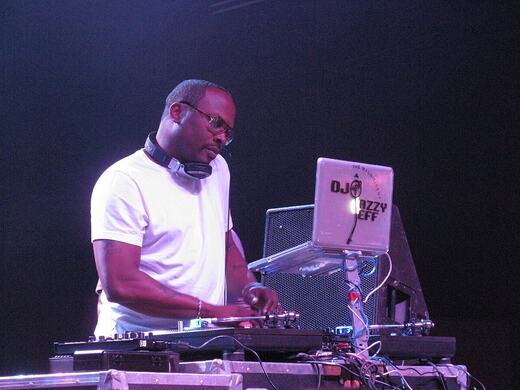
Key works“Parents Just Don't Understand” (1988)
2011 · 📷 Dopefish / Public domain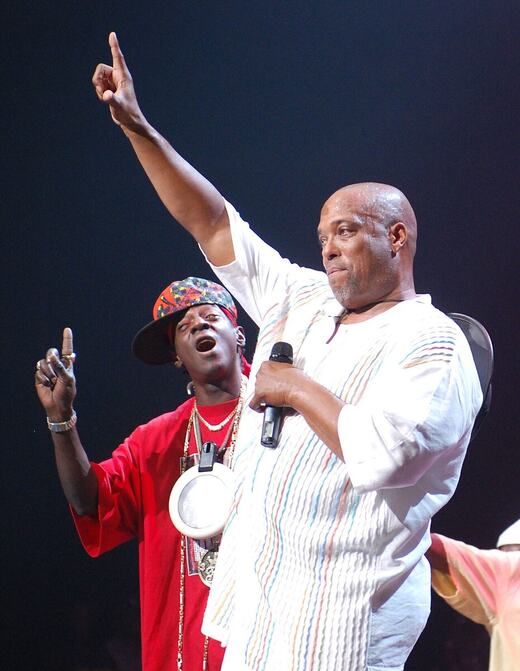
Key works“Friends” (1984)
Ecstasy of Whodini (right) with Flavor Flav (left), Fresh Fest 2009 · 📷 Brett Hammond / CC BY 2.0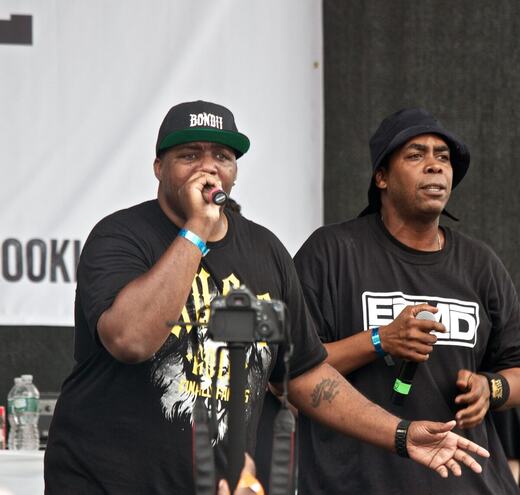
Key worksStrictly Business (1988)
2013 · 📷 Simon Abrams from Brooklyn, USA / CC BY-SA 2.0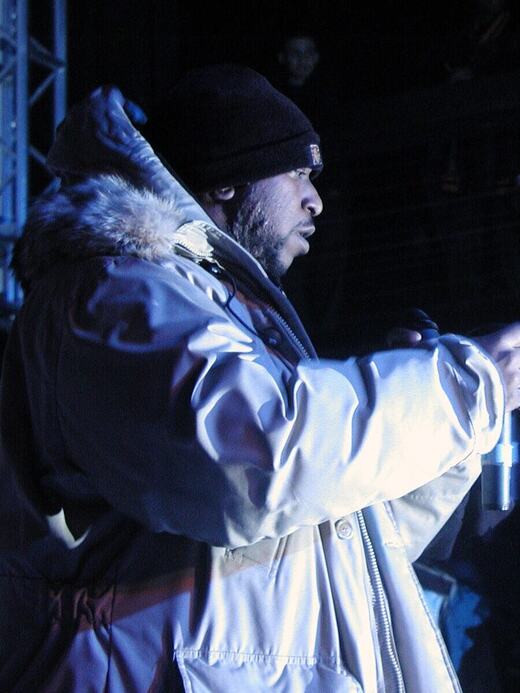
Key worksRoad to the Riches (1989), Wanted: Dead or Alive (1990), “The Symphony” (1988)
2006 · 📷 Kanamedia from Tokyo, Japan / CC BY-SA 2.5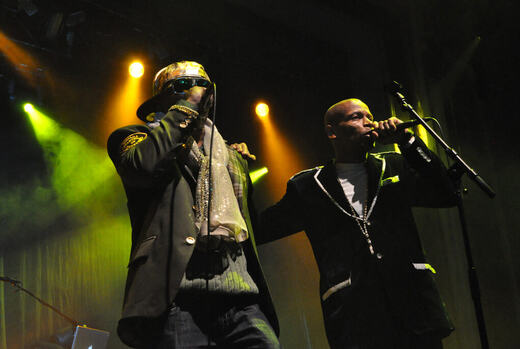
Key worksCritical Beatdown (1988), “Ego Trippin'” (1986), Dr. Octagonecologyst (1996, as Dr. Octagon)
2011 · 📷 Jason Persse / CC BY-SA 2.0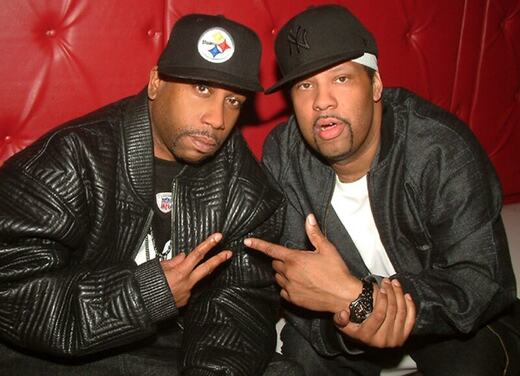
Key worksIt Takes Two (1988), “Joy and Pain” (1988)
2006 · 📷 Mick Tobyn / CC BY-SA 2.0
Key worksIn Full Gear (1988), On Fire (1986), “Talkin' All That Jazz” (1988)
Pictured: member Daddy-O, Atlanta, 2010 · 📷 WeLove1990 / CC BY-SA 3.0
Key worksLōc-ed After Dark (1989), “Wild Thing” (1988), “Funky Cold Medina” (1989)
2023 · 📷 2C2K Photography / CC BY 2.0
Key worksStone Cold Rhymin' (1989), “Bust a Move” (1989)
2021 · 📷 Super Festivals / CC BY 2.0
Key works2 Hype (1988), Kid 'n Play's Funhouse (1990), the film House Party (1990)
2010 · 📷 David Shankbone / CC BY 3.0
Key worksWorld Class (1985), Rapped in Romance (1986), “Surgery” (1984)
World Class Wreckin' Cru, 2019 · 📷 Don Bigileone / CC BY 2.0
Key worksKwamé the Boy Genius (1989), A Day in the Life: A Pokadelick Adventure (1990)
2014 · 📷 Luigi Novi / CC BY 3.0Key works“Go See the Doctor” (1986), How Ya Like Me Now (1987)
Key worksStraight Outta Compton (1988)
Key works“Now That We Found Love” (1991)
Key worksThe Fat Boys (1984)
Key works“Spoonin' Rap” (1979), “Monster Jam” (1980), The Godfather of Rap (1987)
Key works“Positive Life” (1981), House Rocker (1986), “Amityville (The House on the Hill)” (1986)
Key works“Roxanne, Roxanne” (1984), UTFO (1985)
Key works“It's Yours” (1984, T La Rock & Jazzy Jay)
Key worksThe Album (1985), In Full Effect (1988), “King of the Beats” (1988)
Key worksAct a Fool (1988), Tha Triflin' Album (1993)
Key worksOn the Nile (1984), “Egypt, Egypt” (1984)
Key worksYoungest in Charge (1989), “I Got It Made” (1989), “Think About It” (1989)
PLAY / 1980s23
THE GOLDEN ERA
1990s
East, West, then the South. The decade hip-hop took over
Nas's Illmatic, Biggie's Ready to Die, 2Pac's All Eyez on Me, Wu-Tang's 36 Chambers. When people talk about the good old days of hip-hop, this is almost always what they mean.
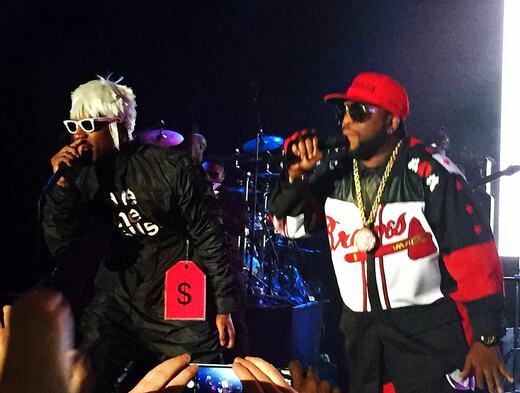
1992The Chronic. Dre locks in the West Coast's G-funk sound
1994Illmatic and Ready to Die. New York strikes back
25 / 24How old 2Pac (1996) and Biggie (1997) were when they died
There's no summing up '90s hip-hop in one word. New York chopping up jazz. Los Angeles with synths whistling over the top. Atlanta and Houston with bass crawling along the ground. A different sound bloomed in every region at once, and every one of them rattled the charts. This is the decade they call hip-hop's golden age, and we're breaking it into four streams.
1. New York: Masters of the Sample and the Word
In the early '90s, New York hip-hop entered its craftsman era. On The Low End Theory (1991), A Tribe Called Quest put a jazz upright bass dead center in the beat. Gang Starr's DJ Premier chopped records into tiny pieces and rebuilt them into new songs, and his razor-sharp drum and piano loops defined “the New York sound.” Pete Rock & C.L. Smooth's “T.R.O.Y.” (1992), with its warm soul horns, still gets talked about as an all-time classic.
The way producers worked was changing too. In 1991, ruling in a lawsuit over a Biz Markie track built on an uncleared sample, the judge laid down a stern line: “Thou shalt not steal.” From then on, you needed the rights holder's permission to sample. Clearance fees got heavy, so producers cut back on how many sources they used, and the art of chopping and flipping a sample until nobody could tell where it came from spread fast. Ironically, those limits also helped sharpen the craft.
2. Los Angeles: Dr. Dre and G-Funk
In 1992, Dr. Dre, now out of N.W.A, dropped The Chronic on his own label, Death Row, and it set the sound of the West Coast. Parliament/Funkadelic funk underneath, slow rolling bass, a high synth that sounds like somebody whistling, women's voices on the hooks: that's G-funk. Where New York's samples hit hard, this was music made for the California sun. The new kid riding it was Snoop Doggy Dogg, whose lazy, gliding flow made him the face of the era almost overnight. His debut, Doggystyle (1993), entered the US chart at No. 1, a rare feat for a first album.
3. New York Strikes Back: Wu-Tang, Nas, Biggie
Pushed back on its heels by G-funk, New York came out swinging. The first shot was Enter the Wu-Tang (36 Chambers) (1993) from Wu-Tang Clan, a nine-man crew out of Staten Island. Kung fu movie dialogue scattered everywhere, RZA's grimy, distorted piano over programmed drums. The grit stays raw while nine MCs take turns snatching the mic. “C.R.E.A.M.” is the signature track, a portrait of a world where money runs everything.
In 1994, two even more decisive records landed. The first was Nas's Illmatic. A 20-year-old raised in the Queensbridge projects painted his block in lines that move almost like a film camera. Ten tracks, about 40 minutes, with DJ Premier, Pete Rock, Q-Tip and Large Professor, the best producers of the day, all on one album. The rap magazine The Source gave it its top rating of five mics, and it still comes up every single time someone argues about the greatest hip-hop album ever made.
The second was Ready to Die from The Notorious B.I.G. (Biggie). The big man from Bedford-Stuyvesant, Brooklyn, talked about the crime life and the rush of coming up in an unhurried baritone, often with a joke tucked in. The arc of “Juicy,” from broke kid to look-at-me-now, became the template for hip-hop's go-to story. Puff Daddy (Sean Combs), running the Bad Boy label, pushed hip-hop onto the pop charts as glossy, flashy success music. Next came Mobb Deep's The Infamous (1995), cold, menacing loops painting New York's dark side. And in 1996, Jay-Z debuted with Reasonable Doubt on an independent label of his own.
4. The South: “The South Got Something to Say”
The 1995 Source Awards. Getting booed in front of the heavyweights from both coasts, OutKast's André 3000 grabbed the mic and said it: “The South got something to say.” Back then, everybody understood hip-hop as an East and West story. But OutKast in Atlanta, UGK and the Geto Boys in Texas, Three 6 Mafia in Memphis, and Master P and Cash Money in New Orleans were redrawing the map with their own sounds and their own language. In Houston, DJ Screw slowed records way down and stretched them into a haze, creating “chopped & screwed,” which became one of the roots of the slow, floating vocals you hear from trap onward.
The Southern sound was built on a bass-heavy drum machine (the TR-808) and beats made to move bodies in the club. Not New York-style wordplay first, but bass you feel in your body first. That idea would completely remake hip-hop in the 2000s, and again in the 2010s.
It was never just East vs. West. '90s hip-hop was national from day one.
Tragedy: 2Pac and Biggie
You can't talk about '90s hip-hop without 2Pac. Born in Harlem, New York, and raised by a mother who'd been a Black Panther, he studied poetry and acting at a performing arts school, then moved from Baltimore to California. No other rapper could carry rage at society and love for his mother, street violence and tenderness, all in the same voice. Me Against the World (1995) hit No. 1 on the US album chart while he was locked up. “Dear Mama,” written for his mother, is loved around the world as a classic that goes way past gangsta rap. That same year he signed with Death Row, and with “California Love” and the 1996 double album All Eyez on Me, he took the West Coast throne.
Then, on September 7, 1996, he was shot in Las Vegas, and on September 13 he died, at 25. On March 9 the following year, 1997, Biggie was shot in Los Angeles, gone at 24. The double album that came out about two weeks after his death was titled Life After Death, which was almost too ironic to bear. The story that an East-West feud took both their lives gets told everywhere, but it's also said that many of the people actually involved never wanted any of it. In the 2Pac case, a suspect was indicted in 2023. Their deaths were also the moment hip-hop's own stars had to face, up close, the fact that this was “dangerous music.”
The Late '90s: Going Pop, and the Rise of Women
By the late '90s, hip-hop sat dead center on the pop charts. Puff Daddy's shiny hits. The smash success of Jay-Z's Vol. 2… Hard Knock Life (1998). And Lauryn Hill's The Miseducation of Lauryn Hill (1998), which did rap and soul in one voice and won five Grammys the following year. Missy Elliott and Timbaland made rhythms that sounded like they'd been beamed in from the future. It was also the decade women rappers stopped being the exception.
The Scene That Radio, Mixtapes and Magazines Built
You could argue the decade's classics were born in late-night radio. Stretch and Bobbito, which started in 1990 on New York college station WKCR, played freestyles from Nas, Wu-Tang, Biggie and others back when nobody knew their names, and became the scene's proving ground. DJs like Hot 97's Funkmaster Flex became stars just by being the guy who played the new records first.
Magazines had real power too. Alongside The Source, Vibe (1993) and XXL (1997) launched, and album reviews became part of the culture's language. In May 1991, Billboard switched its sales tracking to SoundScan, and the numbers showed hip-hop and country were selling more than anyone had assumed. The music actually selling was the music people were playing on the street, and that fact changed how record labels did business.
ARTISTS / 1990s114
Key worksIllmatic (1994), Stillmatic (2001)
2022 · 📷 All-Pro Reels / CC BY-SA 2.0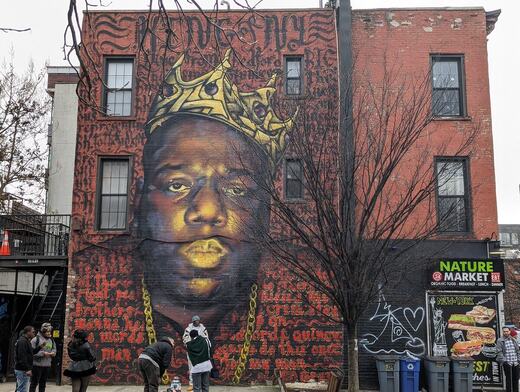
Key worksReady to Die (1994), Life After Death (1997)
A mural in Brooklyn (photo: 2024) · 📷 whatsdownthatstreet (Flickr user; re… / CC BY-SA 2.0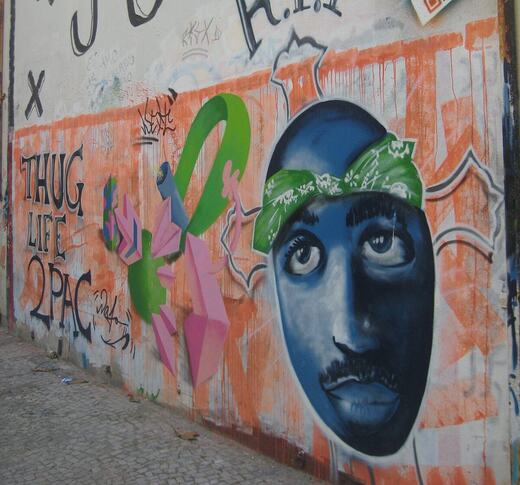
Key worksMe Against the World (1995), All Eyez on Me (1996)
Graffiti on a wall in Rio (photo: 2010) · 📷 marycsalome / CC BY 2.0Key worksEnter the Wu-Tang (36 Chambers) (1993)
2007 · 📷 Napalm filled tires / CC BY-SA 2.0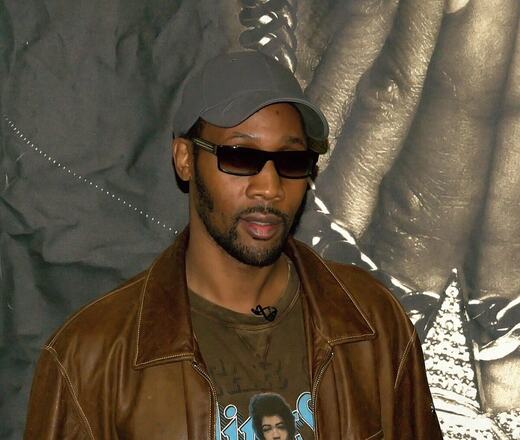
Key worksEnter the Wu-Tang (1993), Bobby Digital in Stereo (1998)
2009 · 📷 David Shankbone / CC BY 3.0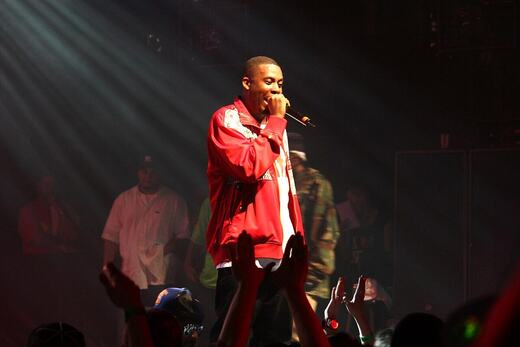
Key worksLiquid Swords (1995)
2008 · 📷 Flowizm / CC BY 2.0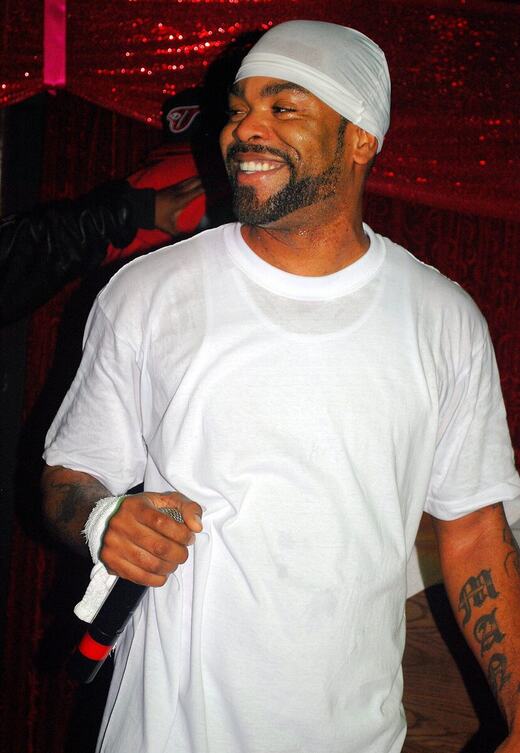
Key worksTical (1994), “Bring the Pain”
2010 · 📷 Alyssa Tomfohrde from Oakland, USA / CC BY 2.0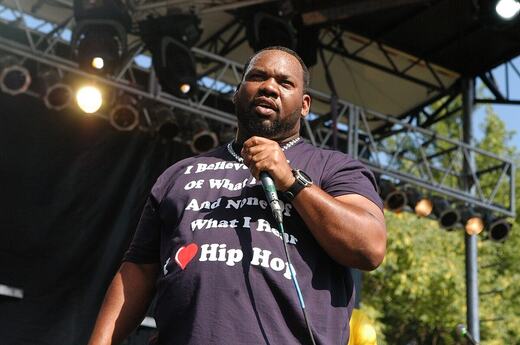
Key worksOnly Built 4 Cuban Linx… (1995)
2010 · 📷 Weekly Dig / CC BY 2.0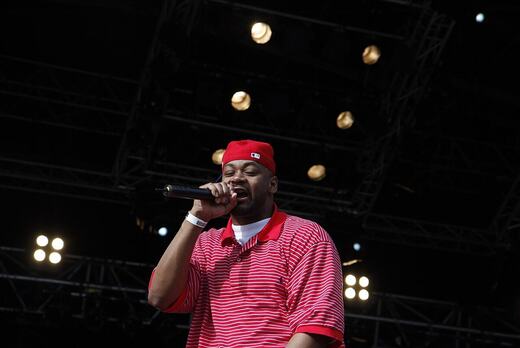
Key worksIronman (1996), Supreme Clientele (2000)
2010 · 📷 Niklas Hellerstedt / CC BY 2.0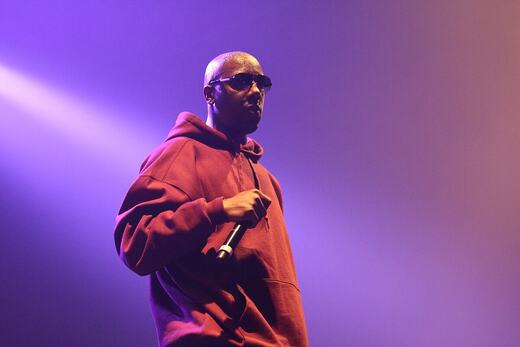
Key works“Triumph” (1997)
2013 · 📷 Coup d'Oreille / CC BY-SA 2.0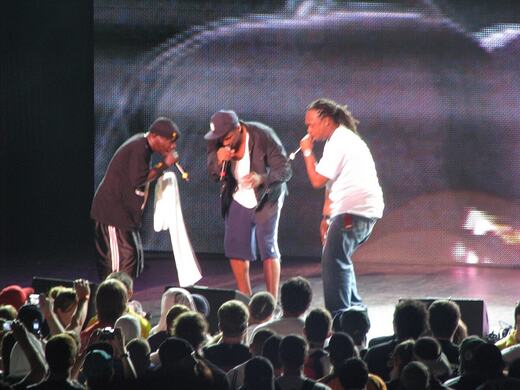
Key worksThe Low End Theory (1991), Midnight Marauders (1993)
2008 · 📷 Charice L. from USA / CC BY-SA 2.0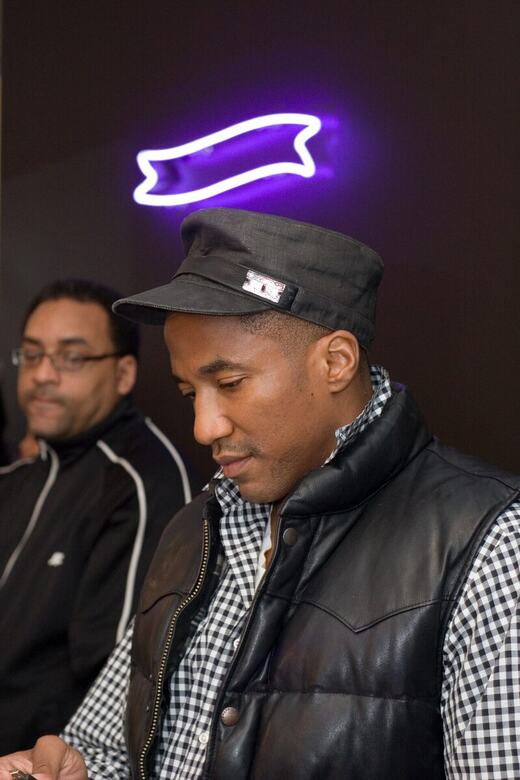
Key worksAmplified (1999)
2008 · 📷 docmonstereyes / CC BY 2.0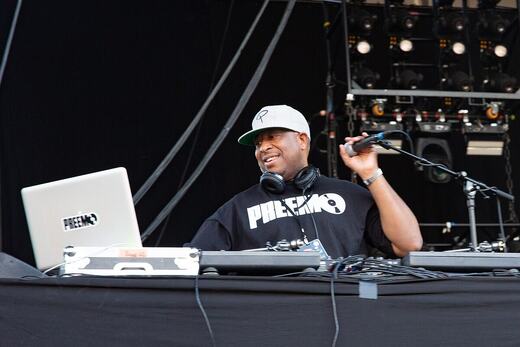
Key works“N.Y. State of Mind” (Nas), Gang Starr's “Mass Appeal”
2019 · 📷 Sven Volkens / CC BY-SA 4.0
Key worksMoment of Truth (1998)
Gang Starr, 2006 · 📷 Barbara Mürdter / CC BY-SA 3.0
Key works“They Reminisce Over You (T.R.O.Y.)” (1992)
2011 · 📷 pinguino k from North Hollywood, USA / CC BY 2.0
Key worksThe Infamous (1995), “Shook Ones Pt. II”
2014 · 📷 Tobias Nielsen (Flickr user Tobi Nie… / CC BY 2.0
Key worksReasonable Doubt (1996), The Blueprint (2001)
2008 · 📷 Mike Barry from Wirral, England / CC BY 2.0
Key worksEnta da Stage (1993)
Black Moon, 2009 · 📷 Flowizm / CC BY 2.0
Key worksWhut? Thee Album (1992)
2016 · 📷 Stefan Brending (2eight) / CC BY-SA 3.0 de
Key works“Slam” (1993)
2014 · 📷 EnglishLoverWillie (English Wikipedia) / CC0
Key works“O.P.P.” (1991)
2012 · 📷 Eva Rinaldi / CC BY-SA 2.0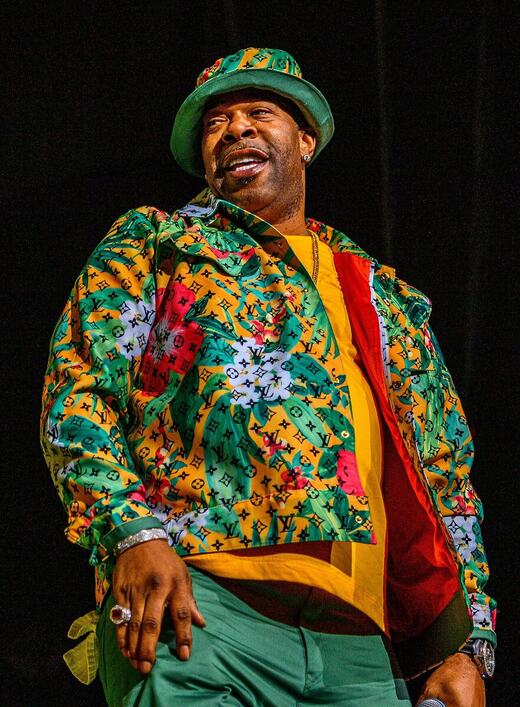
Key works“Woo-Hah!! Got You All in Check” (1996)
2022 · 📷 All-Pro Reels / CC BY-SA 2.0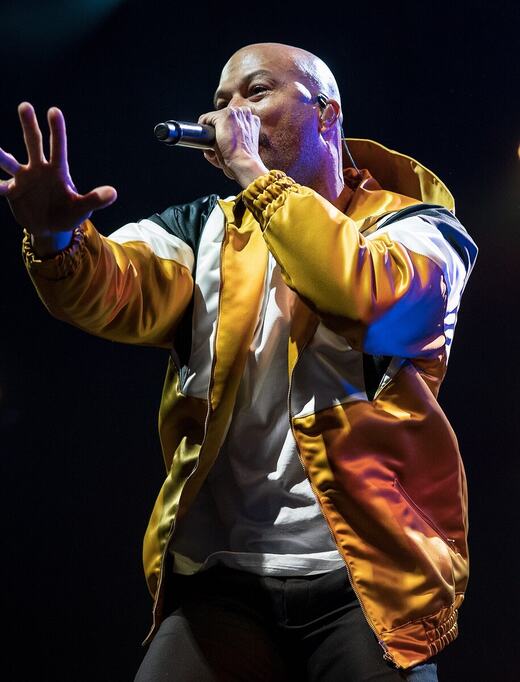
Key worksResurrection (1994), Like Water for Chocolate (2000)
2018 · 📷 Steven Pisano (Feast of Music) / CC BY 2.0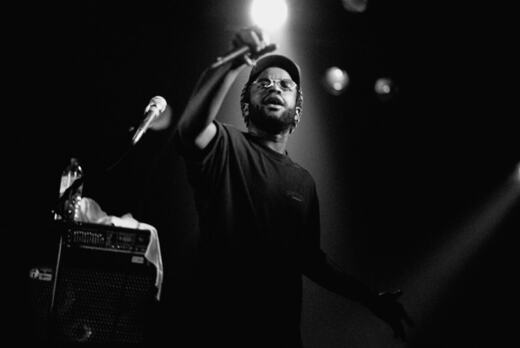
Key worksThings Fall Apart (1999)
Black Thought, 1999, 1999 · 📷 Mika Väisänen / CC BY 3.0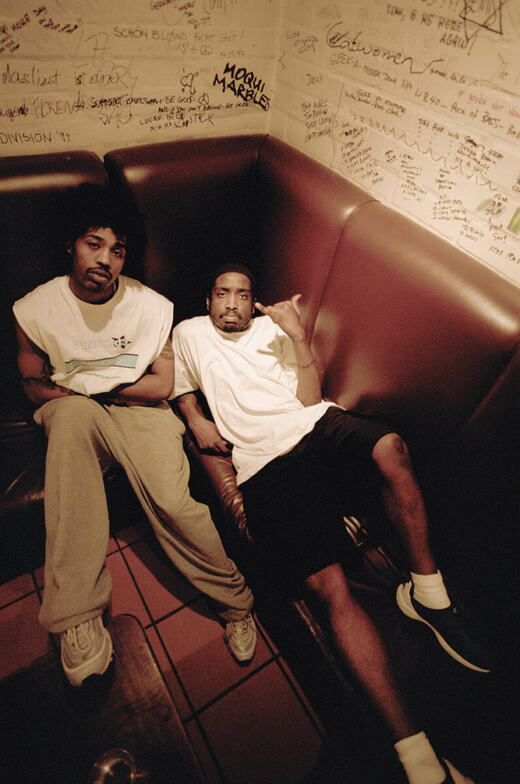
Key worksBizarre Ride II the Pharcyde (1992)
1999 · 📷 MikaV (Mika Väisänen) / CC BY-SA 3.0
Key works“Rebirth of Slick (Cool Like Dat)” (1993)
2010 · 📷 Jester Jay Goldman / CC BY-SA 2.0
Key works“'93 til Infinity” (1993)
2023 · 📷 User:AstonishingTunesAdmirer, Manife… / CC BY 3.0
Key worksThe Score (1996)
2021 · 📷 Matt Johnson (Matt A.J.) / CC BY 2.0
Key worksThe Miseducation of Lauryn Hill (1998)
2014 · 📷 The Come Up Show from Canada / CC BY 2.0Key worksThe Carnival (1997)
2021 · 📷 Matt Johnson (Matt A.J.) / CC BY 2.0
Key worksThe Chronic (1992), 2001 (1999)
2012 · 📷 Jason Persse / CC BY-SA 2.0
Key worksDoggystyle (1993)
2023 · 📷 Bruce Baker / CC BY 2.0
Key works“Regulate” (1994)
2007 · 📷 John B. Mueller / CC BY 2.5
Key worksDogg Food (1995)
2015 · 📷 Connie Lodge / CC BY-SA 2.0
Key worksDeath Certificate (1991)
2012 · 📷 Eva Rinaldi / CC BY-SA 2.0
Key works“Insane in the Brain” (1993)
1998 · 📷 Mika Väisänen / CC BY-SA 4.0
Key works“Gangsta's Paradise” (1995)
2012 · 📷 Timothy Krause / CC BY 2.0
Key works“Tell Me When to Go” (2006)
2007 · 📷 Gamerscore Blog / CC BY-SA 2.0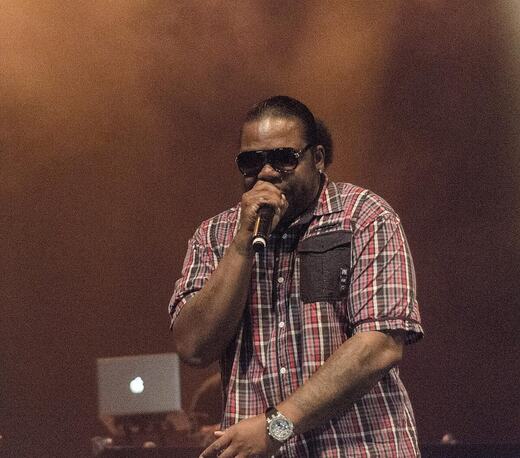
Key works“Tha Crossroads” (1996)
Wish Bone, 2015 · 📷 Drew Yorke (The Come Up Show) / CC BY 2.0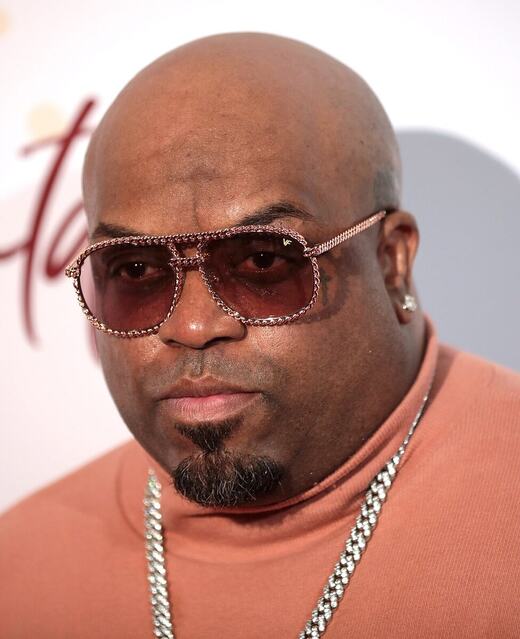
Key worksSoul Food (1995)
2022 · 📷 Gage Skidmore / CC BY-SA 3.0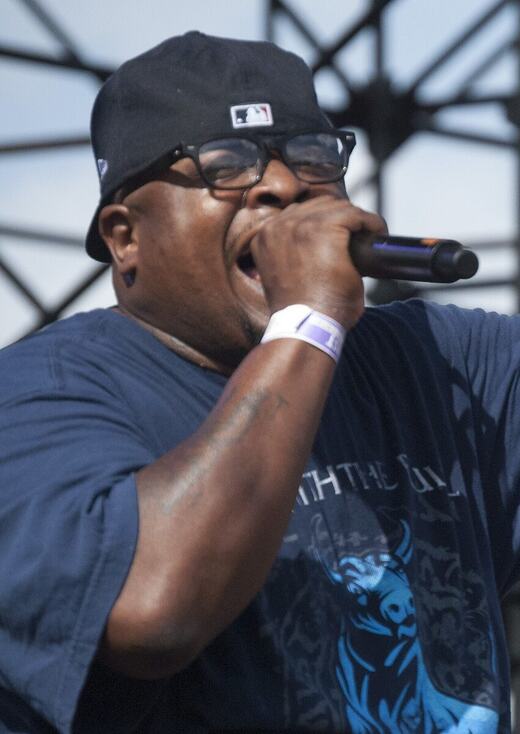
Key works“Mind Playing Tricks on Me” (1991)
2013 · 📷 Jeremy Perez Photos. / CC BY-SA 2.0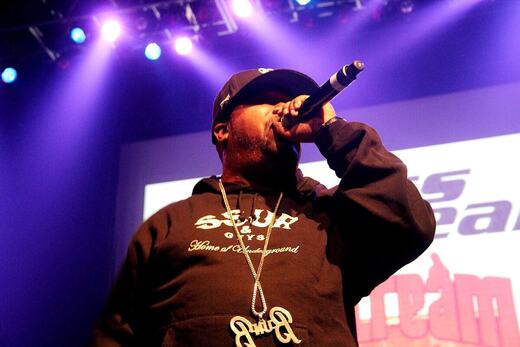
Key worksRidin' Dirty (1996)
Bun B, 2013 · 📷 Eli Watson / CC BY 2.0
Key works“Tear da Club Up '97,” “It's Hard out Here for a Pimp”
2007 · 📷 Jay West / CC BY-SA 3.0
Key works“Make 'Em Say Uhh!” (1997)
2001 · 📷 Mika Väisänen (Mikamote) / CC BY-SA 3.0
Key works“Lean Back” (2004)
2011 · 📷 Eva Rinaldi / CC BY-SA 2.0
Key worksIt's Dark and Hell Is Hot (1998)
2014 · 📷 Rzom_ / CC BY-SA 2.0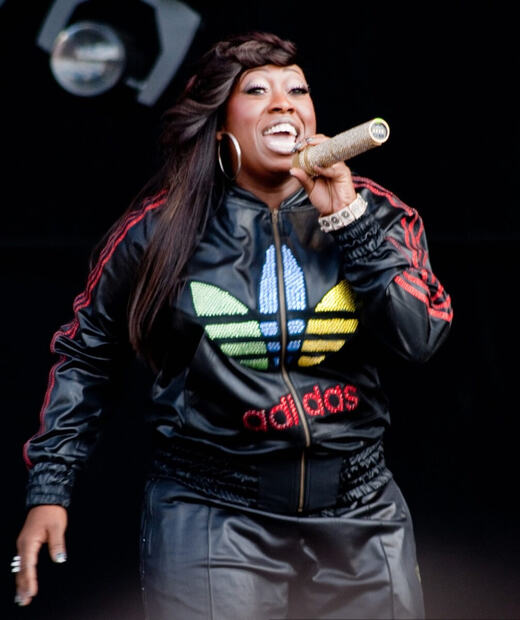
Key worksSupa Dupa Fly (1997), “Get Ur Freak On” (2001)
2006 · 📷 Romana Pierzga / CC BY-SA 2.0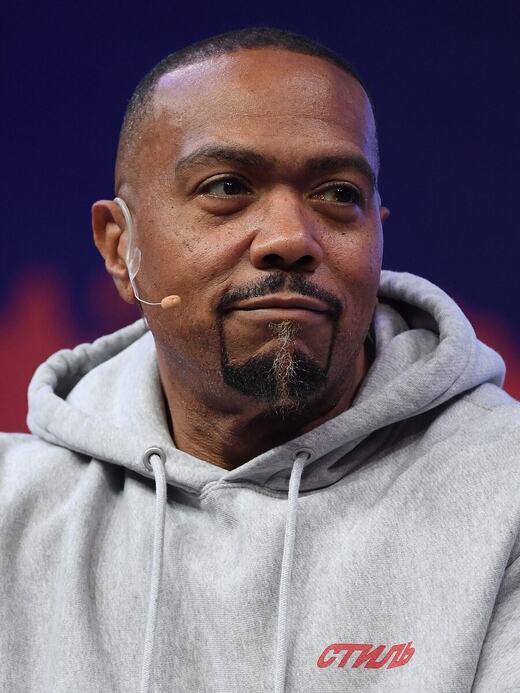
Key works“Try Again” (Aaliyah), “SexyBack”
2019 · 📷 Collision Conf / CC BY 2.0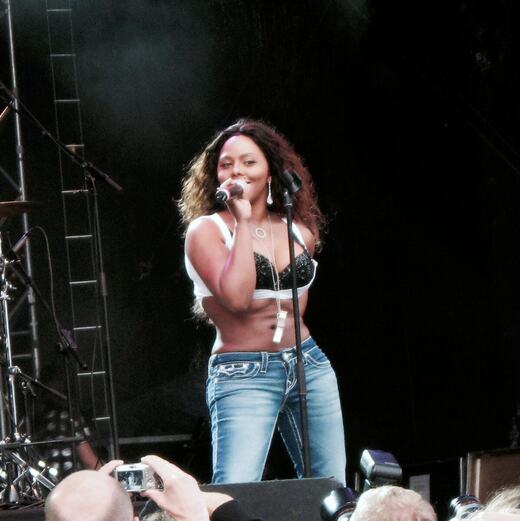
Key worksHard Core (1996)
2008 · 📷 windyjonas (Flickr) / CC BY 4.0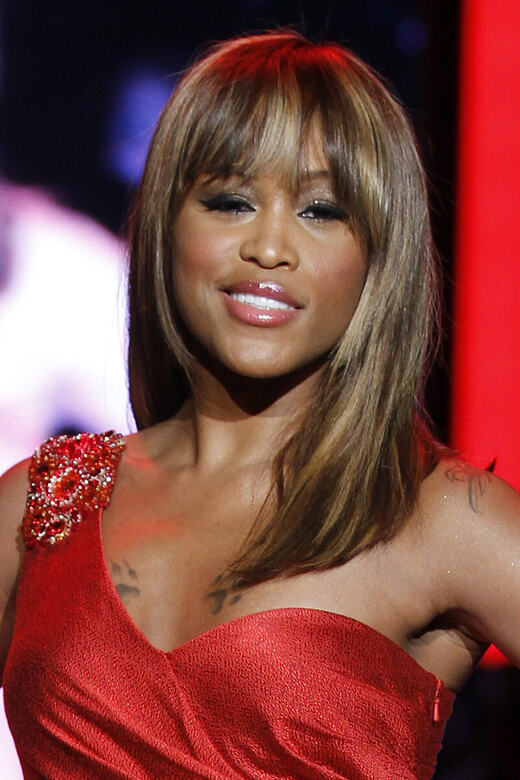
Key works“Let Me Blow Ya Mind” (2001)
2011 · 📷 The Heart Truth (U.S. Dept. of Healt… / Public domain
Key works“I'll Be Missing You” (1997), No Way Out (1997)
Puff Daddy / Diddy, 2010 · 📷 Reckless Dream Photography / CC BY 2.0
Key works“Tennessee” (1992)
2006 · 📷 Joris Peeters / CC BY 2.0Key worksAquemini (1998), Stankonia (2000)
2014 · 📷 David Shankbone / CC BY 3.0
Key worksThe Love Below (2003)
2014 · 📷 David Shankbone / CC BY 3.0
Key worksSir Lucious Left Foot (2010)
2006 · 📷 Utoks / CC BY 3.0
Key worksSlaughtaHouse (1993), Sittin' on Chrome (1995), Disposable Arts (2001)
2002 · 📷 Mikamote (Mika Väisänen) / CC BY-SA 3.0
Key worksOne for All (1990), In God We Trust (1993)
2014 · 📷 DeShaun Craddock / CC BY-SA 4.0
Key worksPlease Hammer Don't Hurt 'Em (1990), “U Can't Touch This” (1990), “Pray” (1990)
2008 · 📷 Brian Solis / CC BY 2.0
Key worksMack Daddy (1992), “Baby Got Back” (1992), “Posse on Broadway” (1987)
2016 · 📷 New Millennium Music / CC BY-SA 4.0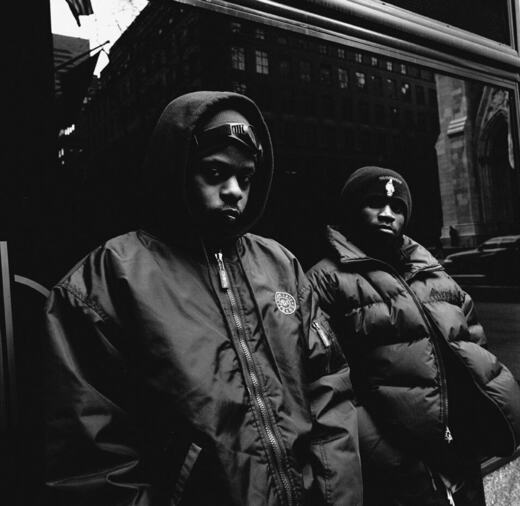
Key worksDead Serious (1992), “They Want EFX” (1992), Straight Up Sewaside (1993)
1997 · 📷 Mika Väisänen (Mika-photography) / CC BY-SA 3.0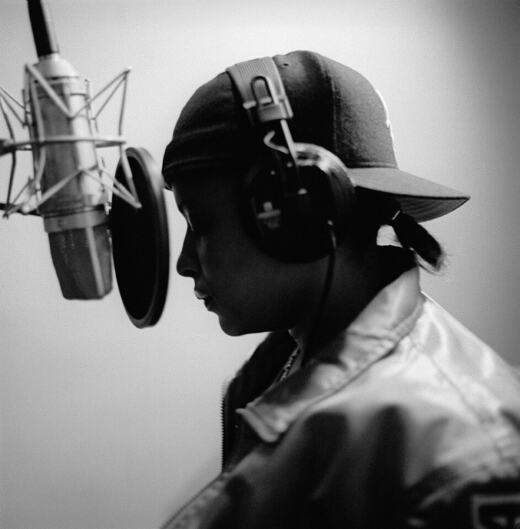
Key worksMake Way for the Motherlode (1991), “You Can't Play with My Yo-Yo” (1991)
1997 · 📷 Mika Väisänen / CC BY-SA 4.0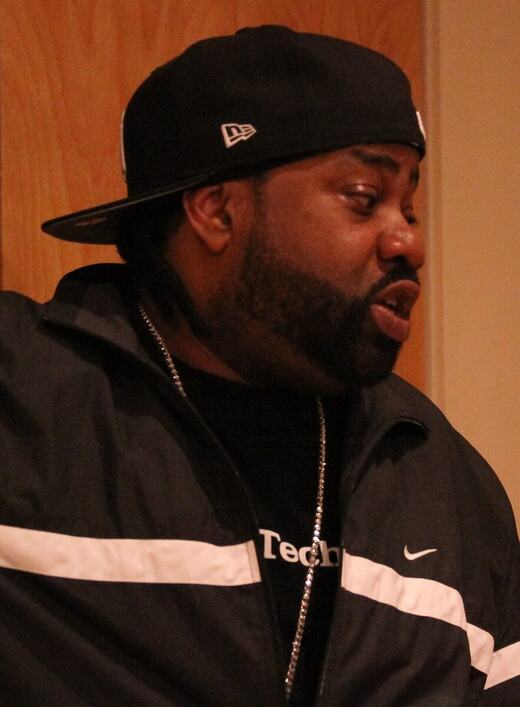
Key worksFunky Technician (1990), Return of the Funky Man (1992)
2014 · 📷 JonathanMena / CC BY 2.0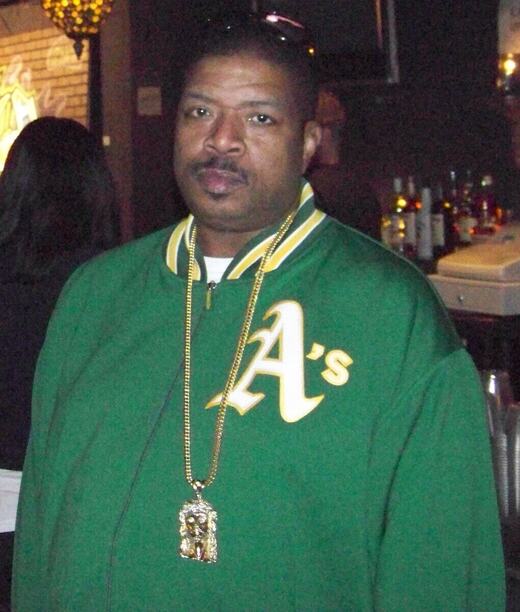
Key worksStunts, Blunts & Hip Hop (1992)
2008 · 📷 Dom Brady / CC BY 2.0
Key worksBreaking Atoms (1991, Main Source), “Looking at the Front Door” (1990)
2016 · 📷 Steven Pisano / CC BY 2.0
Key worksThe Sun Rises in the East (1994), “Come Clean” (1993)
2016 · 📷 Dominik Lippe (Lipstar) und Yannic L… / CC BY-SA 2.5
Key worksFiring Squad (1996), Warriorz (2000), “Ante Up (Robbin-Hoodz Theory)” (2000)
2017 · 📷 Stefan Brending (2eight) / CC BY-SA 3.0 DE
Key worksDah Shinin' (1995), “Bucktown” (1994)
2015 · 📷 Drew Yorke-Slader / CC BY 2.0
Key worksIll Na Na (1996), Chyna Doll (1999), “I'll Be” (1996)
1998 · 📷 Mika-photography / CC BY-SA 3.0
Key worksDa Baddest Bitch (2000), Glamorest Life (2005), “Here We Go” (2005)
2009 · 📷 Tiff Wilson / CC BY-SA 2.0
Key worksLet's Get Ready (2000), “Shake Ya Ass” (2000)
2012 · 📷 Daniel Benavides from Austin, TX / CC BY 2.0
Key worksOperation Stackola (1995), “I Got 5 on It” (1995)
Pictured: member Yukmouth · 📷 BOSS TALK 101 / CC BY 3.0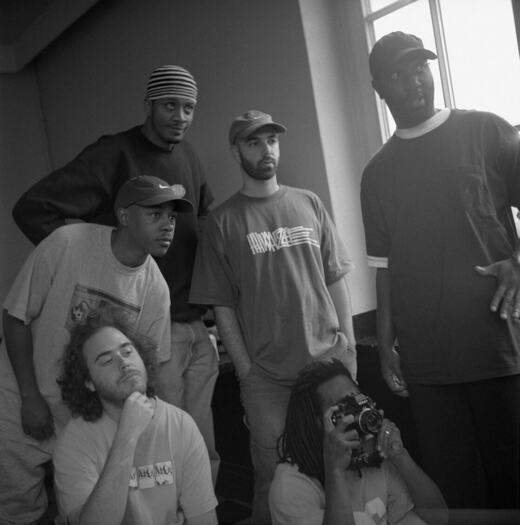
Key worksQuality Control (2000), Power in Numbers (2002)
2000 · 📷 Mika-photography / CC BY-SA 3.0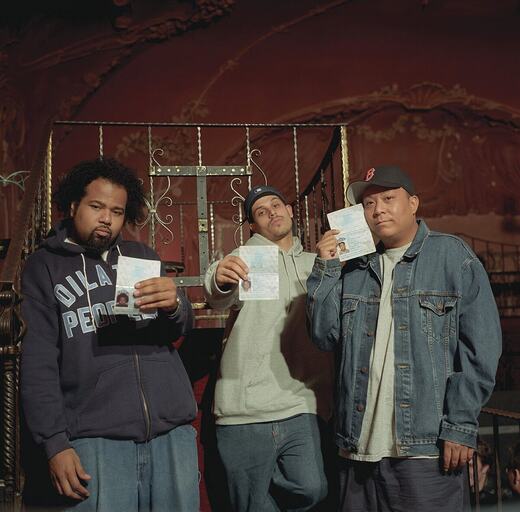
Key worksThe Platform (2000), “This Way” (2004)
2001 · 📷 Mika-photography / CC BY-SA 3.0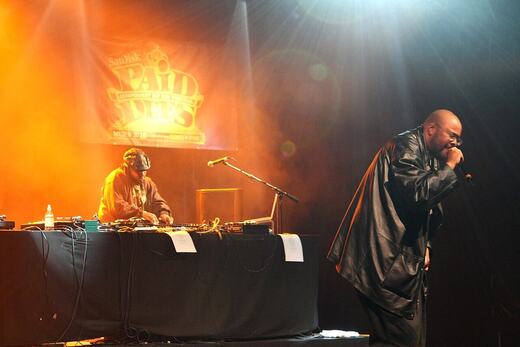
Key worksNia (1999), Blazing Arrow (2002), “Alphabet Aerobics” (1999)
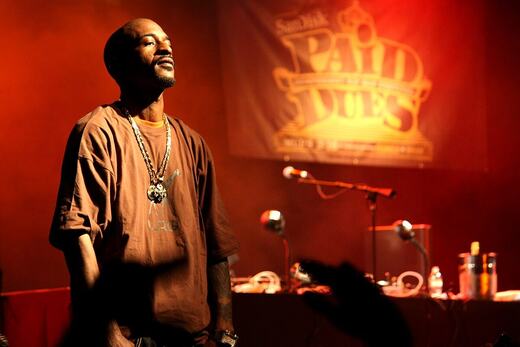
Chief Xcel (left) and Gift of Gab live at Paid Dues, 2008 · 📷 Flowizm / CC BY 2.0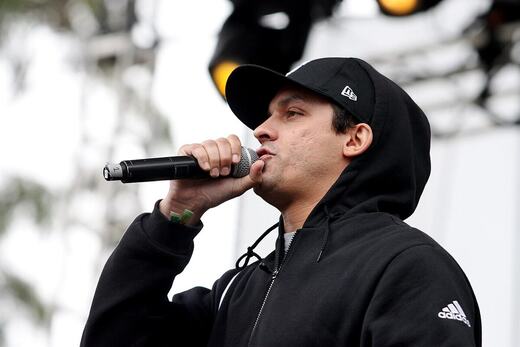
Key worksGod Loves Ugly (2002), When Life Gives You Lemons, You Paint That Shit Gold (2008)
2009 · 📷 Moses / CC BY 2.0
Key worksFuncrusher Plus (1997)
Company Flow, 2007 · 📷 Fred Benenson / CC BY 2.0
Key worksLabor Days (2001), Bazooka Tooth (2003), Skelethon (2012)
2007 · 📷 Alex Blackstock from San Francisco, … / CC BY 2.0
Key worksStill I Rise (1999, with 2Pac)
Young Noble, 2006 · 📷 Mogkilluminati / CC BY-SA 3.0
Key worksAdrenaline Rush (1997), Kamikaze (2004), “Slow Jamz” (2004)
📷 Photobra Adam Bielawski / CC BY-SA 3.0
Key worksAin't a Damn Thang Changed (1991), Curb Servin' (1995)
1989 · 📷 IthakaDarinPappas / CC BY-SA 4.0Key worksReturn to the 36 Chambers (1995)
Key worksLifestylez ov da Poor & Dangerous (1995)
Key works“Regulate,” “21 Questions”
Key works“Back That Azz Up” (1999)
Key worksCapital Punishment (1998)
Key worksSex Packets (1990), “The Humpty Dance” (1990), “Same Song” (1991)
Key worksQuik Is the Name (1991), “Tonite” (1991), Safe + Sound (1995)
Key works21 & Over (1993), Coast II Coast (1995), Likwidation (1997)
Key worksA Wolf in Sheep's Clothing (1991), “Flavor of the Month” (1991), “The Choice Is Yours” (1991)
Key worksA Future Without a Past... (1991), “Case of the P.T.A.” (1991)
Key worksTo the East, Blackwards (1990), Xodus (1992)
Key worksHoly Intellect (1990), Pure Poverty (1991), Black Business (1993)
Key worksDown to Earth (1990), “Ladies First” (1989, with Queen Latifah), “It's a Shame (My Sister)” (1990)
Key worksLife of a Kid in the Ghetto (1991), My Own Worst Enemy (2004, with Pete Rock)
Key worksRunaway Slave (1992), Goodfellas (1995)
Key worksWord...Life (1994), “Time's Up” (1994)
Key worksLivin' Proof (1995), “Supa Star”
Key worksUptown Saturday Night (1997), “Luchini AKA This Is It” (1997)
Key worksThe Realness (2001), The True Meaning (2002)
Key worksNocturnal (1996), Magnum Force (1998), “Leflaur Leflah Eshkoshka” (1995)
Key worksMonkey Barz (2005), Jesus Price Supastar (2007), Mic Tyson (2012)
Key worksProject: Funk da World (1994), “Flava in Ya Ear” (1994)
Key worksConspiracy (1995), “Player's Anthem” (1995), “Get Money” (1996)
Key worksThe War Report (1997), “L.A., L.A.” (1997), “T.O.N.Y. (Top of New York)” (1997)
Key worksChopper City in the Ghetto (1999), “Bling Bling” (1999)
Key worksTotally Krossed Out (1992), “Jump” (1992)
Key works187 He Wrote (1993), AmeriKKKa's Nightmare (1994)
Key worksTo Whom It May Concern… (1991), Innercity Griots (1993)
Key worksThe Cold Vein (2001), “Vein”
Key worksPicture This (1996), “Po Pimp” (1996)
Key worksThe Final Tic (1996), “Hay” (1996)
Key worksMack 10 (1995), Based on a True Story (1997)
Key worksSoul on Ice (1996), “Nature of the Threat”
Key worksComin' Out Hard (1993), On Top of the World (1995), “Space Age Pimpin'” (1995)
PLAY / 1990s78
SUPERSTARS & THE SOUTH
2000s
CDs sold, mixtapes ran, and the South took over
Eminem, 50 Cent, Kanye, Lil Wayne. Hip-hop became the king of pop in every sense, while the sound of the streets quietly started leaning toward trap.
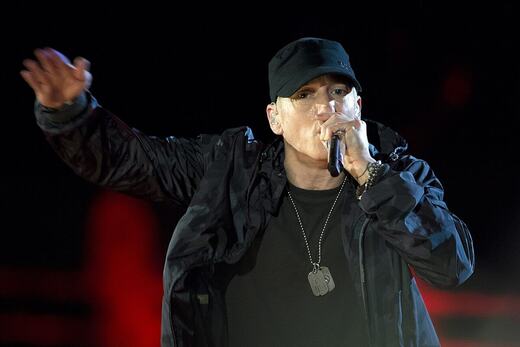
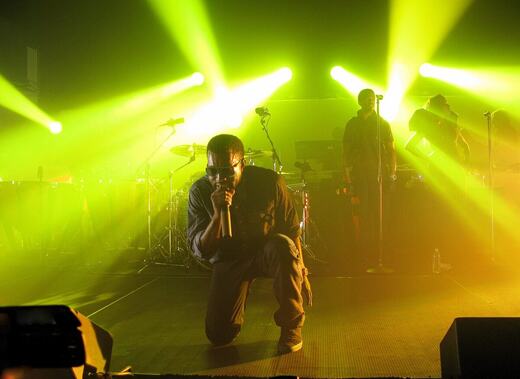
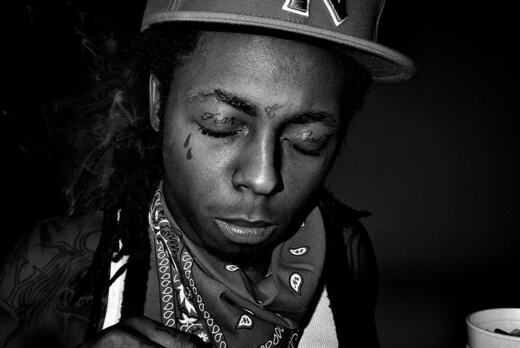
2002“Lose Yourself” (Eminem). The first rap song to win the Academy Award for Best Original Song (awarded in 2003)
2003Trap Muzik (T.I.). “Trap” becomes the name of a sound
1M+First-week sales of Lil Wayne's Tha Carter III (2008). A huge win in the middle of the CD slump
Hip-hop in the 2000s sold, period. CDs had their last golden run, and rappers took over MTV's TRL and radio's heavy rotation. It was a decade that minted one household-name star after another, but under the surface, the seeds of the next era were already sprouting.
Eminem and 50 Cent: Dre's Last Inventions
Eminem, a white rapper from Detroit, broke through with Dr. Dre in his corner. The venom and dark comedy of The Slim Shady LP (1999) and the brutal confessions of The Marshall Mathers LP (2000) sold at a record-setting pace for the time. “Lose Yourself,” the theme from his semi-autobiographical film 8 Mile, became the first rap song to win the Academy Award for Best Original Song.
Next up from Dre and Eminem: 50 Cent, who comes with the story that he took nine bullets and lived. Get Rich or Die Tryin' (2003) and “In Da Club” wrapped street violence and the come-up in catchy hooks and heavy beats, and took over the whole country. Counting his crew G-Unit, this was the era that perfected a business model: take the danger of the streets and sell it, as is, as pop.
Kanye West: The Day the Producer Became the Star
In 2001, on Jay-Z's The Blueprint, there was another genius sitting in the studio: Chicago producer Kanye West. With “chipmunk soul,” speeding up soul records until the vocals went squeaky and high, he repainted boom-bap's craftsman culture in warm colors, and in 2004 he debuted as a rapper too with The College Dropout. There was “Through the Wire,” recorded with his jaw still wired shut after an accident, and “Jesus Walks,” a straight-up prayer to God. In a hip-hop world that was all gangsta, all the time, Kanye's revolution was letting in vulnerability and doubt.
Then came 808s & Heartbreak in 2008. Built on the 808 drum machine and Auto-Tune, it poured out heartbreak and loneliness, and while it split opinions when it dropped, it became the reference point for the generation that followed, Drake, Travis Scott and the rest, with their sung rap, rap that melts into pure feeling.
Dawn in the South: Crunk, Snap, and Then Trap
The 2000s were also the decade the South took the lead. Atlanta's Lil Jon & the East Side Boyz whipped clubs into a frenzy with crunk, all shouted chants and bouncing beats (“Get Low,” 2003). In Houston, Mike Jones and Paul Wall took the chopped & screwed wave national. And D4L's “Laffy Taffy” (2005), out of Atlanta, rode snap, a dry, finger-snapping beat, all the way to No. 1 in the US.
Then the sound that would later blanket the world got its name: T.I.'s Trap Muzik (2003). “Trap” started out as Atlanta slang for the spot where drugs get bought and sold. T.I., Young Jeezy (Let's Get It: Thug Motivation 101, 2005), Gucci Mane and others put out record after record rapping about that life. Heavy 808s, dark synths, hi-hats chopped into quick little rolls. It's fair to say Atlanta in these years drew the blueprint for trap as we know it.
Lil Wayne and Mixtape Culture
From 2005 to 2008, New Orleans' own Lil Wayne kept dropping mixtapes at a ridiculous pace. Rapping over other people's beats without asking and giving it all away for free was a borderline-illegal move, but it turned him into the most prolific rapper in the game, and the one with the strangest way with words. Tha Carter III (2008) sold over a million copies in its first week, an exceptional number in the middle of the CD slump. He was a pioneer of the keep putting work out and get people listening culture that runs from mixtapes to SoundCloud and on into streaming.
Underground Treasures: DOOM and J Dilla
Away from the hits, the 2000s were also when boom-bap's craftsmen did their best work. Madvillainy (2004), the team-up between masked rapper MF DOOM and producer Madlib, is still worshipped for its dusty, made-in-a-bedroom beats packed with humor and wild ideas.
And then there's J Dilla. The Detroit producer behind classics for A Tribe Called Quest, Common, Erykah Badu and more built a new kind of boom-bap out of a slightly wobbly drum swing that refused to line up like a machine. Donuts, the instrumental masterpiece he finished from his sickbed, came out on February 7, 2006. Three days later, he died at 32. One of the biggest sources of the lo-fi hip-hop playing all over the world today starts right here.
“Hip-Hop Is Dead”
In 2006, Nas put out an album called Hip Hop Is Dead. To people who'd been there for New York's golden age, it looked like the culture of words was disappearing, crowded out by the South and by commercialism. But as hits started coming out of YouTube and MySpace (Soulja Boy's “Crank That,” 2007) and the internet took over, it turned out hip-hop hadn't died. It had just moved.
The Internet Rewired Distribution
The 2000s were also the decade the way music reached people changed at the root. The iTunes Store, launched in 2003, made buying one song at a time a habit, while YouTube, founded in 2005, and MySpace became places to get your songs and your face out there without going through a label. The mixtape site DatPiff was born that same year, and free projects from Lil Wayne and Gucci Mane spread across the web. In 2007, Soulja Boy's “Crank That” went from teenage homemade videos and a dance to No. 1 in the US, and that was the start of a new path: the internet-made star.
Meanwhile, CD sales were falling fast. With the end of the sell-the-whole-album era in sight, hip-hop built the new model before anyone else: pump out volume through mixtapes, make your money on live shows and your brand. That thinking would carry straight over into the streaming era that came next.
ARTISTS / 2000s50
Key worksThe Marshall Mathers LP (2000), “Lose Yourself” (2002)
2014 · 📷 DoD News Features (U.S. Department o… / Public domain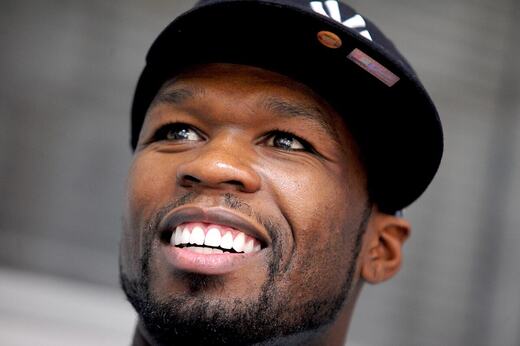
Key worksGet Rich or Die Tryin' (2003), “In Da Club”
2009 · 📷 Nicolas Richoffer / CC BY-SA 4.0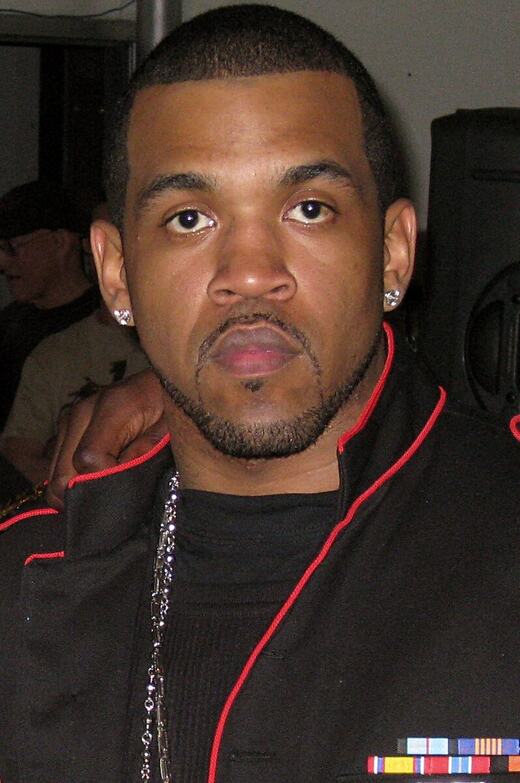
Key worksBeg for Mercy (2003)
📷 East718 (English Wikipedia); derivat… / Public domainKey worksThe College Dropout (2004), My Beautiful Dark Twisted Fantasy (2010)
2008 · 📷 jurvetson / CC BY 2.0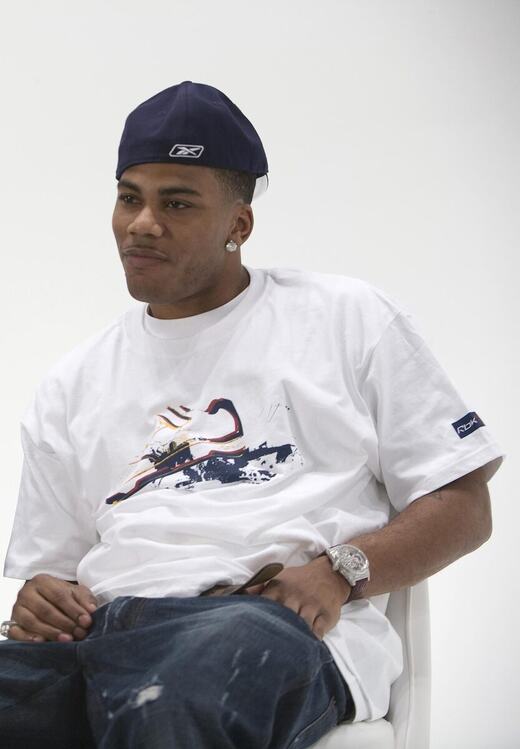
Key worksCountry Grammar (2000), “Hot in Herre”
2007 · 📷 reeb0k2008 / CC BY 2.0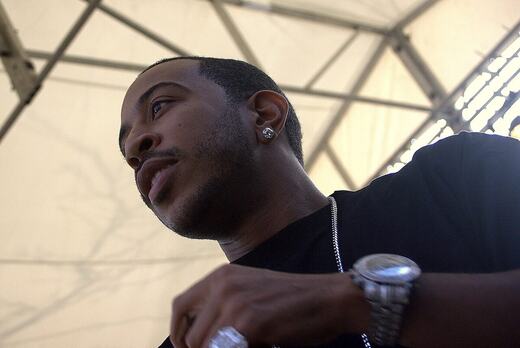
Key worksBack for the First Time (2000)
2009 · 📷 Kelseymariebell / CC BY 3.0Key worksTha Carter III (2008), “A Milli”
2006 · 📷 RJ Shaughnessy (RJ) / Public domain
Key works“Buy U a Drank” (2007)
2019 · 📷 Glenn Francis (PacificProDigital.com) / CC BY-SA 4.0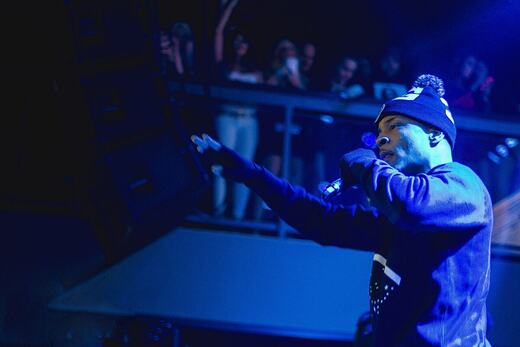
Key worksTrap Muzik (2003), King (2006)
2014 · 📷 Eddy James Rissling / CC BY 2.0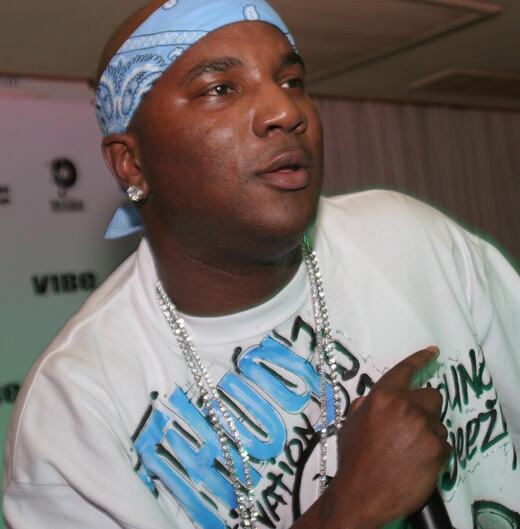
Key worksThug Motivation 101 (2005), “Soul Survivor”
2005 · 📷 Timothy M. Moore / CC BY-SA 3.0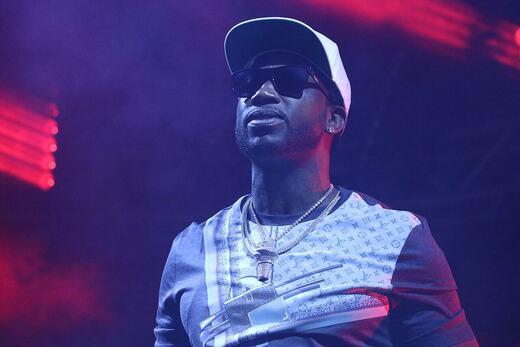
Key worksTrap House (2005), “Lemonade” (2009)
2017 · 📷 Evan Guest / CC BY 2.0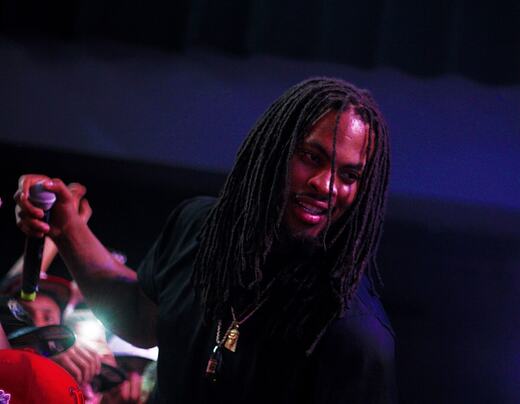
Key works“Hard in da Paint”, Flockaveli (2010)
2014 · 📷 Eddy Rissling for The Come Up Show / CC BY 2.0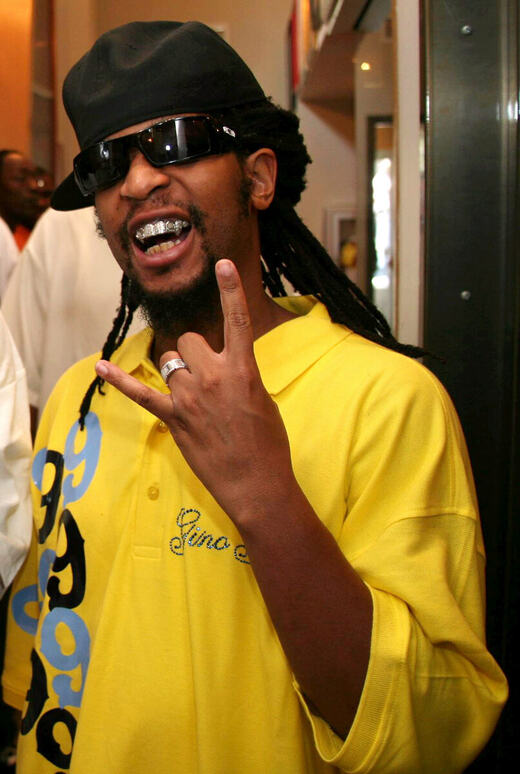
Key works“Get Low” (2003)
2007 · 📷 Gamerscore Blog from USA / CC BY-SA 2.0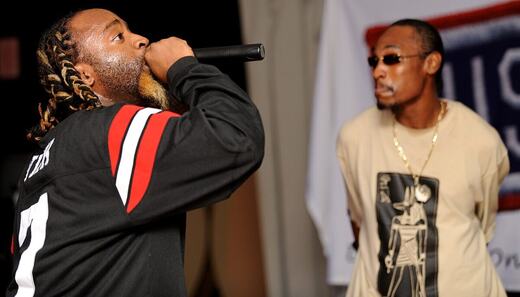
Key works“Wait (The Whisper Song)” (2005)
Kaine (left) and D-Roc, USO show at Thule Air Base, Greenland, 2008 · 📷 Adam M. Stump, U.S. Air Force / Public domain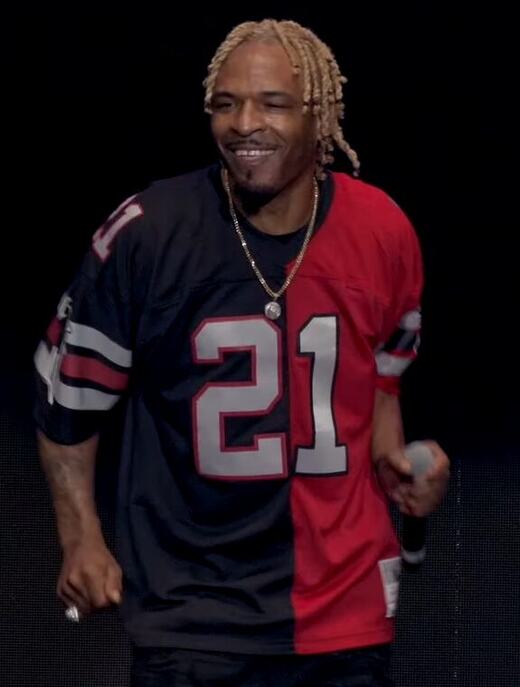
Key works“Laffy Taffy” (2005)
Fabo, 2023 · 📷 HOTSPOTATL / CC BY 3.0
Key worksThe People's Champ (2005)
2005 · 📷 Bradley G. / CC BY 2.0
Key works“Ridin'” (2005)
2008 · 📷 Brian Solis / CC BY 2.0
Key works“Grindin'” (2002), Daytona (2018)
2013 · 📷 Simon Abrams / CC BY-SA 4.0
Key works“Grindin'” (Clipse), “Happy” (2013)
2014 · 📷 Shawn Ahmed / CC BY 2.0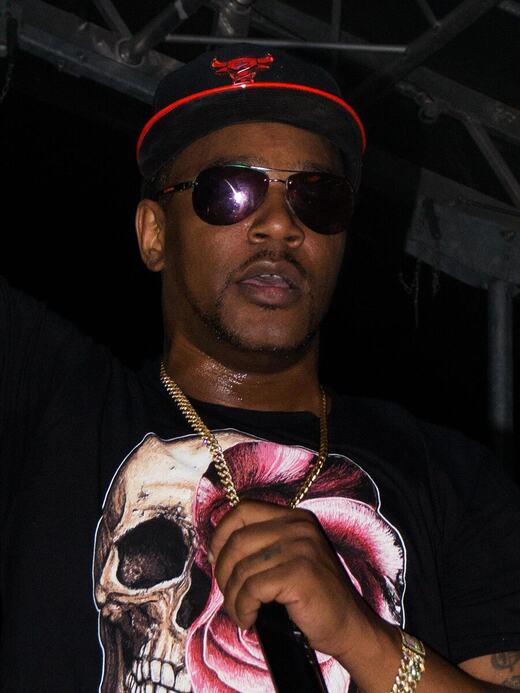
Key worksPurple Haze (2004)
2014 · 📷 fuseboxradio (Flickr) / CC BY-SA 2.0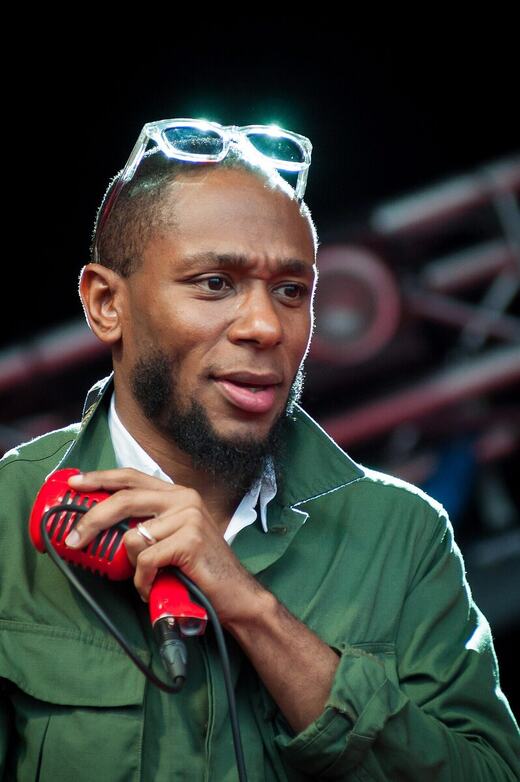
Key worksMos Def & Talib Kweli Are Black Star (1998)
Yasiin Bey, 2012 · 📷 Tuomas Vitikainen / CC BY-SA 3.0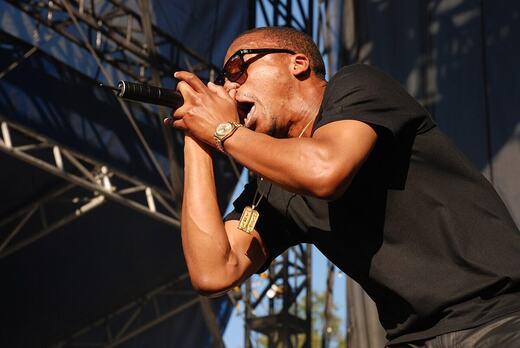
Key worksFood & Liquor (2006), “Kick, Push”
2008 · 📷 Vincent Escudero / CC BY 2.0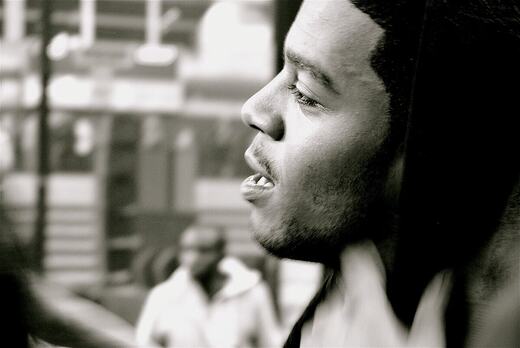
Key worksMan on the Moon: The End of Day (2009)
2009 · 📷 J. Rivera from California, US / CC BY 2.0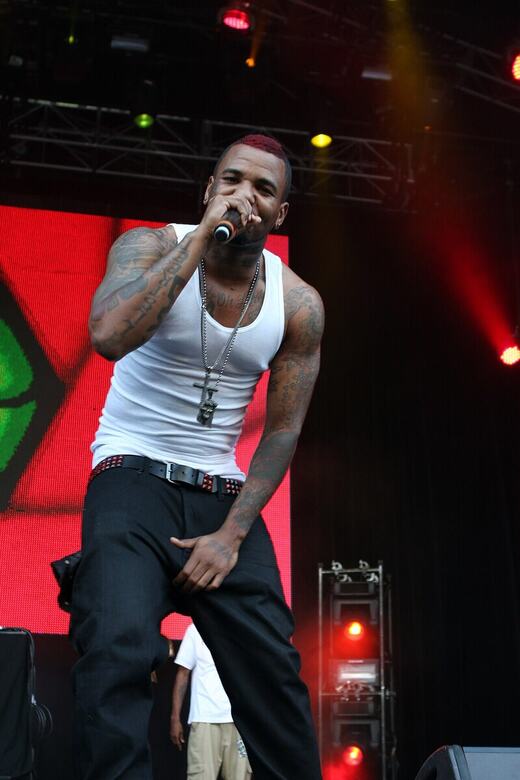
Key worksThe Documentary (2005)
2011 · 📷 Eva Rinaldi / CC BY-SA 2.0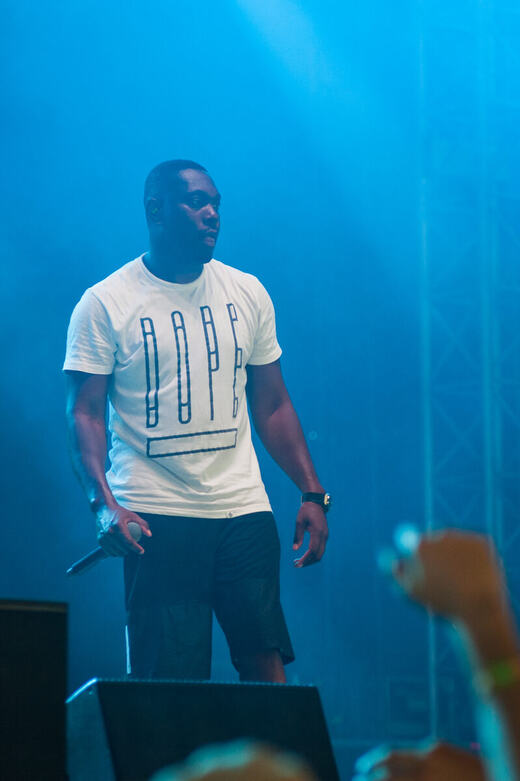
Key worksBoy in da Corner (2003)
2018 · 📷 Tuomas Vitikainen / CC BY-SA 4.0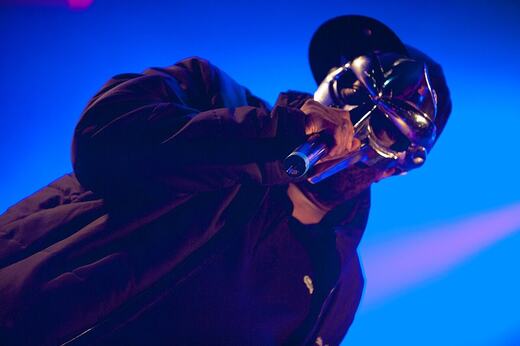
Key worksMadvillainy (2004), Operation: Doomsday (1999)
2011 · 📷 possan / CC BY 2.0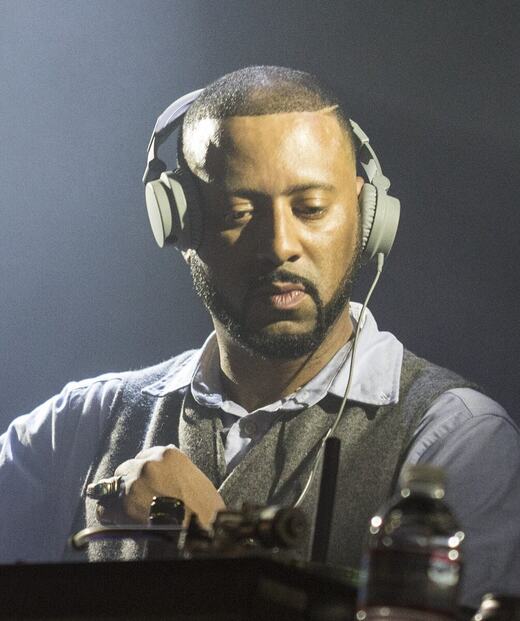
Key worksMadvillainy (2004), Piñata (2014)
2014 · 📷 Carl Pocket / CC BY-SA 2.0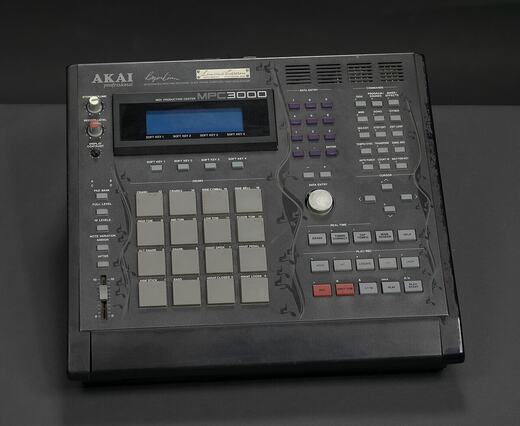
Key worksDonuts (2006), Slum Village's Fantastic, Vol. 2 (2000)
Pictured: J Dilla's own Akai MPC3000 (Smithsonian collection) · 📷 National Museum of African American … / CC0
Key worksVenni Vetti Vecci (1999), Rule 3:36 (2000), “Always on Time” (2001)
2016 · 📷 Web Summit / CC BY 2.0
Key worksSplit Personality (2004), “Hotel” (2003)
2005 · 📷 Timothy M. Moore at https://www.flic… / CC BY-SA 3.0
Key worksThe Truth (2000), The Reason (2001), The B. Coming (2005)
2002 · 📷 User:Mika-photography / CC BY-SA 3.0
Key worksPhiladelphia Freeway (2003), Free at Last (2007)
2008 · 📷 Saquan Stimpson from Newark, DE, USA / CC BY 2.0
Key worksComing of Age (1999), The Understanding (2000), M.A.D.E. (2003)
1998 · 📷 Mikamote / CC BY-SA 3.0
Key worksState Property (2002), The Chain Gang Vol. 2 (2003), “Roc the Mic” (2002)
2002 · 📷 User:Mika-photography / CC BY-SA 3.0
Key worksJoe Budden (2003), “Pump It Up” (2003)
2010 · 📷 InkwellDesignGroup / CC BY 2.0
Key worksThe Nacirema Dream (2013), “Alphabetical Slaughter”
2013 · 📷 Coup d'Oreille / CC BY-SA 2.0
Key worksThere's Something About Remy (2006), “Lean Back” (2004), “All the Way Up” (2016)
2005 · 📷 Timothy M. Moore at https://www.flic… / CC BY-SA 3.0
Key worksBook of Thugs (2000), Thugs Are Us (2001), “Let's Go” (2004)
2015 · 📷 Kwan Wallace (KJW Photography) / CC BY 2.0
Key worksBad Azz (2006), Superbad: The Return of Boosie Bad Azz (2009), “Wipe Me Down” (2007)
Lil Boosie, 2014 · 📷 TrillEntCMG / CC BY-SA 3.0
Key worksMail on Sunday (2008), “Low” (2007), “Right Round” (2009)
2026 · 📷 Gage Skidmore / CC BY-SA 4.0
Key worksTrouble (2004), Konvicted (2006), “Smack That” (2006)
2019 · 📷 Collision Conf / CC BY 2.0
Key worksM.I.A.M.I. (2004), Dale (2015), “I Know You Want Me (Calle Ocho)” (2009)
2012 · 📷 Eva Rinaldi / CC BY-SA 2.0
Key worksAnghellic (2001), Everready (The Religion) (2006), All 6's and 7's (2011)
2006 · 📷 Mizery Made / CC BY-SA 3.0
Key worksWatermelon, Chicken & Gritz (2002), “Po' Folks” (2002)
2005 · 📷 Simon Law (sfllaw) / CC BY-SA 2.0Key works“Crank That (Soulja Boy)” (2007)
Key worksPort of Miami (2006), “B.M.F.” (2010)
Key works“Still Tippin'” (2004)
Key worksThe Greatest Story Never Told (2011)
Key worksSavage Life (2005), Savage Life 2 (2008), “Independent” (2007)
Key worksThe Real Testament (2007), “Shawty” (2007), “Bust It Baby Pt. 2” (2008)
PLAY / 2000s43
STREAMING & TRAP / THE TRAP ERA
2010s
Streaming kicked the doors open, and hip-hop became the most-listened-to music in America
Drake, Kendrick, Migos, Future, Travis Scott, Lil Uzi Vert. When the way people listened changed, the sound and the words changed with it.
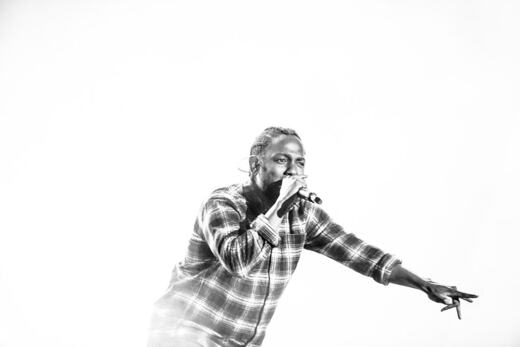
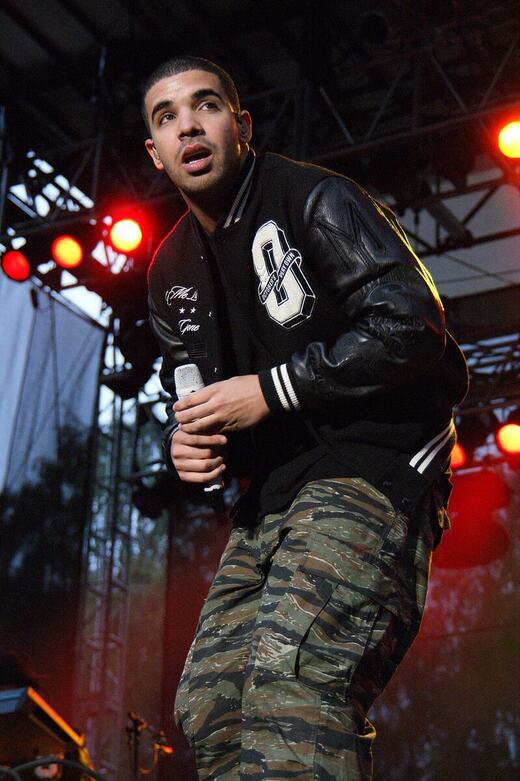
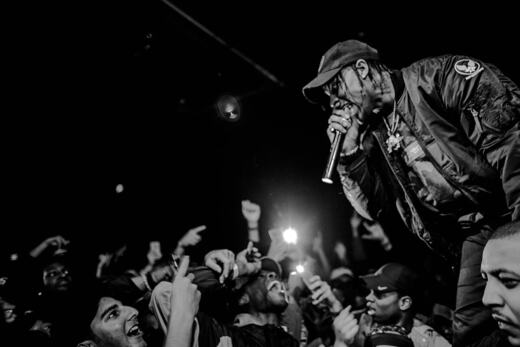
2017Hip-hop/R&B becomes the most-listened-to genre in the US (per Nielsen)
2018Kendrick Lamar's DAMN. wins the Pulitzer Prize for Music
19 wksConsecutive weeks Lil Nas X's “Old Town Road” spent at No. 1 in the US (2019)
The biggest shift of the 2010s was how people listened. Spotify, Apple Music, YouTube, SoundCloud. Once everybody could skip buying CDs and get hundreds of millions of songs for a monthly fee, it mattered less whether an album held you front to back and more whether it had an opening intro strong enough to grab you, plus a mood that made people want to drop it into a playlist. In 2017, Nielsen's numbers showed hip-hop/R&B had passed rock as the most-listened-to genre in the US. A culture that started as street-corner fun had become the world's mainstream.
Drake and Kendrick: Two Peaks
Toronto's Drake came in with an unlikely backstory, a former child actor, and broke through with his 2009 mixtape So Far Gone. He slid between rapping and singing like it was nothing and laid his insecurities and anxieties bare, taking the door Kanye had opened and pushing that style straight into the mass market. Take Care (2011), “Started from the Bottom” (2013), “Hotline Bling” (2015), “One Dance” (2016). As one of the most-streamed artists of the streaming era, he stayed a permanent fixture on the charts.
Compton's Kendrick Lamar was the opposite: a rapper who built an album like a film. good kid, m.A.A.d city (2012) told the story of his own youth. To Pimp a Butterfly (2015) threw jazz, funk and spoken word at Black history and self-hatred. Its track “Alright” became an anthem people sang in the movement protesting police violence. Then DAMN. (2017) became, the following year, the first work outside classical and jazz ever awarded the Pulitzer Prize for Music. Rap had reached one of the most prestigious cultural honors in America.
There was Chance the Rapper, who stayed independent, shook the world with free mixtapes and, with 2016's Coloring Book, became the first streaming-only release to win a Grammy (Best Rap Album). And there was Cardi B, whose “Bodak Yellow” (2017) made her the first woman rapper since Lauryn Hill to top the US chart with a solo song. Over this decade, the roads to stardom multiplied.
Trap Takes Over the World
Trap, which grew up in Atlanta in the 2000s, became the global standard over this decade. One of the sparks was producer Lex Luger. The over-the-top orchestral synths and carpet-bombing 808s he unleashed on Waka Flocka Flame's “Hard in da Paint” and Rick Ross's “B.M.F.” defined “the trap sound” in a way anybody could recognize instantly.
Then in 2013, Migos, a trio from the Atlanta suburbs, saw “Versace” blow up off a Drake remix. A triplet flow that almost sounds like a melody (the so-called “Migos flow”), ad-libs that land like call-and-response, bouncing hi-hats. In 2017, “Bad and Boujee” went No. 1 on the US singles chart, and the album Culture hit No. 1 in the US too. Their success stretched the yardstick for rap skill from “clever rhymes” to “bounce and addictiveness.” (Member Takeoff died in 2022.)
From around DS2 (2015), Future laid loneliness and drug dependency over a voice warped by Auto-Tune, widening trap's emotional range. The flute loop on “Mask Off” (2017) became one of the defining melodies of modern hip-hop. Young Thug showed a new way to build a hook, swinging his pitch wherever he pleased and leaning on the texture of his voice more than the meaning of the words. Travis Scott's Astroworld (2018) was laid out like an amusement park, the beat switching again and again inside a single song, turning the whole album into entertainment. “Sicko Mode” (2018) is one of its high-water marks.
The genre lines kept disappearing. Lil Uzi Vert brought a rock and emo sensibility into trap (“XO Tour Llif3,” 2017). Post Malone moved between singing, rapping and rock all by himself. Lil Nas X's “Old Town Road” (2019) mixed country with trap and sat at No. 1 in the US for 19 straight weeks (the longest run ever at the time). Out of Baton Rouge, NBA YoungBoy built a fanatical following with jaw-dropping output and melodic street rap that wore its emotions raw.
The decade also lost too many, too young. XXXTentacion (2018, age 20), Mac Miller (2018, age 26), Juice WRLD (2019, age 21). Young talent went from SoundCloud to stardom overnight, but the support for dealing with that pressure and with addiction just wasn't there yet.
“Can't understand a word they're saying.” Grown-ups once said the exact same thing about rap itself.
How to Read the “Mumble Rap” Debate
Once trap took over the mainstream, older generations pushed back: “You can't make out the lyrics,” “It's all vibes.” If you came up on Nas's Illmatic, that reaction makes sense. But trap isn't music that stands on lyrical skill alone. Vocal tone, ad-libs, melody, the way the voice locks into the beat: think of it as a culture that uses the voice itself as an instrument, and the picture changes. The spirit of “making something out of nothing, with only what you've got” is alive and well here, too.
Meanwhile in Chicago, Chief Keef's “I Don't Like” (2012) put dark, aggressive “drill” on the world's radar, and it later spread to London and Brooklyn. The boom-bap tradition never died either. New York's Joey Bada$$ and Buffalo's Griselda crew carried that grimy '90s sound straight into the present.
SoundCloud, Going Viral, and the New Proving Ground
In the 2010s, new artists got picked by SoundCloud play counts before any label ever vetted them. Launched in 2007, the platform became a place where anyone could post a song recorded in their bedroom, and from around 2015 it fed a fast-moving scene known as “SoundCloud rap.” XXL's annual “Freshman Class” (2007–) worked as a kind of report card on who the year's new faces were.
Dances and videos gave songs a push, too. In 2019, Lil Nas X's breakout went worldwide with TikTok shares as the spark. Whether the first 15 seconds of a song would get used started to be on producers' minds from the moment they made it. Being impossible to stop in the first few seconds became worth more than getting people to listen from track one of the album. That's one of the reasons 2010s trap got faster, shorter and more addictive.
ARTISTS / 2010s86
Key worksTake Care (2011), “One Dance” (2016)
2010 · 📷 musicisentropy / CC BY-SA 2.0Key worksgood kid, m.A.A.d city (2012), To Pimp a Butterfly (2015)
2016 · 📷 Batiste Safont / CC BY-SA 4.0
Key works2014 Forest Hills Drive (2014)
2010 · 📷 H D / CC BY 2.0
Key worksPink Friday (2010), “Super Bass” (2011)
2012 · 📷 Rory from Glasgow, United Kingdom / CC BY 2.0
Key worksDark Sky Paradise (2015)
2015 · 📷 The Come Up Show / CC BY 2.0
Key worksDreams and Nightmares (2012)
2015 · 📷 Chris Sikich from Philadelphia, USA / CC BY-SA 2.0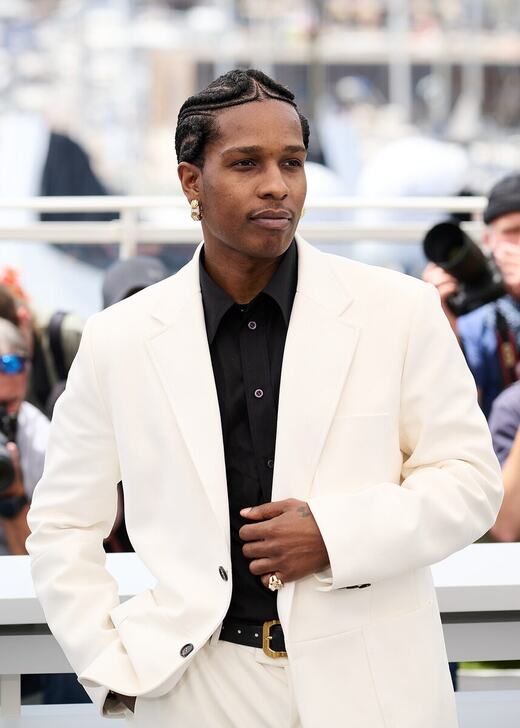
Key worksLong.Live.A$AP (2013)
2025 · 📷 Gabriel Hutchinson / CC BY-SA 4.0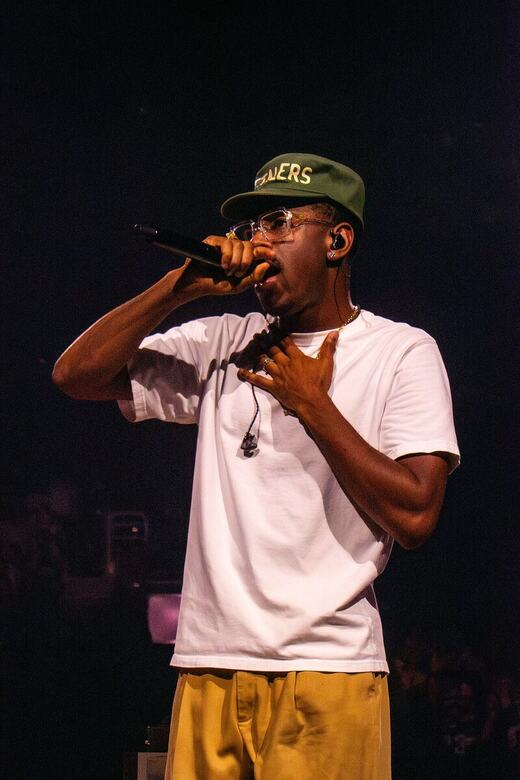
Key worksIgor (2019), Call Me If You Get Lost (2021)
2025 · 📷 Lygonstreet / CC BY-SA 4.0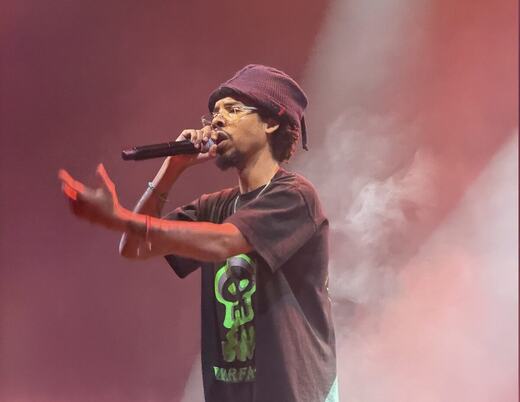
Key worksSome Rap Songs (2018)
2026 · 📷 414.Elis / CC BY 4.0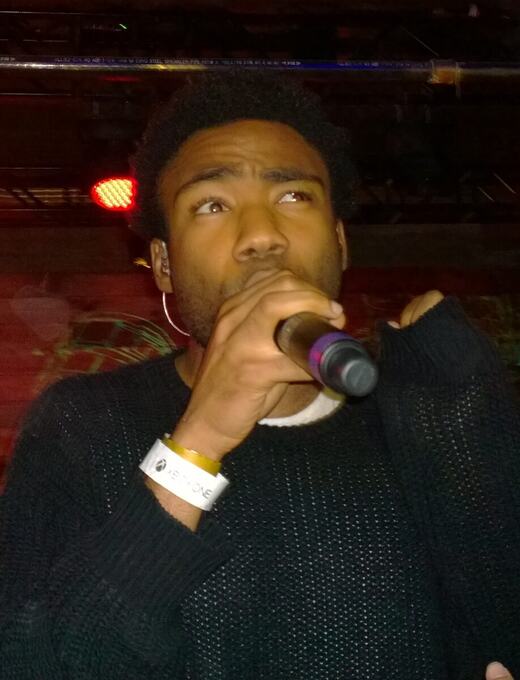
Key works“This Is America” (2018)
2014 · 📷 Daniel Benavides / CC BY 2.0
Key works1999 (2012)
2017 · 📷 The Come Up Show / CC BY 2.5
Key worksRun the Jewels 2 (2014)
2014 · 📷 Treefort Music Fest / CC BY 2.0
Key worksXXX (2011)
2017 · 📷 Julio Enriquez from Denver,CO, USA / CC BY 2.0
Key worksAcid Rap (2013), Coloring Book (2016)
2017 · 📷 Julio Enriquez / CC BY 2.0
Key worksOxymoron (2014)
2012 · 📷 DJ Teck / CC BY 2.0
Key worksSummertime '06 (2015)
2015 · 📷 Tse Daniel for The Come Up Show / CC BY 2.0
Key worksSwimming (2018)
2017 · 📷 Nicolas Völcker / CC BY-SA 4.0
Key worksCulture (2017), “Bad and Boujee”
Quavo, Takeoff, Offset, 2017 · 📷 The Come Up Show (Charito Yap) / CC BY 2.0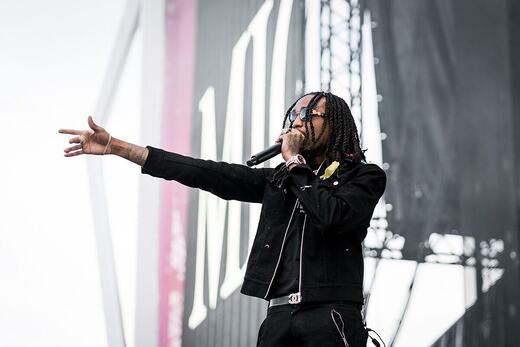
Key works“Bad and Boujee”, Quavo Huncho (2018)
2018 · 📷 Jørund Føreland Pedersen / CC BY-SA 4.0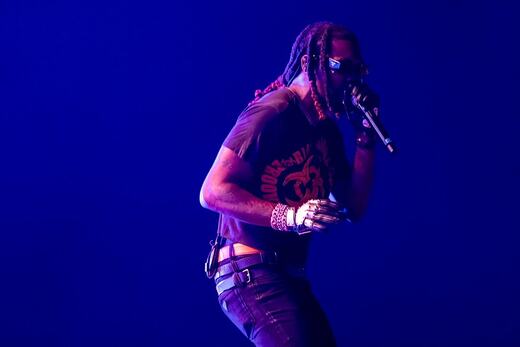
Key worksFather of 4 (2019)
2024 · 📷 Wojciech Pędzich / CC BY 4.0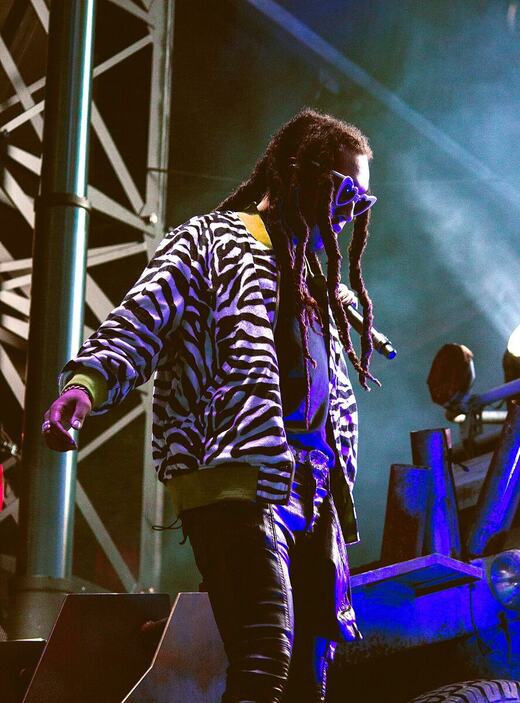
Key worksThe Last Rocket (2018)
2017 · 📷 The Come Up Show (Charito Yap) / CC BY 2.0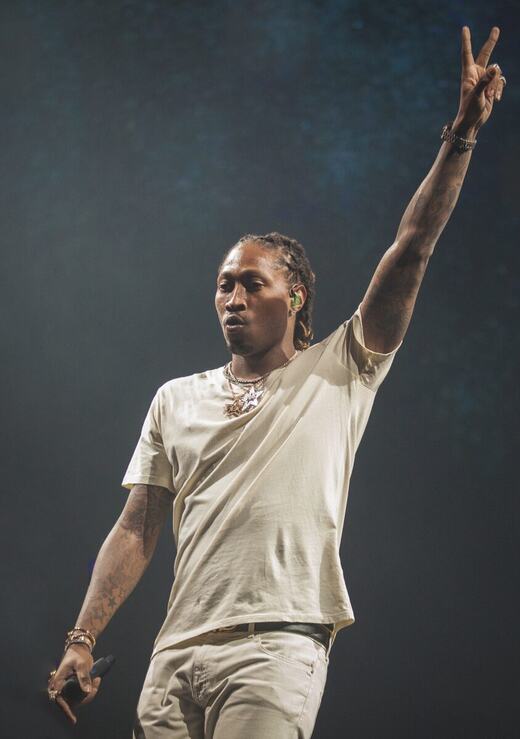
Key worksDS2 (2015), “Mask Off” (2017)
2016 · 📷 The Come Up Show / CC BY 4.0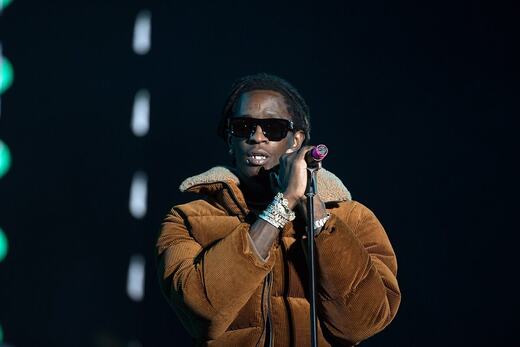
Key worksBarter 6 (2015), “Best Friend”
2019 · 📷 Frank Schwichtenberg / CC BY-SA 4.0Key worksAstroworld (2018), “Sicko Mode”
2016 · 📷 Brandon Dull / CC BY 2.0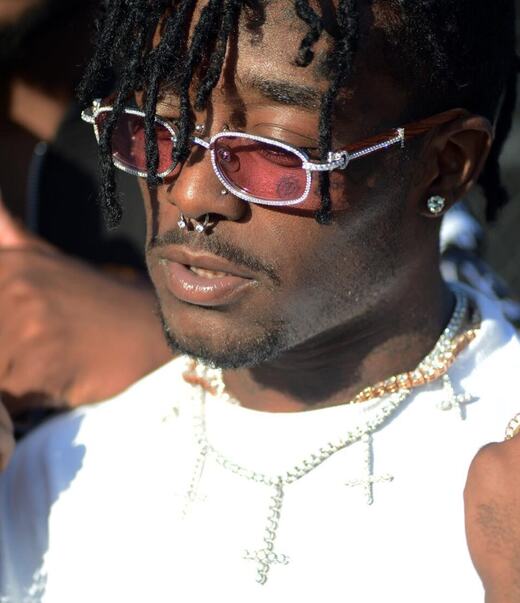
Key worksLuv Is Rage 2 (2017), “XO Tour Llif3”
2017 · 📷 Frank Morales / CC BY-SA 4.0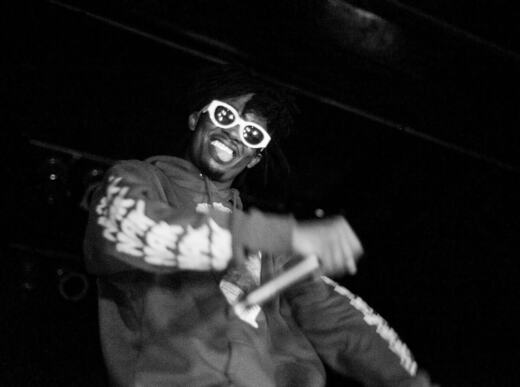
Key worksDie Lit (2018), Whole Lotta Red (2020)
2016 · 📷 The Come Up Show / CC BY 2.0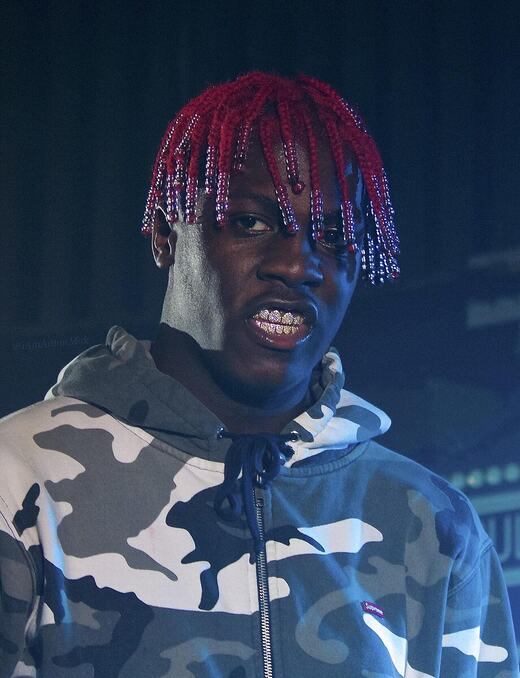
Key works“Minnesota” (2016)
2016 · 📷 Anton Mak / CC BY 2.0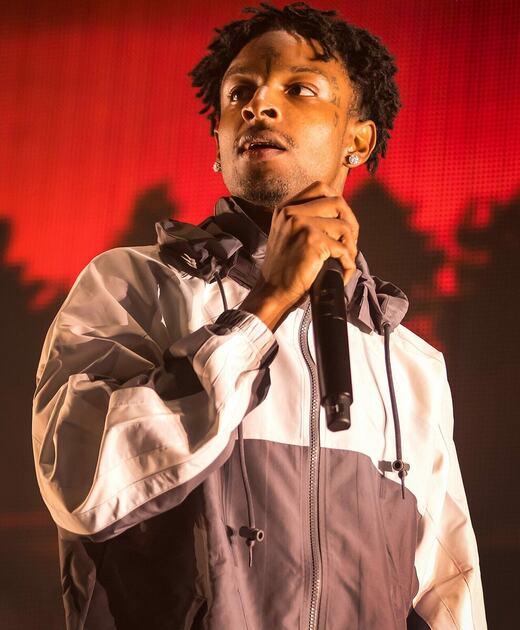
Key worksSavage Mode (2016), “a lot”
2018 · 📷 Ralph Arvesen / CC BY 2.0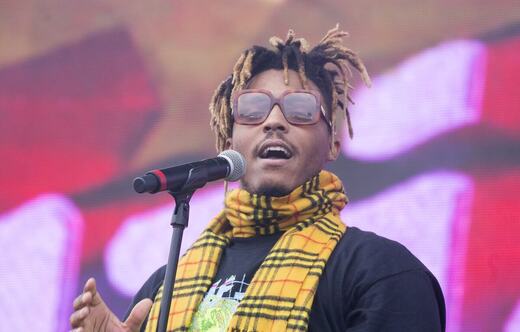
Key worksGoodbye & Good Riddance (2018)
2019 · 📷 Andy Jones / CC BY-SA 2.0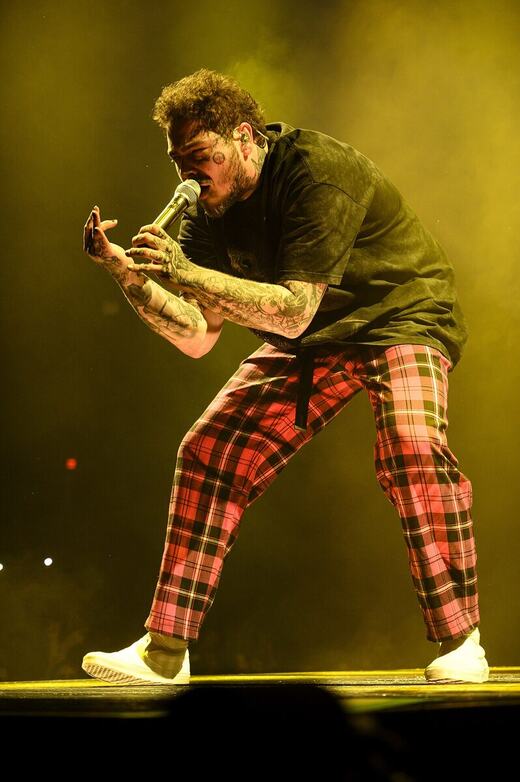
Key worksBeerbongs & Bentleys (2018), “rockstar”
2020 · 📷 Adam Bielawski / CC BY-SA 4.0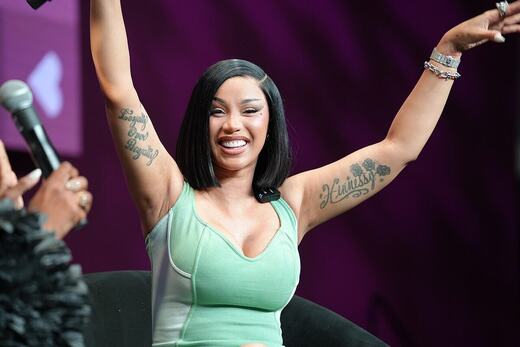
Key worksInvasion of Privacy (2018)
2026 · 📷 Runawaymo / CC BY-SA 4.0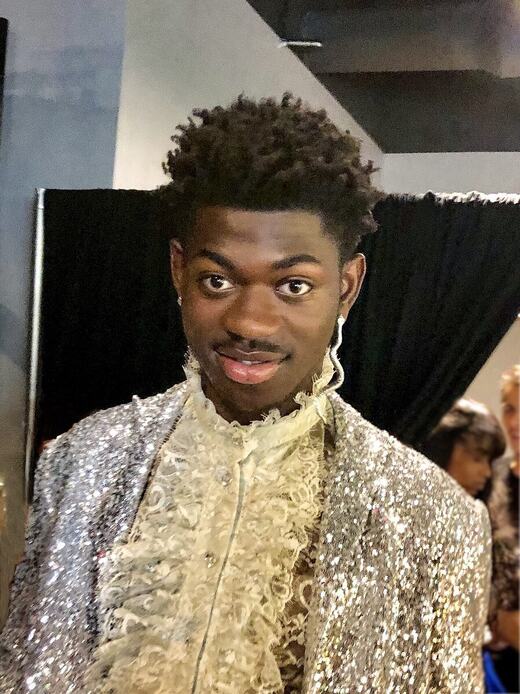
Key works“Old Town Road” (2019)
2019 · 📷 Fabebk / CC BY-SA 4.0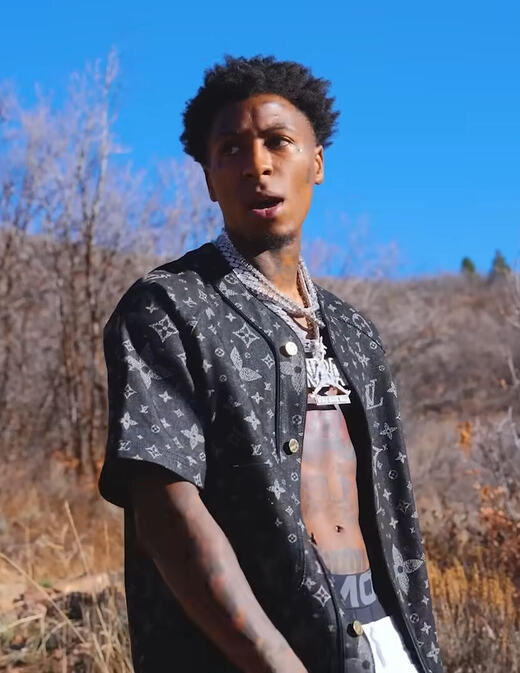
Key worksTop (2020), “Outside Today”
2023 · 📷 Million Dollaz Worth of Game / CC BY 3.0
Key works“Tunnel Vision” (2017)
2018 · 📷 Chrisallmeid / CC BY-SA 4.0
Key works“Rockstar” (2020)
2023 · 📷 HOTSPOTATL / CC BY 3.0
Key works“I Don't Like” (2012)
2019 · 📷 glenjamn3 / CC BY 3.0
Key works“Versace” (Migos)
2025 · 📷 Vbrunophotog / CC BY-SA 4.0
Key works“Rack City” (Tyga), “Not Like Us”
2019 · 📷 Toglenn / CC BY-SA 4.0
Key works“Black Beatles” (2016)
2015 · 📷 The Come Up Show / CC BY 2.0
Key works“Trap Queen” (2014)
2019 · 📷 Bs.Ballout / CC BY 3.0
Key worksGang Signs & Prayer (2017)
2022 · 📷 Raph_PH / CC BY 2.0
Key worksMajor Key (2016), “All I Do Is Win” (2010), “I'm the One” (2017)
2012 · 📷 Meghan Roberts / CC BY 2.0
Key worksRolling Papers (2011), “Black and Yellow” (2010), “See You Again” (2015)
2023 · 📷 Rickmunroe01 / CC BY-SA 4.0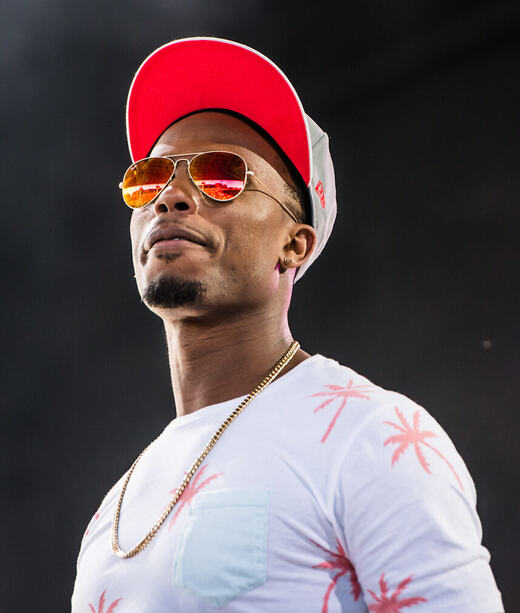
Key worksThe Adventures of Bobby Ray (2010), “Nothin' on You” (2010), “Airplanes” (2010)
2013 · 📷 The Come Up Show / CC BY 2.0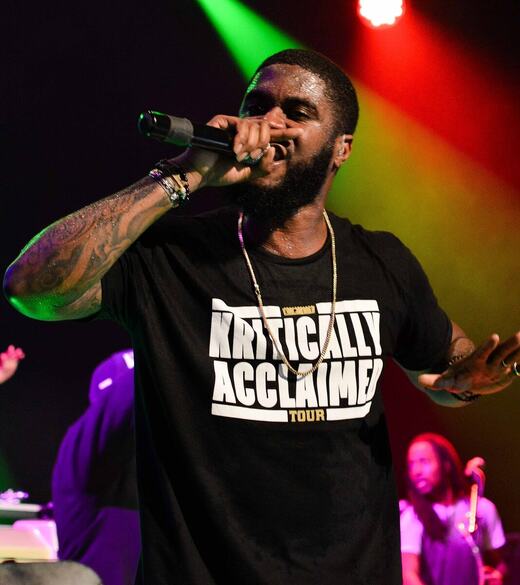
Key worksReturn of 4Eva (2011), Live from the Underground (2012), Cadillactica (2014)
2015 · 📷 Usfjrain / CC BY-SA 4.0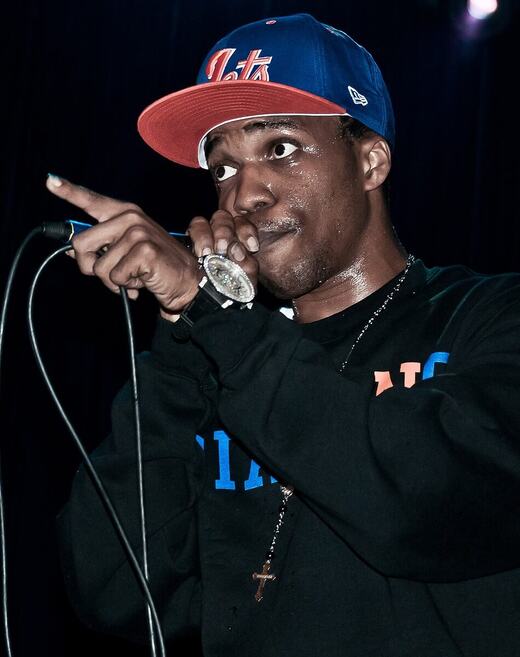
Key worksPilot Talk (2010), Covert Coup (2011), The Stoned Immaculate (2012)
2010 · 📷 thecomeupshow / CC BY 2.0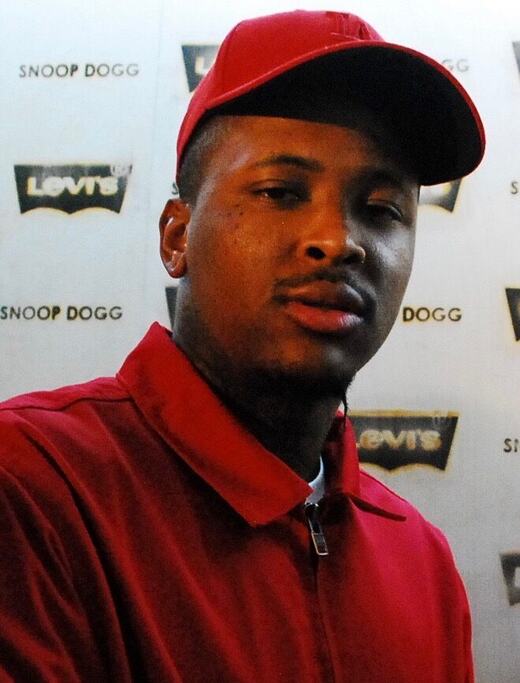
Key worksMy Krazy Life (2014), Still Brazy (2016), “FDT” (2016)
2015 · 📷 Connie Lodge / CC BY-SA 2.0
Key worksVictory Lap (2018), Crenshaw (2013), The Marathon (2010)
2009 · 📷 Adam Bielawski / CC BY-SA 3.0
Key works“Vans” (2006), I'm Gay (I'm Happy) (2011)
2011 · 📷 https://www.flickr.com/photos/genera… / CC BY 2.0
Key worksLace Up (2012), Tickets to My Downfall (2020), “Bad Things” (2016)
2018 · 📷 Paulien Zomer / CC BY-SA 4.0
Key worksKnock Madness (2013), Pound Syndrome (2015), “Ill Mind of Hopsin 5” (2012)
2013 · 📷 thecomeupshow / CC BY 2.0
Key worksThe Incredible True Story (2015), Everybody (2017), “1-800-273-8255” (2017)
2018 · 📷 Julio Enriquez from Denver,CO, USA / CC BY 2.0
Key worksThere's Really a Wolf (2017), “Losin Control”
2025 · 📷 TorontoPhoto9290 / CC0
Key worksThe Heist (2012), “Thrift Shop” (2012), “Can't Hold Us” (2011)
2011 · 📷 Christopher Dube / CC BY-SA 3.0
Key worksProfessional Rapper (2015), “Freaky Friday” (2018), “Earth” (2019)
2015 · 📷 Kayla Johnson / CC BY 2.0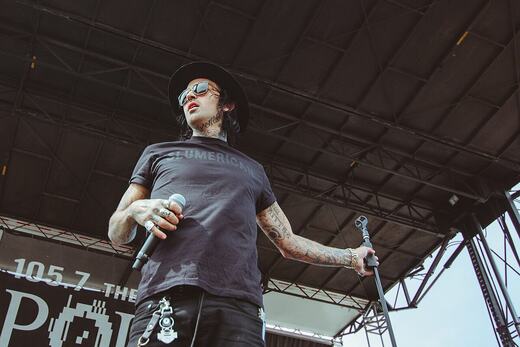
Key worksTrunk Muzik (2010), Radioactive (2011), Trial by Fire (2017)
2015 · 📷 Abby Gillardi / CC BY 2.0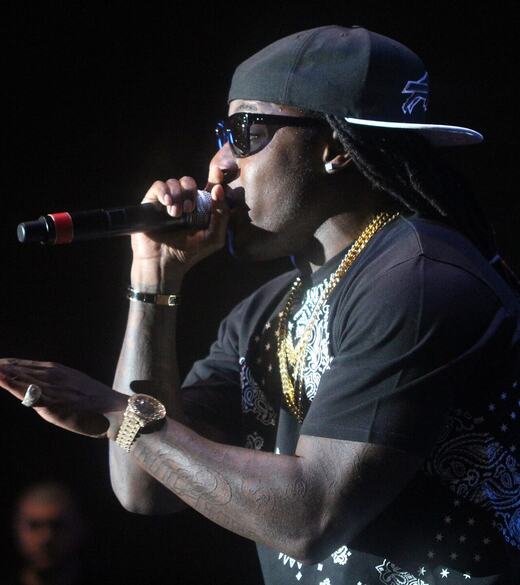
Key worksGutta (2008), Blood, Sweat & Tears (2011), “Bugatti” (2013)
2013 · 📷 Chad Cooper / CC BY 2.0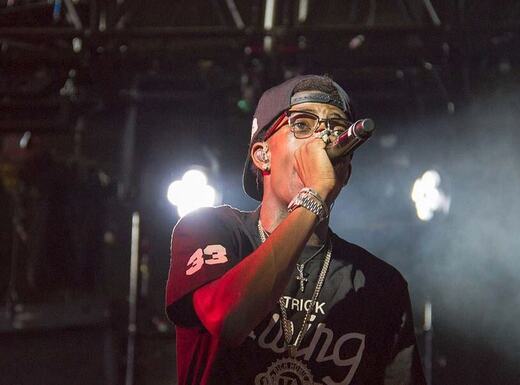
Key works“Type of Way” (2013), “Flex (Ooh, Ooh, Ooh)” (2015), Rich as in Spirit (2018)
2014 · 📷 The Come Up Show / CC BY 2.0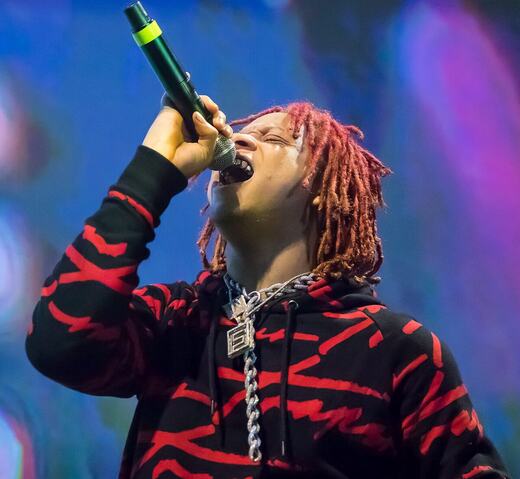
Key worksA Love Letter to You 4 (2019), Life's a Trip (2018), “Love Scars”
2018 · 📷 Ralph Arvesen / CC BY 2.0
Key worksLife of a Dark Rose (2018), Shelby (2019), “Nowadays” (2017)
2019 · 📷 Julio Enriquez from Denver,CO, USA / CC BY 2.0
Key worksDeadstar (2017), “Audi” (2017)
2018 · 📷 The Come Up Show / CC BY 2.0
Key works“Rubbin Off the Paint” (2017), YBN: The Mixtape (2018)
2018 · 📷 The Come Up Show from Canada / CC BY 2.0
Key works“Thotiana” (2018), Famous Cryp (2018)
2020 · 📷 MILLION DOLLAS WORTH OF GAME / CC BY 3.0
Key worksTrue 2 Myself (2019), “Pop Out” (2019), “Calling My Phone” (2021)
2019 · 📷 Bearian / CC BY-SA 4.0
Key worksTop Shotta (2020), “Shotta Flow” (2019)
2019 · 📷 WikiWikiSkylar / CC BY-SA 4.0
Key worksGirl Code (2018), “Act Up” (2018), “Twerk” (2018)
Yung Miami (left) and JT, July 2018 · 📷 Cntrl+Alt+Delete / CC BY 3.0
Key works“Icy Grl” (2017), “My Type” (2019)
2021 · 📷 Amywesson / CC BY-SA 4.0
Key worksThe Bigger Artist (2017), Hoodie SZN (2018), “Look Back at It” (2018)
2017 · 📷 Curtis Huynh for The Come Up Show / CC BY 2.0
Key worksThe World Is Yours (2018), “New Freezer” (2017), “Plug Walk” (2018)
2019 · 📷 Frank Schwichtenberg / CC BY-SA 4.0
Key worksVeteran (2018), All My Heroes Are Cornballs (2019), Scaring the Hoes (2023)
2019 · 📷 Levi Manchak / CC BY 2.0
Key worksInjury Reserve (2019), By the Time I Get to Phoenix (2021)
2018 · 📷 The Come Up Show from Canada / CC BY 2.0
Key worksMirrorland (2019), Ghetto Gods (2022)
2016 · 📷 The Come Up Show / CC BY 2.0
Key worksLaila's Wisdom (2017), Eve (2019), “3:AM” (2024)
2014 · 📷 Coup d'Oreille / CC BY-SA 2.0
Key worksblkswn (2017), NOIR (2018), Luv 4 Rent (2022)
2016 · 📷 The Come Up Show / CC BY 2.0
Key worksCilvia Demo (2014), The Sun's Tirade (2016), The House Is Burning (2021)
2017 · 📷 The Come Up Show / CC BY 2.0
Key worksThe Lost Boy (2019), “Bad Idea” (2019)
2019 · 📷 Frank Schwichtenberg / CC BY-SA 4.0
Key worksB.I.B.L.E. (2022), “Big Drip” (2019), “City of Gods” (2022)
2023 · 📷 Mixtape Madness / CC BY 3.0Key works17 (2017), “SAD!”
Key worksHeroes & Villains (2022)
Key worksYou Will Regret (2017), Stokeley (2018), “Catch Me Outside”
Key worksDie a Legend (2019), “Pop Out” (2019), “Rapstar” (2021)
Key worksFederal 3X (2017), A Gangsta's Pain (2021)
Key worksCertified Hitmaker (2019), “Noticed” (2018), “Blueberry Faygo” (2020)
Key worksControl the Streets, Volume 1 (2017), Control the Streets, Volume 2 (2019)
Key worksHood Baby (2018), Top Chef Gotit (2021)
Key worksParaffin (2018), Haram (2021), We Buy Diabetic Test Strips (2023)
PLAY / 2010s82
NOW / TODAY
2020s
Past 50, and branching out all over the world at once
Beef is one of hip-hop's oldest games. The fire that flared up in 2024 reached all the way to the Grammys and the Super Bowl in 2025.
By the 2020s, hip-hop wasn't “one genre” anymore. It had become a massive common language, evolving its own way in cities all over the world. In Brooklyn and London, there's drill with its menacing bass (Pop Smoke's “Welcome to the Party,” 2019, became the emblem of Brooklyn drill; he died in 2020, at 20). In the Latin world it blended with reggaeton, in Africa it linked up with Afrobeats, and Korea and Japan grew their own scenes. At the same time, the very definition of “live” got wider, with in-game concerts during the pandemic (Travis Scott's Fortnite concert pulled in over 10 million people at once for the first show alone).
2023 marked 50 years since hip-hop was born. New York threw anniversary events, and the Grammys staged a massive tribute that brought together everyone from Grandmaster Flash, Run-DMC, Rakim and Busta Rhymes to Lil Wayne, Future and rappers from across the generations. The night that started in a Bronx rec room in 1973 was being celebrated on the world's center stage.
Kendrick vs. Drake, and “Not Like Us”
In 2024, the clash between Kendrick Lamar and Drake reminded everyone that hip-hop is still a full-contact sport. It was set off by a Kendrick verse on Future & Metro Boomin's “Like That,” and the two traded diss tracks in rapid fire. Kendrick's “Not Like Us,” released in May, rode a bouncing beat from LA's own producer Mustard and blasted everywhere: West Coast clubs, house parties, sporting events.
At the 2025 Grammys, the song won five awards, including Record of the Year and Song of the Year. Then Kendrick headlined the Super Bowl halftime show that followed (February 2025). You could say the old culture of going at each other with words, running all the way back to the 1980s “Bridge Wars,” got its blessing on the biggest stage on earth.
We're living in the sequel. The break loop that rang out in the Bronx 50 years ago now lives inside our phones, on SoundCloud, TikTok and YouTube, still pulling new voices out of bedrooms somewhere in the world. This story isn't finished yet.
The 2020s So Far: Where They're At
- Drake Certified Lover Boy (2021), then a house-leaning turn on Honestly, Nevermind (2022), and Her Loss (2022) with 21 Savage made plenty of noise too.
- Kendrick Lamar Mr. Morale & the Big Steppers (2022), then GNX, dropped out of nowhere in 2024. Even with the beef raging, he keeps widening his range.
- Travis Scott Utopia (2023) went No. 1 in the US. Building a whole world out of his live shows and visuals, he's still on the front line.
- Future & Metro Boomin Dropped We Don't Trust You and We Still Don't Trust You back to back in 2024, a pair of collabs that capture exactly where trap stands right now.
- Tyler, the Creator Won a Grammy for Call Me If You Get Lost (2021), and Chromakopia (2024) also hit No. 1 in the US.
- Playboi Carti After Whole Lotta Red (2020), a long silence before the new album MUSIC (2025), and every time, he owned the conversation.
ARTISTS / 2020s39
Key worksMy Turn (2020), “The Bigger Picture”
2019 · 📷 Frank Schwichtenberg / CC BY-SA 4.0Key works“The Box” (2019), Please Excuse Me for Being Antisocial (2019)
2022 · 📷 Million Dollaz Worth of Game / CC BY 3.0Key works“Savage” (2020), “WAP” (2020)
2022 · 📷 Valerie Albert / CC BY-SA 4.0
Key worksDrip or Drown 2 (2019), DS4EVER (2022)
2019 · 📷 Frank Schwichtenberg / CC BY-SA 4.0
Key worksAlmost Healed (2022)
2022 · 📷 JD Sports / CC BY 3.0
Key works“Munch (Feelin' U)” (2022)
2024 · 📷 Raph_PH / CC BY 2.0
Key works“F.N.F. (Let's Go)” (2022)
2025 · 📷 Cameron Woods / CC BY-SA 4.0
Key works“Big Energy” (2021)
2024 · 📷 HOTSPOTATL / CC BY 3.0
Key worksAlligator Bites Never Heal (2024)
2022 · 📷 Josh Berendes (@brende_films) / CC BY 3.0
Key works“family ties” (2021)
2022 · 📷 Joseph Higgins / CC BY 2.0
Key worksMelt My Eyez, See Your Future (2022)
2017 · 📷 friedoxygen / CC BY 2.0
Key worksHeaven or Hell (2020)
2021 · 📷 Sanchez Productions / CC BY-SA 4.0
Key works“Doja” (2022)
2023 · 📷 200izo / CC BY-SA 4.0
Key worksPsychodrama (2019)
2019 · 📷 SamuelWren98 / CC BY-SA 4.0
Key worksPiñata (2014), Alfredo (2020)
2014 · 📷 Carl Pocket / CC BY-SA 2.0
Key worksHell on Earth (2017)
Conway the Machine, 2022 · 📷 SUPA CINDY / CC BY 3.0
Key worksUn Verano Sin Ti (2022)
2019 · 📷 Toglenn / CC BY-SA 4.0
Key worksHot Pink (2019), Planet Her (2021), “Say So” (2019)
2024 · 📷 Raph_PH / CC BY 2.0
Key worksTrendsetter (2022), “No More Parties” (2021), “Players” (2022)
2026 · 📷 Runawaymo / CC BY-SA 4.0
Key worksHood Hottest Princess (2023), “Pound Town” (2023), “SkeeYee” (2023)
2023 · 📷 MILLION DOLLAZ WORTH OF GAME / CC BY 3.0
Key worksFor Certain (2020), “Whole Lotta Money” (2021)
2017 · 📷 Emma / CC BY-SA 2.0
Key worksHo, Why Is You Here? (2020), “In the Party” (2019), “Never Lose Me” (2023)
2024 · 📷 HOTSPOTATL / CC BY 3.0
Key worksIf Looks Could Kill (2023), Love Lasts Forever (2024)
2024 · 📷 Wojciech Pędzich / CC BY 4.0
Key worksWho Is Nardo Wick? (2021), “Who Want Smoke??” (2021)
2022 · 📷 HOTSPOTATL / CC BY 3.0
Key worksTake Care (2024), I Hope You're Happy (2025), “All the Way” (2025)
2023 · 📷 BOSS TALK 101 / CC BY 3.0
Key works“Billie Eilish.” (2022)
2023 · 📷 U.S. Department of State from United… / Public domain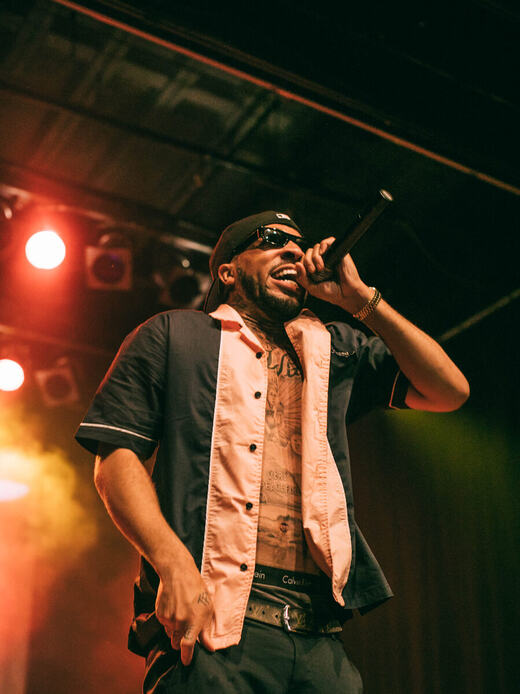
Key worksInto the Late Night (2021), Spaceships on the Blade (2022), The Great Escape (2023)
2018 · 📷 The Come Up Show from Canada / CC BY 2.0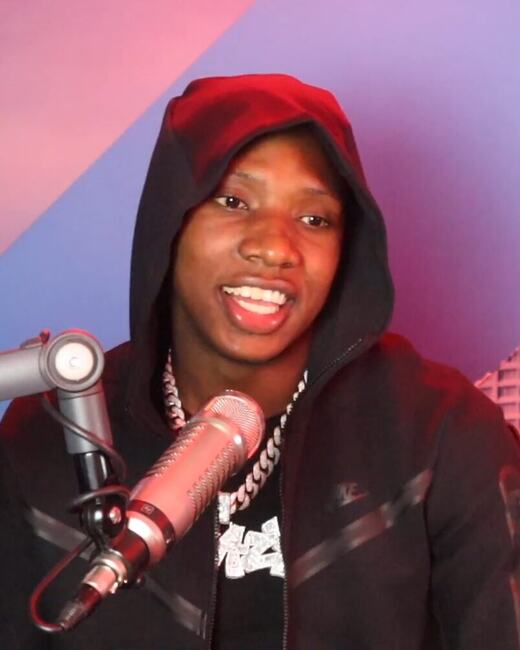
Key worksWelcome to Vulture Island (2022), 4God II (2023)
2023 · 📷 WHTA / CC BY 3.0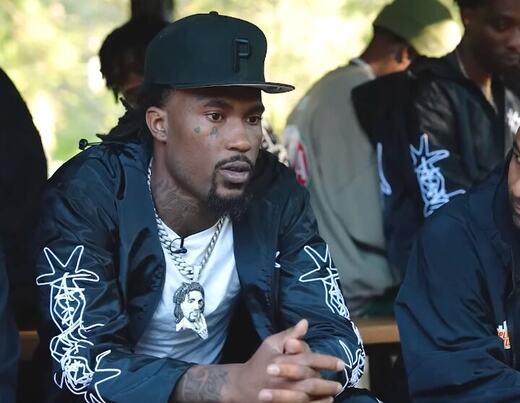
Key works22 (2023), Thank God (2024), “Your Friends” (2024)
📷 MILLION DOLLAZ WORTH OF GAME / CC BY 3.0Key works“Welcome to the Party”, “Dior”
Key worksThe Forever Story (2022)
Key works“First Class” (2022)
Key works“Ransom” (2019)
Key worksSoulFly (2021)
Key works2 Alive (2022)
Key worksProject X (2021), A Great Chaos (2023)
Key worksShiesty Season (2021), “Back in Blood” (2020)
Key worksAlternative Trap (2013), Watch My Back (2017), Flawless Like Me (2022)
Key worksStill Sleep? (2021), “Deep End Freestyle” (2020), “2055” (2021)
PLAY / 2020s42
THE THROUGH-LINE / ONE THREAD
Boom Bap
→ Trap
→ Trap
From boom bap to trap: what changed, and what never did
The old sound and the new one aren't enemies. They're the same river, upstream and downstream. Here's a map for hearing them side by side.
What Is Boom Bap?
“Boom bap” is named after the sound itself: the “boom” of the kick and the “bap” of the snare. The name stuck after KRS-One titled his 1993 solo debut Return of the Boom Bap. It's the umbrella term for the New York–centered hip-hop sound of the late '80s and the '90s, running at roughly 85–95 BPM, with the kick on beats one and three and the snare on two and four. It moves at the speed, and in the shape, of a head nodding along.
Most of the drums are chopped from breaks on old funk and soul records, like James Brown's “Funky Drummer” or The Winstons' “Amen, Brother.” Loop some jazz piano, horns or a scrap of soul vocal over that, and you're there. The tools were turntables and samplers. The E-mu SP-1200 in particular could only sample about 10 seconds, and the tricks producers used to cram sound into that tiny memory gave it that signature rough grit. On the lyric side, it was dense multisyllabic rhymes, storytelling, and battling: verbal combat built to take the other guy out. The standard for what counts as “good rapping” got locked in during this era.
What Is Trap?
“Trap,” as we covered earlier, is Atlanta slang for a spot where drugs get sold. As a sound, trap grew up in 2000s Atlanta and spread worldwide in the 2010s. The tempo is fast, around 130–150 BPM, but the beat is built to hit heavy at half speed (65–75 BPM). The kick is that long, sustained TR-808 boom. A snare or clap lands once, on beat three. And the biggest signature of all: rapid-fire hi-hat rolls that chop a single beat into three, four or even more hits. Pitch them up and down so they tumble, and a machine starts sounding like something alive. On top sit dark synths, bell-like melodies and movie-score strings.
The tools changed too. Instead of old records and samplers: computer software (FL Studio is the go-to in trap) and plug-in instruments. Taken to the extreme, one laptop and a pair of headphones that cost a few hundred dollars are enough to finish a song. That low barrier to entry launched teenager after teenager from SoundCloud onto the world stage. Lyrically, it's built on hooks that repeat the same phrase, short catchphrases, and ad-libs like “Skrrt!” Lines get stretched out melodically, almost sung, and Auto-Tune turns the voice into an instrument.
Boom Bap
Trap
Peak years
Roughly 1988–1999
2010s–now (blueprint in the 2000s)
Home base
New York (Queens, Brooklyn, the Bronx)
Atlanta, then cities all over the world
Tempo
85–95 BPM. Head-nod speed
130–150 BPM (feels like 65–75 BPM at half time)
Drums
Dry kicks and snares chopped from breaks on old records
Long, booming TR-808 kicks, snare on three, rapid hi-hat rolls
Top layer
Jazz piano, soul horns, vocal snippets
Dark synths, bell melodies, strings, flutes
Tools
Turntables, SP-1200, MPC
Computers (FL Studio and the like), plug-in instruments, Auto-Tune
Rap
Complex rhymes, storytelling, battles. Judged on lyrical density
Hooks, ad-libs, melody, vocal texture. Judged on bounce and addictiveness
Key names
Nas, Wu-Tang Clan, Mobb Deep, Gang Starr, A Tribe Called Quest
Migos, Future, Travis Scott, Young Thug, Lil Uzi Vert, Metro Boomin
GEAR / THE TOOLS BEHIND THE SOUND
The 808: One Unbroken Line
They look like opposites, but the two actually sit on the same line. The TR-808 low end that hit on “Planet Rock” in 1982 got handed down without a break: to Miami bass (2 Live Crew and others), to Southern hip-hop in Houston and Memphis, to Atlanta crunk, and on to 2000s trap. The 808 low end comes from a different lineage than New York's “culture of words”: the South's “culture of the body.” In the '90s the two grew up in separate places, and in the 2010s they finally met on one shared stage called streaming. The skeleton of almost every song playing around the world today is a hybrid of New York-style verbal craft and Southern-style low-end physicality.
1973 DJ Kool Herc
Stretching the break→1982 Planet Rock
TR-808→80-90s South
Miami bass / UGK / Three 6→2003 Trap Muzik
T.I.→2010 Lex Luger
Hi-hat rolls→2013 Migos
Triplet flow→Now
Stretching the break→1982 Planet Rock
TR-808→80-90s South
Miami bass / UGK / Three 6→2003 Trap Muzik
T.I.→2010 Lex Luger
Hi-hat rolls→2013 Migos
Triplet flow→Now
That's why “hip-hop was better back in the day, now it's just...” is kind of a wasted take. Boom bap pushed the art of words and samples as far as it could go; trap did the same for the pleasure of voice and rhythm. And the old style hasn't gone anywhere. Buffalo's Griselda, parts of Kendrick Lamar's catalog, J. Cole and others keep carrying the boom-bap texture into the present. Japan's Nujabes, with his smooth way of chopping jazz samples, made one of the sounds that lo-fi hip-hop around the world grew out of.
Here's the move: play Nas's “N.Y. State of Mind,” then go straight into Future's “Mask Off.”
More than 20 years apart, yet the way they paint the darkness of the city should sound surprisingly alike. The drum speed is different. The way they use their voices is different. But the attitude, turning a reality that only exists right here into sound with the tools right here, hasn't changed one bit since that night in 1973.
PLAY / SIDE BY SIDE6
▶ Tap a thumbnail to play it right here (videos load in YouTube's “privacy-enhanced mode”). Some videos play better if you open them on YouTube.
EVERY CITY, ITS OWN SOUND
Scenes
Same Four Beats, Different Cities — Mapping Hip-Hop
From the Bronx to Atlanta, London and Seoul: switch cities and the low end changes, and so do the words. Let's walk hip-hop across the map.
So far we've moved through time. This chapter reads the map instead. It's the same beat culture, but depending on which city it plays in, the tempo, the bass and the language turn into something else entirely.
New York — Five Boroughs, Five Faces
The Bronx is where it all starts. From Kool Herc's parties to KRS-One, Big Pun and Cardi B, it's still the borough where it began. Queens is wordsmith country: it sent out Run-DMC and LL Cool J, and from Queensbridge, one of the largest public housing developments in North America, came Nas and Mobb Deep.
Brooklyn is home to Biggie and Jay-Z. In the 2010s it birthed “Brooklyn drill,” shaped by UK drill, and Pop Smoke and Fivio Foreign came up out of it. Harlem gave us the Diplomats, formed in 1997 by Cam'ron and company, plus A$AP Rocky. And Staten Island is the little island Wu-Tang Clan called “Shaolin.” From there, nine guys shook the world.
Los Angeles and the Bay — The West Coast Isn't One Thing
LA is still the city of N.W.A and G-funk, and it keeps reinventing itself. Compton produced Kendrick Lamar, and hometown beatmaker Mustard rode his bouncy, handclap-style club beats all the way to “Not Like Us” (2024). Nipsey Hussle, who opened his own store on Crenshaw (he died in 2019 at 33), became the symbol of lifting the whole neighborhood up with you.
Across the water, the Bay Area runs even more independent. Hyphy (short for hyperactive), which broke nationally in the mid-2000s, was a culture of pure frenzy grown in Oakland and Vallejo: hard bass, rapid-fire flows, and “ghost riding,” hopping out of a rolling car to dance. E-40, Keak da Sneak and Vallejo's Mac Dre, who died in 2004 at 34, were its icons, and its fingerprints are still on the trap that came later.
The South — Five Cities, Five Kinds of Low End
Atlanta went from the Dungeon Family (OutKast and co.) through crunk and snap, then became trap's home base with T.I.'s Trap Muzik (2003). Houston is the city of “chopped & screwed,” the sound DJ Screw invented in the early 1990s. The Geto Boys, Swishahouse's Mike Jones, and later Travis Scott and Megan Thee Stallion followed.
Memphis is the city of a dark, grimy sound made with cheap tapes and a TR-808. In 2006, Three 6 Mafia became the first hip-hop group to win an Academy Award (Best Original Song), for a track from the film Hustle & Flow. New Orleans is the home of “bounce,” built on recycling the staple “Triggerman beat” loop and dancing to call-outs, and it gave us Cash Money and Big Freedia. In Miami, Miami bass grew up on 808s at around 130 BPM, blasted through car speakers.
Same 808, different city, a whole different music.
In Southern rap, the bass hits your body before the words do. That idea became the backbone of trap.
Detroit and Chicago — Two Faces of the Midwest
Detroit is a proving ground. At the Hip-Hop Shop, which opened in 1993, the battles Proof hosted became the main event, and Eminem and others sharpened their skills there. The soft beats of J Dilla and Slum Village came out of the same city. More recently, Tee Grizzley's “First Day Out” kicked the door open for Sada Baby, Babyface Ray, Veeze and more. The signature: bouncing rhythms and a wobbly, distorted bass.
Chicago is two cities standing back to back, one of words and one of the streets. On Resurrection (1994), Common wrote “I Used to Love H.E.R.,” casting hip-hop as a woman, and Kanye West, Lupe Fiasco and Chance the Rapper carried that introspective line forward. At the opposite pole, in the early 2010s, came South Side drill. A 16-year-old Chief Keef introduced its dark, bouncing sound to the world with “I Don't Like” (2012).
Toronto — OVO Builds the After-Dark Sound
In Canada, the road opened in 1989, when Maestro Fresh Wes's “Let Your Backbone Slide” is said to have become the first gold single by a Canadian rapper. Toronto has a big Caribbean immigrant community, and its sound carries a distinctive mix of Jamaican and Trinidadian rhythms and slang. That's where Drake broke out to the world. Built on the dark, quiet low end he makes with producers like 40 (Noah Shebib), OVO (October's Very Own) launched OVO Fest in 2010 and, in 2012, the label OVO Sound in partnership with Warner, sending out PartyNextDoor and dvsn.
London — Grime and UK Drill
In Britain, hip-hop collided with a different set of city sounds. Grime was born in early-2000s East London, a sharp, roughly 140 BPM music that fused UK garage, jungle and dancehall. Pirate radio spread it, and Wiley pioneered it. With Boy in da Corner (2003), a teenage Dizzee Rascal became the youngest-ever winner of the Mercury Prize. Skepta took the same prize in 2016, and Stormzy's Gang Signs & Prayer (2017) became the first grime album to hit No. 1 on the UK albums chart. In 2019, Stormzy became the first Black British solo artist to headline Glastonbury's Pyramid Stage.
From around 2012, UK drill took shape in Brixton, South London. It used Chicago drill as its blueprint and layered on sliding 808s, distinctive hi-hats and British slang. Crews like 150 and 67 led the way, and Headie One's Edna went to No. 1 in the UK. Brooklyn drill was influenced by the producers behind UK drill. Drake brought Skepta and Giggs onto More Life (2017), too.
Spanish-Language Rap, Korea and Japan
In the Latin world, Cuban-born brothers Mellow Man Ace and Sen Dog were pioneers in Los Angeles. Mellow Man Ace's “Mentirosa” (1990) is considered a bilingual hit, and Sen Dog's group Cypress Hill mixed English and Spanish and went to No. 1 on the US albums chart with Black Sunday (1993). New York's Big Pun became the first Latino solo rapper to go platinum with Capital Punishment (1998), then died in 2000 at 28.
A separate current is reggaeton, which grew up in Panama and Puerto Rico. Daddy Yankee's “Gasolina” (2004) kicked open the door to the world, and in the 2010s Latin trap spread out of Puerto Rico. Bad Bunny was Spotify's most-streamed artist of the year three years straight starting in 2020, and in 2026 Debí Tirar Más Fotos became the first Spanish-language album to win the Grammy for Album of the Year.
Korean hip-hop came in through the neighborhoods around US military bases and the clubs of Itaewon. In 1992, Seo Taiji and Boys brought American-style rap and dance to the masses; Drunken Tiger (debuted 1999) and Epik High (debuted 2003) built followings, and Hongdae's clubs became the center of the scene. Mnet's Show Me the Money, launched in 2012, turned hip-hop into living-room entertainment, and in 2015 Keith Ape's “It G Ma” went global online.
Japan's story gets its own chapter, so here's just the local color. In 1999, Sapporo's THA BLUE HERB dropped Stilling, Still Dreaming and proved a crew far from the capital could carry real weight. In February 2024, Kawasaki's BAD HOP became the first Japanese hip-hop act to headline its own show at the Tokyo Dome, and then disbanded. Japan's strength is its crews, rooted in their own cities all over the country.
City Sounds: The Cheat Sheet
- 1990sLos Angeles
G-Funk
Slow, rolling bass, whistle-like synths, female backing vocals. Dr. Dre, Snoop Doggy Dogg, Warren G.
- 2000sOakland / Vallejo
Hyphy
Hard bass, rapid-fire flows and a frenzied culture of dancing along with rolling cars. E-40, Keak da Sneak, Mac Dre.
- 1980sMiami
Miami Bass
TR-808s at around 130 BPM, pumped through car speakers. Low end built for dancing. 2 Live Crew, MC A.D.E., Luke (Luther Campbell).
- 1990sNew Orleans
Bounce
The staple “Triggerman beat” loop and call-and-response chants. DJ Jubilee, Big Freedia, Cash Money's Mannie Fresh.
- 1990sHouston
Chopped & Screwed
Tracks slowed way down, vocals stretched out, a woozy, intoxicated feel. DJ Screw, Paul Wall, Mike Jones.
- 1990sMemphis
Memphis Rap
Dark, distorted lo-fi texture and 808s, spread by word of mouth on cassette. Three 6 Mafia, Project Pat, DJ Spanish Fly.
- 2000sAtlanta
Trap
Heavy 808s, dark synths, rapid-fire hi-hats. T.I., Young Jeezy, and later Migos and Future.
- 2010sChicago
Drill
Ominous synths and bouncing hi-hats, a sound that mirrors the streets of the South Side. Chief Keef, Lil Durk, Young Chop.
- 2000sEast London
Grime
Sharp beats at around 140 BPM and rapid-fire MCs, spread by pirate radio. Dizzee Rascal, Wiley, Skepta, Stormzy.
- 2010sBrixton, London
UK Drill
Sliding 808s, distinctive hi-hats, British slang. Headie One, 67, 150. It went on to influence Brooklyn drill.
Labels Made History
Labels
Indie, Partnered, Bought Out, Indie Again — 45 Years of Hip-Hop Labels
Rappers weren't the only ones who carried hip-hop from the street corner to the world. This is the story since 1979, told from the side of the labels: the people who pressed the records, pushed them, and sometimes ended up owning the rights.
One 12-Inch Moved an Industry
In 1979, when rap first started selling widely as a product, the action wasn't at a major. It was at a small label in New Jersey. Sugar Hill Records was run by Sylvia Robinson, and the record she put out, “Rapper's Delight,” is said to have sold 14 million copies worldwide. But the company filed for bankruptcy in 1985 and was gone the following year.
Tommy Boy, founded in 1981, was started by Tom Silverman, who'd been publishing a dance-music trade magazine, and it put out Afrika Bambaataa's “Planet Rock” (1982). Profile, born the same year, signed Run-DMC after Russell Simmons brought in a demo. The group's debut album (1984) became the first rap album ever certified gold.
Then in 1984 came Def Jam, started by Rick Rubin and Simmons out of an NYU dorm room. In 1985 CBS/Columbia took over its distribution, and that same year Warner bought half of Tommy Boy. Here's where the industry's basic division of labor took shape: small independents find and develop the music; the majors run the plants and the distribution. The street-level tastemakers carry the risk, and the majors profit on whatever sells.
The '90s — Labels Became “Camps”
The '90s are when a logo became a flag. In Compton, Eazy-E launched Ruthless in 1987 and put out N.W.A. Dr. Dre left and, in 1991, co-founded Death Row with Suge Knight and others. Backed by Interscope's money and distribution, it fired off The Chronic (1992) and Doggystyle (1993) back-to-back, and in 1995 2Pac joined too.
In New York, Puff Daddy (Sean Combs) launched Bad Boy in 1993 with distribution through Arista, and it blew up the next year with Biggie's Ready to Die. Loud, the label that signed Wu-Tang Clan, agreed to let the members cut solo deals with other companies.
Death Row went into a fast slide after a run of blows: Dre's exit and 2Pac's death in 1996, then founder Knight's incarceration starting that fall (for a probation violation; in February 1997 he was sentenced to nine years).
Whoever Owns the Masters Wins
The long money goes to whoever owns the masters (the master recordings). Master P's No Limit started out of a record store in Richmond, California, and moved to New Orleans in 1995. Even in the distribution deal it struck with Priority in the mid-'90s, it never gave up its masters. In 1998 alone it released 23 albums. In the same city, Cash Money reportedly signed a three-year distribution deal with Universal in 1998 worth about $30 million. Its Young Money imprint (2005) is where Drake and Nicki Minaj took off.
Jay-Z was looking in the same direction. Turned down by the majors, he started Roc-A-Fella with Damon Dash and Biggs Burke around 1994–95 and released Reasonable Doubt (1996) through Priority. In 1997 the label entered an equal partnership with Def Jam, and in December 2004, as Def Jam bought out the remaining stake, Jay-Z himself became the company's president. The man who built a label was now sitting at the top of a giant one.
A hit lasts a moment. A master pays its owner for years.
Boutique Shops and Underground Fire
There were small workshops inside the majors, too. Aftermath, which Dr. Dre started in 1996 as a company distributed through Interscope, signed Eminem in 1998 and brought in 50 Cent in 2002. Eminem, for his part, set up Shady with his manager in 1999.
The indie flag never came down either. Rawkus, with Black Star (1998), and Stones Throw (founded 1996), with Madvillainy (2004) and Donuts (2006), kept the underground lit.
After Streaming — Labels Became “Brands”
In the 2010s, SoundCloud and streaming slashed the cost of getting music to people. Companies grew up to serve as on-ramps for small talent, like the independent distributor EMPIRE (founded 2010). But the ones that gained real power were label-slash-brands run by the artists themselves.
Carson's TDE (Top Dawg Entertainment, founded 2004) struck a joint venture with Aftermath and Interscope in 2012, setting things up so Kendrick Lamar was signed to both. Drake's OVO announced a partnership with Warner that same year. Dreamville, which J. Cole launched in 2007, teamed up with Interscope in 2014, and 2019's Revenge of the Dreamers III, which came out of a 10-day session in Atlanta, went No. 1 in the US.
The trap generation walked the same road. Atlanta's Quality Control (founded 2013) launched Migos, Lil Baby and more, and in 2023 HYBE's US arm bought it for about $300 million. Travis Scott's Cactus Jack arrived in 2017. Buffalo's Griselda built its strength on limited-press vinyl and signed with Shady in 2017.
The other buzzword was the 360 deal: a contract where the label shares not just recording revenue but income from touring, merch, endorsements and publishing. EMI's 2002 deal with Robbie Williams is the well-known example. In 2008 Jay-Z founded Roc Nation off the back of a Live Nation deal reported at about $150 million. Labels had morphed into the home base of brands that also house management, live shows and clothing.
When a track hits in the club, nobody sees the label's logo. Still, who found the song, who put up the money, who owns the rights — that tug-of-war is what has shaped this culture.
14 Labels, Logo by Logo
- 1979Sugar Hill Records
Put a Price Tag on Rap
Founded in Englewood, New Jersey, by Sylvia Robinson and others. Put out “Rapper's Delight” (1979) and Grandmaster Flash's “The Message” (1982).
- 1981Tommy Boy Records
Started by a Trade-Mag Publisher
Tom Silverman launched it with a loan from his parents. It signed De La Soul, Queen Latifah and Naughty by Nature, and in 1985 Warner bought half the company.
- 1984Def Jam Recordings
Out of a Dorm Room
Founded by Rick Rubin and Russell Simmons. Home to LL Cool J, the Beastie Boys, Public Enemy and more, it later moved under PolyGram and then Universal.
- 1987Ruthless Records
From Compton to the Whole Country
Founded by Eazy-E, it released N.W.A's Straight Outta Compton (1988). It also signed Bone Thugs-n-Harmony, but Eazy-E died in 1995.
- 1991Death Row Records
Defined the West Coast Sound
Founded by Dr. Dre, Suge Knight and others. With Snoop Dogg and 2Pac on the roster it hit the top, later went through bankruptcy, and in 2022 Snoop bought it.
- 1991Cash Money Records
The New Orleans Brothers
Founded by Birdman and Slim, the Williams brothers. Juvenile's 400 Degreez (1998) hit No. 9 in the US and went multi-platinum. Through Young Money, the line runs from Lil Wayne to Drake.
- 1991No Limit Records
Never Let Go of the Masters
Master P built it out of a small record store. 1998's MP da Last Don went No. 1 in the US. It filed for bankruptcy at the end of 2003, but it's still held up as the textbook case of the own-your-masters play.
- 1993Bad Boy Records
Sold Success Itself
Founded by Puff Daddy (Sean Combs), with Arista handling distribution at first. It took off with Craig Mack's “Flava in Ya Ear” (1994) and Biggie's Ready to Die (1994).
- 1994Roc-A-Fella Records
Built a Label, Then Took the Top Seat
Founded by Jay-Z, Damon Dash and Biggs Burke. It had Kanye West and Beanie Sigel on the roster, but wound down in 2013.
- 2004Top Dawg Entertainment
Carson's Little Workshop
Founded by Anthony “Top Dawg” Tiffith. Home to Kendrick Lamar (until 2022), Jay Rock, ScHoolboy Q, SZA and more.
- 2012OVO Sound
Drake's Banner
Grew out of OVO, the crew of Drake, producer Noah “40” Shebib, manager Oliver El-Khatib and others. In 2013 it signed PartyNextDoor, among others.
- 2012Griselda Records
Lit the Fuse With Limited Runs
Built around Westside Gunn, Conway the Machine and Benny the Butcher. They put out limited releases on Daupe!, a small London label, and in 2019 dropped WWCD through Shady/Interscope.
- 2013Quality Control Music
Rounding Up Atlanta's New Generation
Founded in Atlanta by Pierre “P” Thomas and Kevin “Coach K” Lee. Home to Lil Baby, Lil Yachty and others, it came under HYBE in 2023.
- 2017Cactus Jack Records
A Star Raising the Next Wave
Founded by Travis Scott in January 2017. The roster includes Sheck Wes and Don Toliver. Distribution varies by artist: Travis himself is with Epic, Don Toliver with Atlantic.
The Beatmakers
Producers
From Turntables to Laptops — How the Hands Behind the Beat Changed
Behind every rapper, there was always someone making the sound. Every time the tools changed, the feel of the beat changed with them, until the beatmakers became stars in their own right.
New Tools, New Beats
Beatmaking started with the DJ. From Kool Herc stretching out breaks on two turntables, the gear moved on to the Roland TR-808 in 1980, the E-mu SP-12 in 1985, the SP-1200 in 1987 and the Akai MPC60 in 1988. The SP-1200 could only record about 10 seconds, and the sound was rough. That roughness ended up loved as a kind of “gritty warmth.” The MPC60 was built around tapping a 4×4 grid of pads to piece a beat together, and it became the template for how beatmakers would work from then on.
The New York Craftsmen
Marley Marl was the center of Queensbridge's Juice Crew. On records like MC Shan's “The Bridge” (1986), he popularized sampling drum sounds one hit at a time and rebuilding them. As he tells it, the discovery came when a snare slipped in while he was sampling a vocal.
In the '90s, the craft of chopping samples hit its peak. DJ Premier produced nearly all of Gang Starr's catalog and handled tracks like “N.Y. State of Mind” on Nas' Illmatic (1994). Pete Rock, a longtime SP-1200 loyalist, made his name with “T.R.O.Y.” (1992) and its warm slices of soul, and made “The World Is Yours” for Illmatic. RZA is said to have built Enter the Wu-Tang (36 Chambers) (1993) on cheap gear centered on Ensoniq samplers (the EPS-16 Plus and the ASR-10).
The Producer Becomes a “Brand”
Dr. Dre gradually shifted his center of gravity from sample-based production to bringing live players into the studio. He founded Aftermath in 1996 and launched Eminem and 50 Cent. He started Beats headphones with Jimmy Iovine, and in 2014 Apple announced it would buy the company for about $3 billion. The guy making the beats was now the headliner of a mega-deal.
Two names came out of Virginia Beach. Timbaland produced most of Aaliyah's One in a Million in 1996 and Missy Elliott's debut, Supa Dupa Fly, in 1997, melting the line between hip-hop and R&B. The Neptunes (Pharrell Williams and Chad Hugo) branched out to Britney Spears and Justin Timberlake and won the Grammy for Producer of the Year in 2004.
Kanye West grew up in Chicago. Around 2000 he became Roc-A-Fella's in-house producer and got noticed for his work on Jay-Z's The Blueprint (2001). His 2004 debut, The College Dropout, put his own voice over tracks he'd built with an MPC, among other tools. That's where the road opened for a producer to step straight out front.
The Shadow Craftsmen — J Dilla and Madlib
Some people refined the texture of the beat far from the trends. Detroit's J Dilla switched off the quantize (automatic timing correction) on his MPC3000 and made rhythms that sat slightly off the grid. That sway is called “Dilla time.” He released Donuts on February 7, 2006, and died three days later, on the 10th, at 32. Oxnard's Madlib is known for sample-driven production on gear like the Boss SP-303, and cut Madvillainy (2004) with MF DOOM.
FL Studio and the 808 — The Southern Era
From the 2000s on, production moved from dedicated hardware to the computer. Pro Tools, introduced in 1991, became the studio standard, and Fruity Loops, whose first version came out at the end of 1997 (it was renamed FL Studio in 2003), became the gateway for young beatmakers.
Zaytoven learned piano and organ in church, teamed up with Gucci Mane, and produced tracks including Migos' “Versace” (2013). Lex Luger made beats in FL Studio and on the MPC, and linked up with Waka Flocka Flame after they connected on MySpace. “Hard in da Paint” was a hit by May 2010, and that same year he also produced Rick Ross' “B.M.F.”
The main character of the 2010s was Metro Boomin. Out of St. Louis, he started messing with FL Studio at 13. He produced his first US No. 1 with Migos' “Bad and Boujee” (2016), and both Not All Heroes Wear Capes (2018) and Heroes & Villains (2022) debuted at No. 1 on the US albums chart. Off his 2024 album with Future, We Don't Trust You, “Like That,” featuring Kendrick Lamar, went to No. 1 in the US.
LA's Mustard is known for beats built on 808s, handclaps, synths and shouted chants, and Tyga's “Rack City” (2011) hit No. 7 in the US. He produced Kendrick Lamar's “Not Like Us” in 2024, and the song swept five categories at the 2025 Grammys. Mike WiLL Made-It reached No. 11 in the US with his debut single, “23” (2013), and won the Grammy for Best Rap Song for Kendrick's “HUMBLE.” Hit-Boy produced Nas' King's Disease (2020), which won Best Rap Album at the 2021 Grammys.
Vocal Signatures and “Type Beats”
One piece of proof that producers had become the stars: the “producer tag” that rings out at the top of a track. It's a short vocal signature calling out the producer's name, and Metro Boomin's is famous for being in Future's voice. On top of that, a whole culture grew up on YouTube and SoundCloud around buying and selling “type beats” that copy a particular artist's vibe.
The gear got lighter. Only the names got heavier.
Beatmaking moved from the studio to the bedroom. Metro Boomin and Lex Luger both started on FL Studio. With one laptop and some production software, you can start your first track in LA, in Atlanta, or anywhere else.
16 Beatmakers
- 1986Marley Marl
Rebuilt the Drums One Hit at a Time
The Juice Crew's central figure. He produced Big Daddy Kane's Long Live the Kane (1988) and Biz Markie's Goin' Off (1988) top to bottom.
- 1992Dr. Dre
Defined G-Funk
After N.W.A, he locked in the West Coast sound with The Chronic (1992). Through Aftermath he launched Eminem and 50 Cent, and in 2014 Apple announced it would buy Beats for about $3 billion.
- 1992Pete Rock
Warm Slices of Soul
The producer behind Pete Rock & C.L. Smooth's Mecca and the Soul Brother (1992). He also made “The World Is Yours” on Nas' Illmatic.
- 1993RZA
The Architect of Wu-Tang
Formed Wu-Tang Clan in 1992 and produced Enter the Wu-Tang (36 Chambers) (1993). He has also scored films, including Kill Bill.
- 1994DJ Premier
Chopped Vocals Become the Hook
Produced nearly all of Gang Starr's catalog and handled “N.Y. State of Mind,” “Memory Lane” and “Represent” on Illmatic. Ranked No. 3 on Billboard's 2023 list of the greatest rap producers of all time.
- 1996Timbaland
Melted the Line Between Rap and R&B
Produced most of Aaliyah's One in a Million (1996) and Missy Elliott's Supa Dupa Fly (1997). Later he also worked on Timberlake's FutureSex/LoveSounds (2006).
- 2001The Neptunes
The Virginia Beach Duo
Pharrell Williams and Chad Hugo. They worked with Britney Spears (2001) and Justin Timberlake (2002), and won the Grammy for Producer of the Year in 2004.
- 2001Kanye West
From In-House to Out Front
Broke through as Roc-A-Fella's in-house producer on The Blueprint (2001) and became known for chipmunk soul. His 2004 album The College Dropout won the Grammy for Best Rap Album.
- 2004Madlib
Stones Throw's Mad Genius
From Oxnard. Madvillainy (2004), with MF DOOM, is still worshipped, and he makes grainy beats on gear like the Boss SP-303.
- 2006J Dilla
Inventor of the Off-Grid Groove
With a signature sway that came from switching off the MPC3000's quantize, he worked on records by Common and Slum Village. He died at 32, three days after Donuts came out.
- 2010Lex Luger
Beats Delivered via MySpace
A Virginia teenager cranking out beats in FL Studio, he scored hits with “Hard in da Paint” and “B.M.F.” (both 2010). He also worked on Watch the Throne.
- 2011Mustard
Bouncy West Coast Club Sound
Born in Los Angeles. Hit No. 7 in the US with Tyga's “Rack City” (2011), and in 2025 won the Grammy for Record of the Year for “Not Like Us.”
- 2013Zaytoven
Church Piano Goes Trap
Learned piano and organ in church and helped hold down the Atlanta sound for Gucci Mane and others. He also produced Migos' “Versace” (2013).
- 2013Mike WiLL Made-It
From the Atlanta Suburbs to the Whole Country
From Marietta. His debut single, “23” (2013), hit No. 11 in the US. He won Best Rap Song at the 2018 Grammys for Kendrick Lamar's “HUMBLE.”
- 2016Metro Boomin
Turned a Vocal Tag Into a Brand
From St. Louis. Produced his first US No. 1 with Migos' “Bad and Boujee” (2016), and in 2024 landed his first US No. 1 as a lead artist with “Like That.”
- 2020Hit-Boy
Peaking With Nas
From Fontana, California. Working in FL Studio, he produced Nas' King's Disease (2020) and won Best Rap Album at the 2021 Grammys.
WOMEN IN HIP-HOP
Women
From “The Only Woman” to the Ones Setting Trends — 40 Years of Women in Rap
From Sha-Rock to Doechii: women pushed past the days of being called “the exception” and ended up holding the charts and the rights.
Women were in hip-hop's story from day one. But for a long time, they were written in as “the exception.” Over 40 years, that position changed.
The Pioneers — The 1980s
The Bronx's Sha-Rock is credited as the first female MC. On February 14, 1981, her group Funky 4 + 1 appeared on Saturday Night Live, becoming the first hip-hop group to perform on national TV. In 1984, Roxanne Shanté, then 14 or 15, dropped “Roxanne's Revenge,” an answer to a UTFO song. It lit the fuse on the “Roxanne Wars,” where anywhere from dozens to over 100 answer records flew back and forth.
Next, Salt-N-Pepa became the first female rap act to go gold and platinum, with Hot, Cool & Vicious (1986). Brooklyn's MC Lyte was 17 when she released Lyte as a Rock (1988), the first full-length solo album by a female MC. At the 1995 Grammys, Salt-N-Pepa and Queen Latifah (“U.N.I.T.Y.”) both took home trophies.
The Star Era — Late '90s to the 2000s
Lauryn Hill's The Miseducation of Lauryn Hill (1998) won five Grammys the following year. Missy Elliott debuted on her own label with Supa Dupa Fly (1997). Brooklyn's Lil' Kim and Foxy Brown both put out debuts in 1996 and won fans by talking sex and desire in their own words. Foxy's Chyna Doll (1999) became the first solo female rap album to debut at No. 1. In 2001, Lil' Kim hit No. 1 in the US with “Lady Marmalade” alongside Christina Aguilera and others, and won a Grammy too.
Ruff Ryders' Eve took her debut, Let There Be Eve… (1999), to No. 1 on the US albums chart, and in 2002 won a Grammy for “Let Me Blow Ya Mind” with Gwen Stefani. Miami's Trina went gold with her 2000 debut, too.
The 2010s and Beyond — Setting the Trends
Trinidad-born, Queens-raised Nicki Minaj debuted with Pink Friday (2010), and in 2017 she passed Aretha Franklin for the most Hot 100 entries by a female artist (at the time). Cardi B scored the first solo No. 1 by a female rapper since Lauryn Hill with “Bodak Yellow” (2017), and Invasion of Privacy made her the first solo woman to win the Grammy for Best Rap Album. Her 2025 album Am I the Drama? also debuted at No. 1, making her the first female rapper whose first two albums both topped the US albums chart.
Houston's Megan Thee Stallion and Cardi's “WAP” (2020) became the first female rap collab to debut at No. 1. In 2022, Memphis's GloRilla rode “F.N.F. (Let's Go),” which blew up on TikTok, to a deal with Yo Gotti's CMG. The Bronx's Ice Spice broke through the same year with “Munch (Feelin' U).”
The days of being called “the only woman” are over. Now they're the ones deciding what's hot.
In 2025, Tampa's Doechii won the Grammy for Best Rap Album with Alligator Bites Never Heal. She's only the third woman to win the category, after Lauryn Hill (as part of the Fugees) and Cardi B. London's Little Simz won both the 2022 Mercury Prize and the BRIT Award for Best New Artist with Sometimes I Might Be Introvert, released on her own independent label.
Beyond the Music — Rights and Companies
The other big shift is a seat at the business table. Queen Latifah has long run Flavor Unit, a management and production company, together with her business partner. In 2024, Megan reportedly signed a distribution deal with Warner Music Group while keeping her masters and publishing. Same story here: the people who make the music are holding on to the rights.
Women in Hip-Hop: 10 Milestones
- 1981Sha-Rock / The Bronx
First on National TV
A member of Funky 4 + 1, credited as the first female MC. The group appeared on SNL, becoming the first hip-hop group to perform on national network TV.
- 1984Roxanne Shanté / Queens
A 14-Year-Old Fires Back
“Roxanne's Revenge,” produced by Marley Marl, was an answer record aimed at UTFO. It spawned anywhere from dozens to over 100 more answer records.
- 1986Salt-N-Pepa / Queens
First Gold & Platinum
Hot, Cool & Vicious was the first release by a female rap act certified gold and platinum. “Push It” (released 1987) cracked the US Top 20.
- 1988MC Lyte / Brooklyn
First Female Solo Full-Length
She released Lyte as a Rock at 17. Her 1993 track “Ruffneck” earned the first gold certification ever for a female solo rapper.
- 1995Queen Latifah / New Jersey
A Grammy for “U.N.I.T.Y.”
Won Best Rap Solo Performance. In 2006 she got her star on the Hollywood Walk of Fame, said to be the first for a hip-hop artist.
- 1997Missy Elliott / Portsmouth, VA
Arriving on Her Own Label
Supa Dupa Fly debuted at No. 3 in the US. In 2019 she became the first female rapper in the Songwriters Hall of Fame, and in 2023 the first female hip-hop artist inducted into the Rock and Roll Hall of Fame.
- 1999Lauryn Hill / New Jersey
Five Grammys
The Miseducation of Lauryn Hill won five awards, including Album of the Year. “Doo Wop (That Thing)” debuted at No. 1.
- 2017Cardi B / The Bronx
“Bodak Yellow” Hits No. 1
The first solo No. 1 by a female rapper since Lauryn Hill. In 2019, Invasion of Privacy made her the first solo woman to win Best Rap Album.
- 2020Megan Thee Stallion / Houston
“WAP” Debuts at No. 1
“WAP” with Cardi B was the first female rap collab to debut at No. 1, and it rewrote the first-week streaming record too. Three Grammys followed in 2021.
- 2025Doechii / Tampa
Best Rap Album
Won for Alligator Bites Never Heal (2024). She's the third woman to take the category, after the Fugees' Lauryn Hill and Cardi B.
Fighting Words, Played as a Sport
Beef
Beefs and Battles — Call Them Out by Name, Let the Crowd Pick the Winner
Hip-hop's fights started out as a contest of verbal skill. From the Bridge Wars to Kendrick vs. Drake in 2024, this is the history of beef and MC battles, and of the day the game stopped being a game.
How a Fight Became a Sport
A hip-hop beef isn't just an argument. A song that goes at a rival by name is a diss track, and whoever takes the hit answers with a song of their own. The crowd hears both and rules on who cut deeper. Black communities have a word game called the dozens: you trade insults in front of an audience, and whoever runs out of comebacks loses. Rap's back-and-forths get talked about in the same breath as that tradition.
An early example came in 1984. Answering UTFO's “Roxanne, Roxanne,” 14-year-old Roxanne Shanté cut “Roxanne's Revenge.” It sold more than 250,000 copies in the New York area alone and set off a frenzy of more than 30 answer records.
From the Bridge Wars to Old School vs. New School
One of the biggest wars in hip-hop history was the Bridge Wars. It kicked off with “The Bridge” (1986) by Queensbridge's MC Shan, a song that sounded like it was claiming hip-hop was born in Queensbridge (Shan himself denies that). KRS-One and his South Bronx crew Boogie Down Productions fired back with “South Bronx” (1986) and “The Bridge Is Over” (1987). Peace finally came in 2007, when KRS-One and Marley Marl, the producer in MC Shan's camp, released a joint album, Hip Hop Lives.
Around the same time, a generational showdown broke out. On How Ya Like Me Now (1987), Kool Moe Dee went after the rising LL Cool J. The cover shows LL's trademark Kangol bucket hat getting crushed under a Jeep tire. LL answered with “Jack the Ripper” in 1988, and Moe Dee came back with another song.
When Beef Got Measured in Numbers
By the 2000s, beef was tangled up with sales and fame. Jay-Z threw “Takeover” (2001), and Nas hit back with “Ether” (2001). The two showed they'd made peace at a Jay-Z concert in October 2005, and in 2006 Nas signed to Def Jam, where Jay-Z was president. In 2003, 50 Cent's debut Get Rich or Die Tryin' sold more than 870,000 copies in its first week and went No. 1 in the US. Its track “Back Down” was aimed at Ja Rule, and the momentum in that feud swung to 50.
In 2015, Meek Mill publicly accused Drake of not writing his own verses. Drake answered with “Charged Up” and “Back to Back.” The two squashed it in 2018. That same year, a whole war played out in days: Pusha T's “Infrared” (May 25), Drake's “Duppy Freestyle” the same day, then “The Story of Adidon” four days later (May 29). How far it reached into private lives made it the stuff of legend.
Then came 2024: Kendrick Lamar vs. Drake. The spark was Kendrick's verse on Future and Metro Boomin's “Like That” on March 22, and from mid-April into early May the two traded songs at a rapid clip. “Not Like Us,” released May 4, went to No. 1 on the Hot 100 right out of the gate, and at the Grammys in February 2025 it won all five awards it was nominated for.
Beef is a sport played with words, and the listeners are the judges.
East vs. West — The Day the Game Got Real
But there were times when the contest broke out of its frame. In the mid-'90s, the rivalry between New York's Bad Boy Records and Los Angeles' Death Row Records spread into an “East Coast vs. West Coast” war. The tension went public at The Source Awards in August 1995, and in June 1996, 2Pac released “Hit 'Em Up.” On September 7 that year, 2Pac was shot in Las Vegas; he died on the 13th, at 25. Then on March 9, 1997, The Notorious B.I.G. was shot in Los Angeles and died at 24. The scene learned in the worst way possible that a war of words can run straight into real violence.
The Sport on the Mic — MC Battles
Strip beef down to just the competition and you get the MC battle. The 2002 film 8 Mile (directed by Curtis Hanson, starring Eminem) put freestyle face-offs on screen in Detroit, and its theme song, “Lose Yourself,” became the first rap song to win the Academy Award for Best Original Song (2003). On BET's 106 & Park, the “Freestyle Friday” segment had a rule: win seven weeks straight and you went into the Hall of Fame. Jin pulled it off in 2002 and landed a deal with Ruff Ryders.
In Japan, KREVA won the B-BOY PARK MC battle three years running (1999–2001), and in 2005 Libra Records launched ULTIMATE MC BATTLE (UMB), which R-Shitei won three straight times from 2012 to 2014. The “High School Rap Championship,” born in July 2012 as a segment of the show BAZOOKA!!!, and Freestyle Dungeon, which premiered on TV Asahi in September 2015 with Zeebra as lead MC, brought battles into living rooms. Battles are still the purest surviving form of what beef looked like back when it was a sport.
- 1984UTFO / Roxanne Shanté
Roxanne, Roxanne → Roxanne's Revenge
Fourteen-year-old Shanté answered off the top and moved more than 250,000 copies around New York. The spark for the “Roxanne Wars,” which ran to more than 30 answer records.
- 1986–87MC Shan / KRS-One
The Bridge → South Bronx → The Bridge Is Over
The Bridge Wars. A borough-vs.-borough fight over who could claim the birthplace, settled with a joint album in 2007.
- 1987–88Kool Moe Dee / LL Cool J
How Ya Like Me Now → Jack the Ripper
The vet came at the new kid, and the new kid answered on wax: a generational showdown. The Kangol on the cover became its symbol.
- 19962Pac
Hit 'Em Up
Released in June 1996 as the B-side of “How Do U Want It,” it called out The Notorious B.I.G. and the Bad Boy camp by name. It's said to be the song that pushed the East-West feud past the point of no return.
- 2001Jay-Z / Nas
Takeover → Ether
New York's heavyweight title fight, waged the year of The Blueprint and Stillmatic. They made peace in 2005.
- 2002Dir. Curtis Hanson
8 Mile
The movie that put freestyle battles in front of a mass audience. Eminem starred, and the theme song, “Lose Yourself,” won the Oscar for Best Original Song.
- 200350 Cent / Ja Rule
Back Down
A track off Get Rich or Die Tryin'. Together with the album, which sold more than 870,000 copies in its first week and hit No. 1 in the US, it flipped the feud.
- 2015Drake / Meek Mill
Charged Up / Back to Back
It started with a claim about who was really writing the verses. “Back to Back” reached No. 21 on the Hot 100. They squashed it in 2018.
- 2018Pusha T / Drake
Infrared → The Story of Adidon
Four days of fire, May 25 to 29. “The Story of Adidon” rode the beat of a Jay-Z song and won high marks from critics too.
- 2024Kendrick Lamar / Drake
Like That → Not Like Us
Sparked by “Like That” on March 22, songs flew back and forth from mid-April into early May. “Not Like Us” topped the Hot 100 and won five Grammys in 2025.
Steal It, Chop It, Stick It, Flip It
Samples
Sampling 101 — The Invention That Turned Other People's Records Into Instruments
Hip-hop beats have been built out of a few seconds of old records. Breaks, chops and flips, all the way to the hard reality that borrowing takes permission.
The Break — The Few Seconds That Move the Floor
Hip-hop is music that started by turning other people's records into instruments. The starting point is the break: the short stretch of a funk or soul song where the vocals and the melody drop out, leaving just drums and bass. In 1973, DJ Kool Herc got two copies of the same record and kept cutting between them to stretch the break out, because that's where the dancers went hardest. Later came Ultimate Breaks & Beats (1986–91, 25 volumes), a series that compiled those records and became the producers' textbook.
A few classic breaks. On James Brown's “Funky Drummer” (1970), Clyde Stubblefield's drumming ended up on Public Enemy's “Fight the Power” and LL Cool J's “Mama Said Knock You Out.” But Stubblefield wasn't credited as a writer and reportedly never got paid for it. The drum break on The Winstons' “Amen, Brother” (1969) lasts only about seven seconds. Still, it powered N.W.A's “Straight Outta Compton” and later became the foundation of British drum and bass. The Honey Drippers' “Impeach the President” (1973) also turns up on MC Shan's “The Bridge,” which came up in the beef chapter.
Cut It, Paste It, Flip It
What spread this way of making music was the E-mu SP-1200 in 1987 and the Akai MPC in 1988. The SP-1200 could record only about 10 seconds. Inside that tight window, you slice a long phrase into small pieces, assign them to pads, and play them back in a different order from the original. That's a chop. Repeating a chopped fragment is a loop; remaking the source into something completely different is a flip. Those three moves are the basics of sampling.
Some masters at work. On Wu-Tang Clan's “C.R.E.A.M.” (1993), RZA kept the opening piano and drums of The Charmels' “As Long as I've Got You” (1967) cycling. Kanye West used the Jackson 5's “I Want You Back” (1969) on Jay-Z's “Izzo (H.O.V.A.)” (2001), and on his own “Through the Wire” (2003) he pitched up Chaka Khan's vocal. J Dilla looped Bobby Caldwell's “Open Your Eyes” (1980) silky-smooth on Common's “The Light” (2000). Dilla is said to have played his beats with the MPC3000's quantize (the feature that snaps hits to the grid) switched off, which is where that slightly off-kilter groove came from. He released Donuts on February 7, 2006, and died three days later, on the 10th, at 32.
Borrowing Takes Permission
The free-for-all didn't last. In December 1991, a federal court in New York ruled against the record label, finding that Biz Markie had used Gilbert O'Sullivan's “Alone Again (Naturally)” (1972) without permission. The judge opened the ruling with the biblical line “Thou shalt not steal,” and the song was pulled from Biz's album I Need a Haircut. After that, the cost of sample clearance ballooned, and the Public Enemy approach of stacking dozens of samples reportedly became financially hard to pull off.
There are two layers of rights: the recording itself (the master) and the song (the composition). Sampling needs permission for both. Interpolation, where you replay the original phrase yourself, only needs the song rights. An early example is 1979's “Rapper's Delight,” which replayed the bassline from Chic's “Good Times.” Chic's Nile Rodgers and Bernard Edwards were later credited as writers. In 2005, a US appeals court (the Sixth Circuit) ruled that even a tiny sample needs permission, though courts in other parts of the country have come down differently.
Every hip-hop beat is also a record of how many records somebody listened to.
Sample Drill — What's Happening Now
In the early 2020s, sample drill spread out of the Bronx. It's the style that lays an R&B or pop song everybody knows over heavy drill beats. B-Lovee's “My Everything” uses Mary J. Blige's “Everything.” A melody your ear already knows travels fast on social media. At the same time, more than a few of these tracks reportedly haven't caught up on clearing the rights. The tools have changed, but the invention of turning someone else's sound into your own song hasn't stopped since the Bronx in 1973.
- 1967The Charmels
As Long as I've Got You
Wu-Tang Clan's “C.R.E.A.M.” (1993). RZA kept the opening piano and drums on repeat.
- 1969The Winstons
Amen, Brother
N.W.A's “Straight Outta Compton” and more. The roughly seven-second drum solo also became a foundation of British drum and bass.
- 1969The Jackson 5
I Want You Back
Jay-Z's “Izzo (H.O.V.A.)” (2001), produced by Kanye West.
- 1970James Brown
Funky Drummer
Public Enemy's “Fight the Power” (1989), LL Cool J's “Mama Said Knock You Out” (1990). Drums by Clyde Stubblefield.
- 1972Lyn Collins
Think (About It)
Rob Base & DJ E-Z Rock's “It Takes Two” (1988), Kanye West's “Lost in the World” (2010).
- 1973The Honey Drippers
Impeach the President
MC Shan's “The Bridge” (1986), Audio Two's “Top Billin'” (1987), Nas' “I Can” (2002).
- 1973Incredible Bongo Band
Apache
Nas' “Made You Look” (2002). Missy Elliott's “We Run This” (2006) used the Sugarhill Gang's cover version (1981) instead. Kool Herc reportedly called it “the national anthem of hip-hop.”
- 1973Melvin Bliss
Synthetic Substitution
It caught fire on “Ego Trippin'” (1986) by Ultramagnetic MC's, then fed Naughty by Nature's “O.P.P.” (1991) and Wu-Tang Clan's “Bring da Ruckus” (1993).
- 1979Chic
Good Times
The Sugarhill Gang's “Rapper's Delight” (1979). An early example of interpolation, replaying the part instead of sampling it; the two Chic writers were later credited.
- 1980Bobby Caldwell
Open Your Eyes
Common's “The Light” (2000). Produced by J Dilla, it became Common's first single to make the Hot 100.
Clothes, Kicks, Film, Words
Style
Clothes, Kicks, Film — Hip-Hop Spread Through the Look and the Screen
From Run-DMC's Adidas to Pharrell taking the top seat at Louis Vuitton. Style and film carried hip-hop around the world from outside the music.
It Started With What Was on Their Feet
Hip-hop's look was tied to the music from day one. Run-DMC released “My Adidas” in 1986, and at their Madison Square Garden show that July, the sight of the crowd holding their Adidas in the air led to a deal. It's regarded as the trailblazer for big deals between music artists and sports brands. That's the same building the Knicks call home.
From there, workwear and sporting goods turned, one after another, into the uniform of the streets. Kangol, the hat brand born in Britain, became iconic through LL Cool J's bucket hat. Timberland's yellow boots, launched as workwear in 1973, showed up in the songs and videos of Wu-Tang Clan, Mobb Deep, Nas, 2Pac, The Notorious B.I.G. and more, earning the nickname “the Air Jordan of boots.” In sneakers, the Air Force 1, designed by Bruce Kilgore in 1982, was beloved in Harlem as “Uptowns,” and Nelly made a song about it in 2002. The Air Jordan 1, released in 1985, also became a staple on rappers' feet. Michael Jordan's signature sneaker crossed over from the hardwood to hip-hop. In Brooklyn, the Lo-Lifes, a crew formed in 1988, were known for the way they rocked Polo Ralph Lauren.
The Tailor of Harlem
Dapper Dan opened his shop on 125th Street in Harlem in 1982. He took the logos of Louis Vuitton, Gucci and Fendi, reworked them into prints on fabric and leather he developed himself, and tailored them into custom jackets. His clients included Mike Tyson, LL Cool J, Eric B. & Rakim, Salt-N-Pepa and Jay-Z. Legal action from the brands shut the shop down in 1992. But in 2017 Gucci caught heat for showing a jacket that recalled his work, and in 2018 he opened a shop in Harlem in partnership with Gucci. He was the original: a man outside the brands who turned their designs into street style.
Grills, the metal pieces worn over the teeth, also caught on in '80s New York. Maker Eddie Plein's first famous client was Just-Ice, who flashed his gold teeth on a 1987 album cover. Grills took root in the South in the '90s, and in 2005 Nelly's “Grillz” (with Paul Wall and others) took them nationwide.
The Street Moves the Luxury Houses
Then the current started running the other way. A Bathing Ape (BAPE), launched in 1993 by Japan's NIGO, teamed up with Pharrell Williams in the 2000s to start Billionaire Boys Club and Ice Cream, and spread across the streets of the world. NIGO also became artistic director of KENZO in 2021. Virgil Abloh launched Off-White in 2013 and in 2018 became artistic director of Louis Vuitton's menswear, reportedly the first person of African descent in that role. He died on November 28, 2021, at 41. On February 14, 2023, Pharrell was announced as his successor, and he showed his first collection at Paris Men's Fashion Week that June. Rappers kept launching their own brands too: Wu-Tang Clan's Wu-Wear, Jay-Z's Rocawear, Diddy's Sean John and more.
Hip-Hop on Screen
On screen, the movies got there first. Wild Style (1983, directed by Charlie Ahearn) is called the first hip-hop movie, and Style Wars (made in 1983), a documentary that aired on PBS, followed the graffiti writers. Beat Street (1984) and Krush Groove (1985), a film about the early days of Def Jam, came next. In 1989, Spike Lee's Do the Right Thing set one scorching day in Brooklyn to the sound of Public Enemy's “Fight the Power.”
In the '90s, the realities of Los Angeles and Harlem became movies. With Boyz n the Hood (1991), John Singleton became the youngest person ever, and the first African American, to be nominated for the Academy Award for Best Director. Juice (1992) was 2Pac's acting debut; Menace II Society (1993) was the Hughes Brothers' directing debut. Meanwhile, films like Friday (1995), written by Ice Cube, showed the same streets through comedy.
From the 2000s on, music success stories multiplied. 8 Mile (2002) starred Eminem and won Best Original Song for “Lose Yourself.” In Hustle & Flow (2005), a Three 6 Mafia song became the second hip-hop song to win Best Original Song. Straight Outta Compton (2015), the N.W.A biopic, grossed about $200 million worldwide. On TV, FX's Atlanta (2016–22), created by and starring Donald Glover, won Emmys in 2017 for lead actor and directing in a comedy series. In Japan, Yu Irie's SR Saitama no Rapper (2009) followed young people in a provincial city who dream of rapping.
Hip-hop is a culture worth following with your eyes, not just your ears.
- 1983Dir. Charlie Ahearn
Wild Style
Centered on a Bronx graffiti writer, with Grandmaster Flash and others in the cast. Nas and A Tribe Called Quest have both sampled audio from the film.
- 1983Dir. Tony Silver, Henry Chalfant
Style Wars
A documentary following graffiti writers and breakdancers in early-'80s New York. It won the Grand Jury Prize for documentary at the 1984 Sundance Film Festival.
- 1989Dir. Spike Lee
Do the Right Thing
One sweltering day in Brooklyn. Its theme is Public Enemy's “Fight the Power,” and it earned Oscar nominations for screenplay and supporting actor.
- 1991Dir. John Singleton
Boyz n the Hood
Young men coming up in South Central, with Ice Cube in the cast. Singleton became the youngest-ever and first African American Best Director nominee.
- 1992Dir. Ernest R. Dickerson
Juice
Four Harlem teenagers on a downward spiral. Built around a kid who dreams of DJing, it marked 2Pac's acting debut.
- 1995Dir. F. Gary Gray
Friday
A comedy about one day in South Central, written by Ice Cube and DJ Pooh. Chris Tucker co-stars.
- 2002Dir. Curtis Hanson
8 Mile
Eminem plays a Detroit rapper trying to come up. The battle scenes, plus “Lose Yourself,” winner of the Oscar for Best Original Song.
- 2005Dir. Craig Brewer
Hustle & Flow
A Memphis man tries to change his life through rap. Terrence Howard got a Best Actor nomination, and Three 6 Mafia won Best Original Song.
- 2015Dir. F. Gary Gray
Straight Outta Compton
The N.W.A biopic. Ice Cube and Dr. Dre came on as producers, and it grossed about $200 million worldwide. Oscar-nominated for its screenplay.
- 2016Created by and starring Donald Glover
Atlanta
An FX series (four seasons, 2016–22) that follows an up-and-coming rapper and his manager through everyday life in Atlanta. It won two Emmys in 2017.
GOING GLOBAL
World
A Bronx party game, now rapped in every language
London grime, Paris rap français, Seoul's K-hip-hop, Rio, Lagos, and Tokyo. Every city rebuilt hip-hop with its own words and its own beats.
Hip-hop was already leaving America in the 1980s. Screenings of Wild Style and Beat Street, the breaking boom, and the records themselves carried it out. The first thing that happened everywhere was imitation. Then MCs started writing rhymes in their own language, about life on their own streets. The core of hip-hop is a way of making things that works anywhere, so in every city the local slang became a weapon.
In London, sound-system culture from reggae mixed with jungle to birth grime in the early 2000s, and UK drill followed. In Paris, MC Solaar and IAM showed what French could do in a rhyme. In Seoul, Epik High laid groundwork for what later became K-hip-hop worldwide. In Brazil, Racionais MC's told the truth about the favelas, and across the Latin world trap and reggaeton fused until someone like Bad Bunny could top global charts without switching out of Spanish.
And then there's Japan. The next chapter follows Japanese rap from import to something all its own.
ARTISTS / WORLD40
Key worksKonnichiwa (2016), “That's Not Me” (2014), “Shutdown” (2015)
2016 · 📷 Batiste Safont / CC BY-SA 4.0
Key works“Wearing My Rolex” (2008), “Heatwave” (2012), Godfather (2017)
2005 · 📷 believekevin / CC BY-SA 2.0
Key worksAJ Tracey (2019), “Ladbroke Grove” (2019), “Butterflies” (2018)
2019 · 📷 Jwslubbock / CC BY-SA 4.0
Key worksEdna (2020), Music x Road (2019), “18Hunna”
2017 · 📷 Mixtape Madness / CC BY 3.0
Key worksGrey Area (2019), Sometimes I Might Be Introvert (2021)
2019 · 📷 Frank Schwichtenberg / CC BY-SA 4.0
Key worksNothing Great About Britain (2019), Tyron (2021), “Inglorious” (2019)
2023 · 📷 Bruce Baker / CC BY 2.0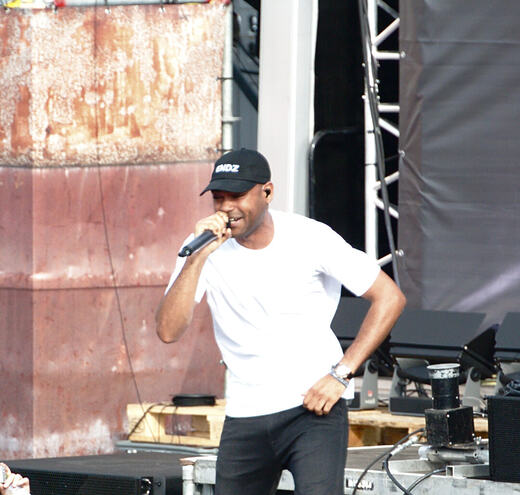
Key worksMade in the Manor (2016), Hoodies All Summer (2019), “Hail” (2015)
2017 · 📷 Nicolas Völcker / CC BY-SA 4.0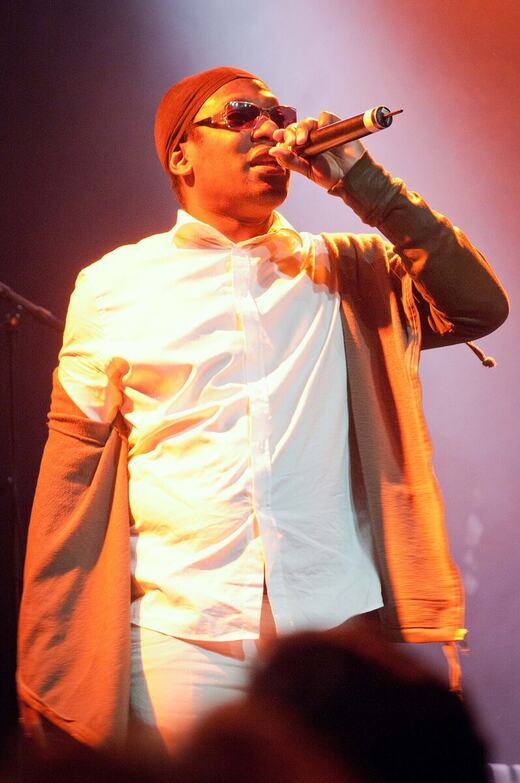
Key worksBrand New Second Hand (1999), Run Come Save Me (2001), “Witness (1 Hope)” (2001)
2012 · 📷 Anaïs Chaine / CC BY-SA 3.0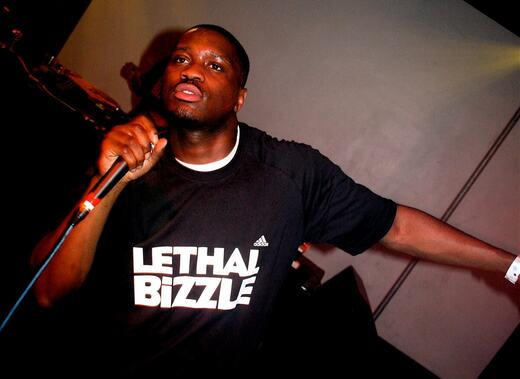
Key works“Oi!” (2002), “Pow! (Forward)” (2004), Against All Oddz (2005)
2007 · 📷 Max Gleeson (derivative work: A Thou… / CC BY 2.0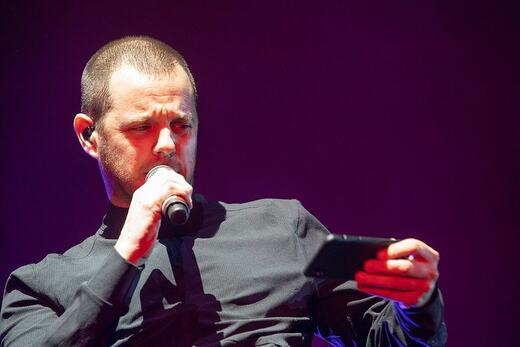
Key worksOriginal Pirate Material (2002), A Grand Don't Come for Free (2004), “Dry Your Eyes” (2004)
Mike Skinner, 2019 · 📷 Simoncromptonreid / CC BY-SA 4.0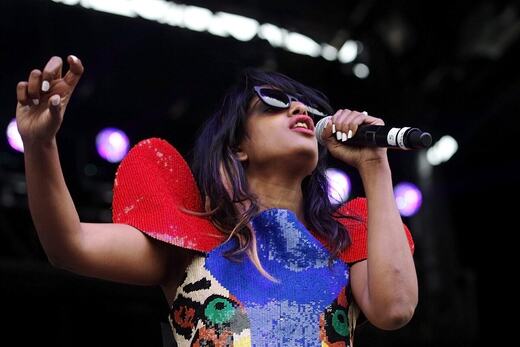
Key worksArular (2005), Kala (2007), “Paper Planes” (2008)
2009 · 📷 Moses (moses namkung), noise reducti… / CC BY 2.0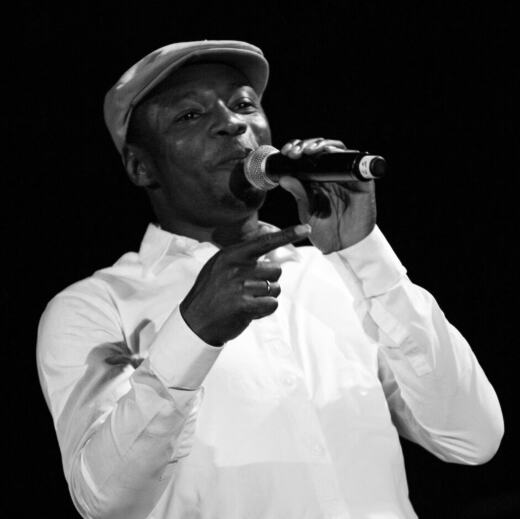
Key worksQui sème le vent récolte le tempo (1991), Prose Combat (1994), “Bouge de là”
2009 · 📷 Thomas Faivre-Duboz / CC BY-SA 2.0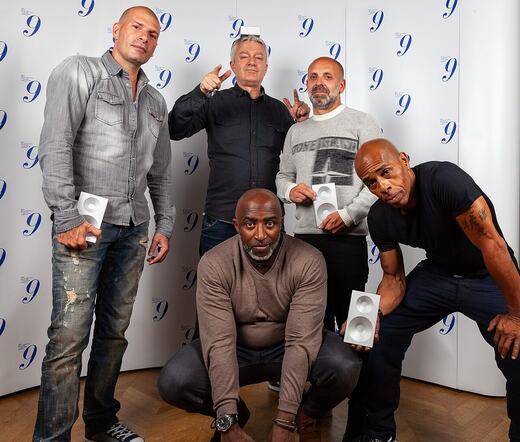
Key works...De la planète Mars (1991), L'école du micro d'argent (1997), “Je danse le Mia”
2019 · 📷 CsdemFrance / CC BY-SA 4.0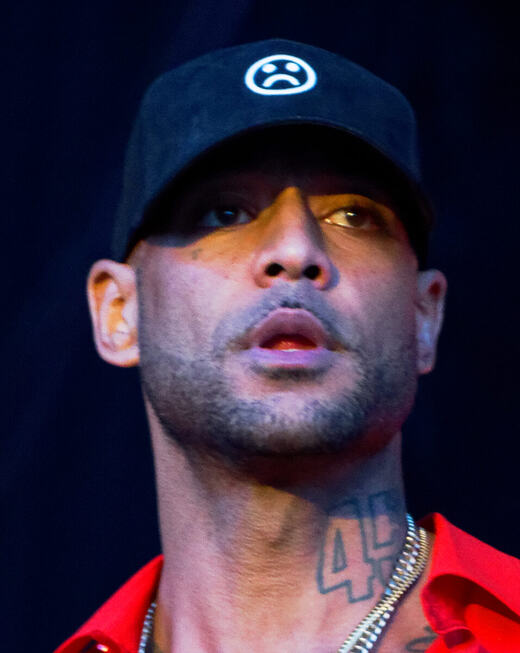
Key worksTemps mort (2002), Ouest Side (2006), Trône (2017)
2019 · 📷 Thesupermat / CC BY-SA 4.0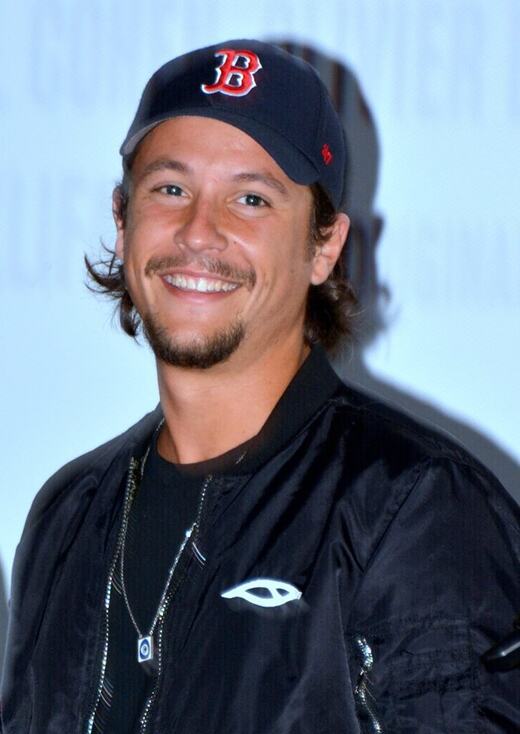
Key worksFeu (2015), Cyborg (2016), Les étoiles vagabondes (2019)
2017 · 📷 Georges Biard / CC BY-SA 3.0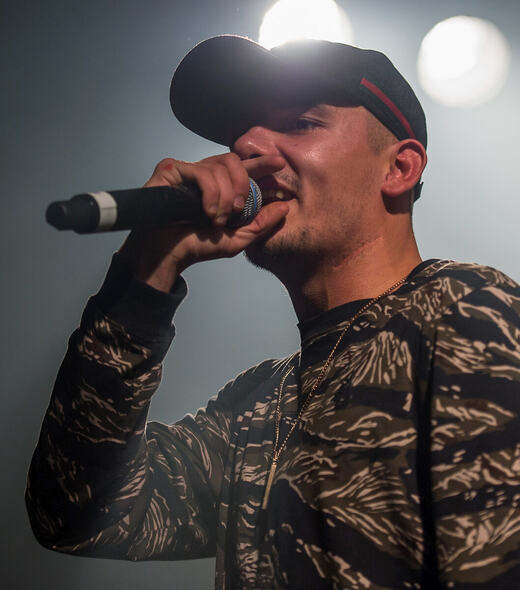
Key worksBerlin lebt (2018), CB6 (2019), “Neymar” (2018)
2018 · 📷 Stefan Brending (2eight) / CC BY-SA 3.0 de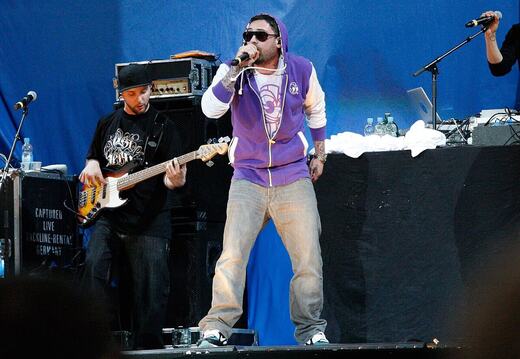
Key worksMaske (2004), Ich und meine Maske (2008), “Astronaut” (2015)
2011 · 📷 Sven-Sebastian Sajak (Sven0705) / CC BY-SA 3.0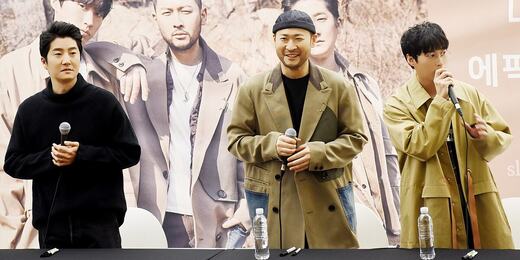
Key worksSwan Songs (2005), “Fly” (2005), Shoebox (2014)
2019 · 📷 Explicit / CC BY-SA 4.0
Key worksMultillionaire (2015), “1llusion”
2018 · 📷 Explicit / CC BY-SA 4.0
Key worksNew Breed (2012), Everything You Wanted (2016), “SOJU” (2018)
2012 · 📷 임윤아1 / CC BY-SA 2.0
Key works“Any Song” (2020), “Boys and Girls” (2015), Television (2017)
2017 · 📷 Bonnielou2013 / CC BY-SA 4.0
Key worksQ Train (2006), The Real Me (2007)
2018 · 📷 Explicit / CC BY-SA 4.0
Key works24:26 (2012), Up All Night (2014), “Dali, Van, Picasso” (2013)
2011 · 📷 Lamin / CC BY 4.0
Key worksBarrio Fino (2004), “Gasolina” (2004), “Despacito” (2017)
2015 · 📷 Daddy Yankee / CC BY 3.0
Key worksReal Hasta la Muerte (2018), “China” (2019), “Secreto” (2019)
2022 · 📷 Tony Dandrades / CC BY 3.0
Key worksResidente o Visitante (2007), “Latinoamérica” (2011), Residente (2017)
Calle 13, 2019 · 📷 RandyNavarroB / CC BY-SA 4.0
Key worksSobrevivendo no Inferno (1997), “Diário de um Detento” (1997), Nada Como um Dia Após o Outro Dia (2002)
2013 · 📷 Fernando Eduardo / CC BY 2.0
Key worksAmarElo (2019), Sobre Crianças, Quadris, Pesadelos e Lições de Casa... (2015)
2023 · 📷 Ministerio de Cultura de la Nación / CC BY-SA 2.0
Key worksMakye (2009), Rapperholic (2012), Highest (2017)
2017 · 📷 Owula kpakpo / CC BY-SA 4.0
Key worksTsholofelo (2014), “Doc Shebeleza”, Thuto (2017)
2014 · 📷 Thabiso Molatlhwa / CC BY 2.5 za
Key worksTestimony 1990 (2018), “Yego”, “Mazishi”
2020 · 📷 Safari jpk / CC BY-SA 4.0
Key worksQuest for Fire: Firestarter, Vol. 1 (2001), Not 4 Sale (2008), “Dangerous” (2008)
2024 · 📷 Kevin Payravi / CC BY-SA 4.0
Key worksSymphony in Effect (1989), “Let Your Backbone Slide”
2023 · 📷 A Disappearing Act / CC BY-SA 2.0
Key worksThe Calling (2003), The Hard Road (2006), Drinking from the Sun (2012)
Suffa (left) and Pressure, Groovin the Moo, May 2012 · 📷 Gwendolyn Lee from Sydney, Australia / CC BY-SA 2.0Key worksLandlord (2016), “Talkin' da Hardest” (2007)
Key worksClose to Home (2022), “Baby” (2022), “Rain” (2020)
Key worksDans la légende (2016), Deux frères (2019), “Au DD” (2019)
Key worksDans ma paranoïa (2014), My World (2015), “Tchikita” (2016)
Key works“It G Ma” (2015)
Key worksBad Hair (2016), Strings and Bling (2018), Zulu Man with Some Power (2020)
PLAY / WORLD15
A SHORT DETOUR / JAPANESE RAP
Japan
Hip-hop in Japan
How do you rhyme in Japanese? Forty years of trial and error later, the answer is reaching the global charts.
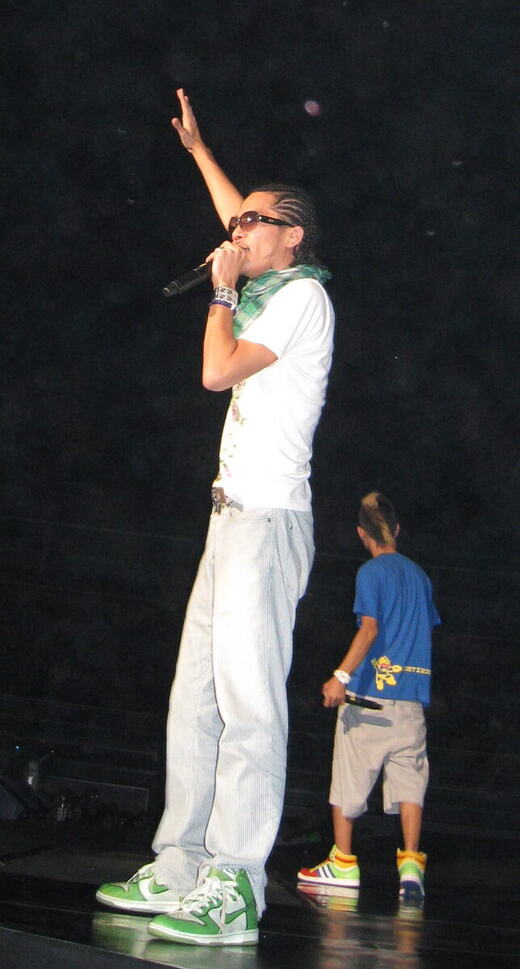
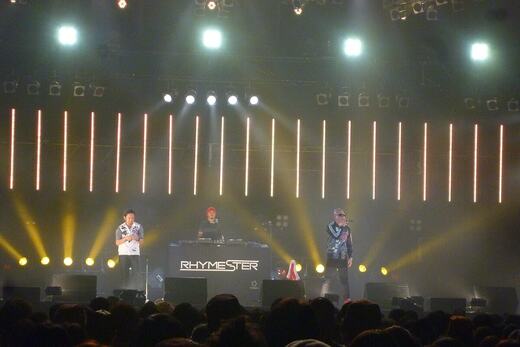
Hip-hop reached Japan in the 1980s through New York records and the films Wild Style and Style Wars. Seiko Ito, Haruo Chikada, Hiroshi Fujiwara and Kan Takagi started feeling out how to rap in Japanese, and the first problem was simple and brutal: Japanese doesn't rhyme on stressed beats the way English does. The fix, rhyming on vowel sounds, took shape bit by bit. In the '90s, Scha Dara Parr made it loose but serious; their 1994 collab with Kenji Ozawa, “Konya wa Boogie Back,” spread from the clubs into living rooms. In 1995, King Giddra's Sora kara no Chikara landed as a high-water mark for hardcore Japanese rap, alongside RHYMESTER (debut 1993) and Buddha Brand, and in 1999 Dragon Ash's “Grateful Days” pushed hip-hop onto charts all over the country.
In the 2000s, RIP SLYME (“Rakuen Baby,” 2002), KICK THE CAN CREW and KREVA played hip-hop on the pop stage while countless crews threw events in cities across Japan, and Nujabes' jazz-rap, together with his music for the anime Samurai Champloo, won listeners worldwide. The 2010s turned on MC battles: the High School Rap Championship from 2012, then Freestyle Dungeon, led by ZEEBRA, which launched on TV Asahi in September 2015 and turned improvised rap battles into living-room TV. R-Shitei (Creepy Nuts), Hannya and Cypress Ueno became stars, while lone figures like KOHH and Kawasaki's BAD HOP built their own worlds out of Japanese trap.
Then 2024. Creepy Nuts' “Bling-Bang-Bang-Born,” riding the opening of the anime Mashle and TikTok, became a worldwide smash: a No. 8 peak on the Billboard Global 200 and 19 weeks at No. 1 on the Billboard Japan Hot 100. Japanese rap reached the world's ears without switching languages. The old import relationship had flipped.
ARTISTS / JAPAN20
Key works“Gyokai Konna Monda Rap” (1985)
Earth Day Concert, Yoyogi Park, April 2019 · 📷 Nesnad / CC BY 4.0
Key works“Konya wa Boogie Back” (1994)
2022 · 📷 Nesnad / CC BY 4.0
Key worksSora kara no Chikara (1995)
Pictured: Zeebra, Asian Hip Hop Festival, Bangkok, 2008 · 📷 Sry85 / CC BY 3.0Key worksBased on a True Story (1998)
2008 · 📷 Sry85 / CC BY 3.0Key works“B-Boy Ism” (1998)
2011 · 📷 Nesnad / CC BY-SA 3.0
Key worksRHYMESTER
TBS Radio studio, April 2026 · 📷 さえぼー (Saebo) / CC0
Key works“Rakuen Baby” (2002)
2016 · 📷 Nesnad / CC BY-SA 4.0Key works“Queendom” (2022)
2017 · 📷 Tayler P. Schwamb (U.S. Marine Corps) / Public domainKey worksHis work as President BPM
Key worksTheir work as TINNIE PUNX
Key works“Grateful Days” (1999)
Key works“Marche” (2002)
Key worksShinjin KREVA (2004), Ai Jibunpaku (2006)
Key worksMetaphorical Music (2003)
Key worksHis memoir Nanimono demo Nai (2018)
Key works“Bling-Bang-Bang-Born” (2024)
Key worksMONOCHROME (2014)
Key works“Katei no Jijo” (2021)
Key worksAppearances on Freestyle Dungeon
Key works“Kawasaki Drift” (2018)
PLAY / JAPAN18
All You Need to Keep Up
Words
Hip-Hop Glossary — 32 Words That Unlock Any Article or Lyric Sheet
From break to grime: the words that keep showing up in articles and lyric sheets, each nailed down in a sentence or two.
Read enough hip-hop articles and credits and the unfamiliar words start piling up: abbreviations and slang, gear names, genre labels. Skim past them without knowing what they mean and you only get half of a good story. Here are 32 words that come up all the time, running through how the sound gets made, rap technique, what tracks are called, genre names and culture terms. You don't need to memorize them all. When a word trips you up, just come back here.
- Break Production
- The short stretch of a funk or soul song where it's just drums and bass. DJs stretched it out across two copies of a record and served it up to the dancers.
- Breakbeat Production
- Drum-heavy beat material lifted from a break. A rhythm built out of it goes by the same name.
- Sample Production
- Lifting part of an existing record to use as raw material for a new track. The lifted sound itself is also called a sample, and repeating it over and over is a loop.
- Chop Production
- Slicing a sample into small pieces, assigning them to pads and replaying them in a different order from the original.
- Flip Production
- Remaking the source track into a completely different song. How a beatmaker transforms the sample is where the skill shows.
- Crate digging Production
- Combing used-record stores and stacks of old boxes for records to sample. The dedicated ones are called diggers.
- Cypher Rap
- A circle where the mic gets passed around and everyone takes a turn rapping. It's usually described less as a competition than as a place to show off skills.
- Freestyle Rap
- Rap made up on the spot instead of written ahead of time. More broadly, any rap performed loose, outside the frame of a song.
- Flow Rap
- How you ride the beat with your words: the inflection, the pauses, the rhythm. Same lyrics, different flow, and it sounds like a different song.
- Verse / Bars Rap
- A verse is a self-contained chunk of rap, often 16 bars long. Each of those measures counts as a bar, and by extension, having good bars means writing good lyrics.
- Punchline Rap
- The knockout line: a bit of wordplay or an unexpected twist that makes the listener do a double take or laugh.
- Hook Tracks
- The catchy, repeated phrase that works as a song's chorus. The name comes from the way it hooks your ear.
- Ad-lib Tracks
- The interjections and shouts dropped in between the lines. Short sounds like “Yeah” or “Skrrt” that add energy to a track.
- Feature Tracks
- Another artist guesting on a track. The song title gets a “feat.” tag, and in hip-hop the guest spot is often just called a feature.
- Mixtape Tracks
- Originally a cassette a DJ put together and got into circulation. Today it usually means a project a rapper puts out separately from their official albums, often as a free release.
- Diss track Tracks
- A song that goes after a specific target by name. Diss is short for disrespect, and a song fired back in response is an answer.
- Cosign Culture
- When an established artist publicly backs a newcomer or another artist. It can also come through a feature or a name-drop.
- 808 Production
- Roland's TR-808 drum machine (released in 1980). Its long, booming kick became the backbone of hip-hop, and that low end itself is also called an 808.
- Hi-hat roll Production
- Firing off hi-hats in rapid bursts within a single beat, shifting the speed and pitch so they roll. One of trap's signatures.
- Double time Rap
- A flow that keeps the beat at the same tempo but doubles the rapper's pace, piling the words on.
- Triplet flow Rap
- A flow that splits each beat into three and crams the words in. Migos' “Versace” (2013) is often cited as the classic example.
- Auto-Tune Production
- Software that automatically corrects pitch (released in 1997). Cranking it to the extreme to turn the voice into an instrument caught on through T-Pain and Kanye West's 808s & Heartbreak (2008), among others.
- Chopped & screwed Production
- Slowing a track way down and adding skips and scratches. Houston's DJ Screw popularized it in the early '90s.
- Crunk Genre
- A party sound out of Memphis and Atlanta that whips up the crowd with chants and heavy bass. Lil Jon's “Get Low” (2003) made it known nationwide.
- Trap Genre
- A Southern sound built on 808s and hi-hat rolls, named after Atlanta slang for a place where drugs are sold. It became the global mainstream in the 2010s.
- Drill Genre
- A style born in early-2010s Chicago that lays dark, blunt lyrics, delivered flat, over trap-based beats. It took off with Chief Keef's “I Don't Like” (2012) and later spread to London and Brooklyn.
- Mumble rap Genre
- A label for styles that put melody and mood ahead of clear enunciation. It started out as a put-down, and the definition is fuzzy.
- Boom bap Genre
- Named for the boom of the kick and the bap of the snare. It means the hard-hitting '90s New York beats built from drums chopped out of samples.
- G-funk Genre
- The West Coast sound popularized by Dr. Dre's The Chronic (1992). Its trademarks: P-Funk samples, high-pitched synths and a laid-back groove at 90 to 100 BPM.
- Grime Genre
- Rap over electronic beats at around 140 BPM, born in East London in the early 2000s. Dizzee Rascal's Boy in da Corner (2003) won the Mercury Prize.
- B-boy / B-girl Culture
- Someone who breakdances. The term is said to come from Kool Herc, who called the dancers at his parties that. Breaking became an official Olympic event at the 2024 Paris Games.
- Tag / Piece Culture
- Graffiti terms. A tag is a quick signature of your name; a piece is a full-on work that takes time to paint.
ESSENTIAL ALBUMS / 26 TO HEAR FIRST
Start
Here
Here
Where do I start? The essential albums, in order
You can't hear everything. So here's one record at a time, pulled from the names in this story. Pick the decade that grabbed you, work your way down, and you'll have the map of hip-hop in your head.
- 1987Eric B. & Rakim
Paid in Full
Took rap from talk to art. Rakim's calm voice became the standard every MC gets measured against.
- 1988Public Enemy
It Takes a Nation of Millions to Hold Us Back
The Bomb Squad's roar and Chuck D's fury. Politics and sheer sonic pressure, colliding head on.
- 1988N.W.A
Straight Outta Compton
The turning point that took gangsta rap nationwide. The language of the street, played exactly as spoken. A shock to the system.
- 1991A Tribe Called Quest
The Low End Theory
Jazz basslines and samples in their ideal form. If you want boom bap's light-footed intelligence, start here.
- 1992Dr. Dre
The Chronic
G-funk, perfected. Also the record that introduced Snoop to the world. Your front door to the West Coast.
- 1993Wu-Tang Clan
Enter the Wu-Tang (36 Chambers)
RZA's raw, rough-cut beats and nine MCs going at each other. The opening shot of New York's counterattack.
- 1994Nas
Illmatic
Ten tracks, about 40 minutes. The first name that comes up whenever people argue about boom bap's greatest album.
- 1994The Notorious B.I.G.
Ready to Die
Storytelling in a low, smooth voice. The come-up and the shadows, given exactly the same weight.
- 1995Mobb Deep
The Infamous
Cold, uneasy loops. New York's dark side, delivered by the shortest possible route.
- 1995-962Pac
Me Against the World / All Eyez on Me
The introspective Me Against the World and the lavish double album. Play them side by side: two faces of the same man.
- 1996Jay-Z
Reasonable Doubt
A debut, and the origin point of the future kingpin. Cool, cerebral hustler rap.
- 1998OutKast
Aquemini
Southern pride and free-roaming psychedelic ideas. The album that put Atlanta on the world stage.
- 1998Lauryn Hill
The Miseducation of Lauryn Hill
Rap and soul in a single voice. A one-of-one masterpiece that every generation keeps coming back to.
- 2000Eminem
The Marshall Mathers LP
Venom, jokes and confession. The rapid-fire rhymes and the storytelling chops still flatten you today.
- 2004Kanye West
The College Dropout
The warm texture of chipmunk soul. A debut that let vulnerability into rap.
- 2004Madvillain
Madvillainy
MF DOOM x Madlib. Grainy loops and off-the-wall wordplay. An underground monument.
- 2006J Dilla
Donuts
The textbook on drums that sway. One of the roots of lo-fi hip-hop.
- 2008Lil Wayne
Tha Carter III
Over a million copies in week one. It carried the mixtape era's momentum all the way to No. 1 in total US album sales for 2008.
- 2011Drake
Take Care
Rapping and singing, anxiety and ease. The prototype for streaming-era mood music.
- 2012Kendrick Lamar
good kid, m.A.A.d city
One day in a teenager's life, told like a movie. A concept-album masterpiece.
- 2015Kendrick Lamar
To Pimp a Butterfly
Jazz, funk and poetry. An epic that stares down Black history and self-hatred.
- 2015Future
DS2
The record where trap was perfected as music of loneliness and excess. A textbook on 808s and Auto-Tune.
- 2017Migos
Culture
Triplet flows and ad-libs proved a rap record could run on pure feel.
- 2017Lil Uzi Vert
Luv Is Rage 2
The breakout that melted rock and emo into trap, with “XO Tour Llif3” on board.
- 2017Kendrick Lamar
DAMN.
The album picked for a Pulitzer Prize. Hard-hitting hooks and deep introspection, on the same record.
- 2018Travis Scott
Astroworld
A theme park of a trap epic, with beats that switch again and again. The model for how albums get built now.
DIG DEEPER / HOW TO DIG
Found a song you love? The best game in hip-hop is chasing the source. Sample databases like WhoSampled let you look it up, and suddenly a Nas beat connects to a jazz standard and a Kendrick track to a funk record. Soul and jazz from the '60s and '70s you'd never heard open right up, with hip-hop as the doorway.
If you'd rather follow the story on screen, documentaries are the way in. Style Wars (1983) and Wild Style (1983), shot right where hip-hop was born. Hip-Hop Evolution, a series that runs from the classics to now through the people who were there. Beats, Rhymes & Life (2011), on A Tribe Called Quest's journey. Straight Outta Compton (2015), the N.W.A movie. Every one of them gives you the feel of its moment, the thing you can't get from the music alone.
- Style Wars (1983) The documentary that captured New York subway graffiti and the heat of breaking.
- Wild Style (1983) One of the very first feature films, putting all four elements of early hip-hop on screen together.
- Hip-Hop Evolution (2016–) A series that traces hip-hop history through interviews with the people who lived it.
- Beats, Rhymes & Life (2011) The bonds and the blowups of A Tribe Called Quest.
It hits hardest in the room.
Got a few of these songs stuck in your head? Take them out tonight. Where the game ends, the night begins: hip-hop nights in NBA cities, all on Courtside Crawlers.
Photo & video credits
The photos on this page come from Wikimedia Commons and similar sources, published under licenses that allow reuse (CC BY / CC BY-SA / public domain, etc.). Every photo shows its photographer and license underneath, with a link back to the original page. Videos are YouTube embeds (pressing play connects to YouTube's servers); all rights belong to their respective owners. If anything here is a problem, please reach us through the About page.
- DJ Kool Herc (2009) — Bigtimepeace (Wikimedia Commons user) / Public domain
- Grandmaster Flash (2014) — Victor Frankowski / Southbank Centre / CC BY 2.0
- Run-DMC (December 1984, Long Beach) — Ian Dryden, Los Angeles Times / CC BY 4.0
- LL Cool J (2017) — U.S. State Department / Public domain
- Public Enemy (2014. Chuck D (left) and Flavor Flav) — kowarski / CC BY 2.0
- Rakim (2008) — Flowizm / CC BY 2.0
- KRS-One (2009) — Luigi / CC BY 2.0
- Slick Rick (2009) — Brett Hammond / CC BY 2.0
- Ice Cube (2012) — Eva Rinaldi / CC BY-SA 2.0
- Dr. Dre (2012) — Jason Persse / CC BY-SA 2.0
- Snoop Dogg (2023) — Bruce Baker / CC BY 2.0
- Nas (2022) — All-Pro Reels / CC BY-SA 2.0
- Wu-Tang Clan (2007) — Napalm filled tires / CC BY-SA 2.0
- Method Man (2010) — Alyssa Tomfohrde from Oakland, USA / CC BY 2.0
- Jay-Z (2008) — Mike Barry from Wirral, England / CC BY 2.0
- OutKast (2014) — David Shankbone / CC BY 3.0
- Lauryn Hill (2014) — The Come Up Show from Canada / CC BY 2.0
- Missy Elliott (2006) — Romana Pierzga / CC BY-SA 2.0
- Eminem (2014) — DoD News Features (U.S. Department of Defense) / Public domain
- 50 Cent (2009) — Nicolas Richoffer / CC BY-SA 4.0
- Kanye West (2008) — jurvetson / CC BY 2.0
- Lil Wayne (2006) — RJ Shaughnessy (RJ) / Public domain
- T.I. (2014) — Eddy James Rissling / CC BY 2.0
- Drake (2010) — musicisentropy / CC BY-SA 2.0
- Kendrick Lamar (2016) — Batiste Safont / CC BY-SA 4.0
- Future (2016) — The Come Up Show / CC BY 4.0
- Travis Scott (2016) — Brandon Dull / CC BY 2.0
- Lil Uzi Vert (2017) — Frank Morales / CC BY-SA 4.0
- Cardi B (2026) — Runawaymo / CC BY-SA 4.0
- Megan Thee Stallion (2022) — Valerie Albert / CC BY-SA 4.0
- Lil Baby (2019) — Frank Schwichtenberg / CC BY-SA 4.0
- Playboi Carti (2016) — The Come Up Show / CC BY 2.0
- NBA YoungBoy (2023) — Million Dollaz Worth of Game / CC BY 3.0
- Migos (Quavo, Takeoff, Offset, 2017) — The Come Up Show (Charito Yap) / CC BY 2.0
- Juice WRLD (2019) — Andy Jones / CC BY-SA 2.0
- Young Thug (2019) — Frank Schwichtenberg / CC BY-SA 4.0
- 1520 Sedgwick Avenue (2009) — Bigtimepeace (Wikimedia Commons user) / Public domain
- Breaking (2017) — Muhammed amine benloulou / CC BY-SA 4.0
- Graffiti (1973, New York subway) — Erik Calonius (EPA DOCUMERICA project; US National Archives) / Public domain
- Technics SL-1200 (2006) — Adrian DuMay from USA / CC BY 2.0
- Boombox (Vintage radio-cassette player) — Free Photo Fun / CC BY 2.0
- Crate digging (2016, London) — Artificial Photography (Unsplash: @artificialphotography) / CC0
- Afrika Bambaataa (2009. The DJ in the background is someone else) — docmonstereyes from USA / CC BY 2.0
- Grandmaster Melle Mel (2010) — Samantha Lauren (derivative work: Gobonobo) / CC BY 2.0
- The Sugarhill Gang (2015) — Tramlines Festival / CC BY 2.0
- Kurtis Blow (2015) — Moe N Reed / CC BY-SA 4.0
- Grand Wizzard Theodore (2002) — Flintmi (Flintmichigan) / CC BY 3.0
- Cold Crush Brothers — Easy AD / CC BY-SA 3.0
- Fab 5 Freddy (2009) — David Shankbone / CC BY 3.0
- Beastie Boys (1992, Club Citta, Kawasaki, Japan) — Masao Nakagami / CC BY-SA 2.0
- Big Daddy Kane (2013) — RustyShack / CC BY 2.0
- Doug E. Fresh (2010) — Jason Persse from Brooklyn, USA / CC BY-SA 2.0
- Biz Markie (2016) — fuseboxradio (Flickr) / CC BY-SA 2.5
- Marley Marl (1999) — MikaV (Mika Väisänen) / CC BY-SA 4.0
- Roxanne Shanté (2016) — fuseboxradio (Flickr) / CC BY-SA 2.0
- Salt-N-Pepa (2013) — David Burke / CC BY 2.0
- MC Lyte (1999) — Mika Väisänen (Mikamote) / CC BY-SA 3.0
- Queen Latifah (2023) — Freddie Everett / U.S. Department of State / Public domain
- Ice-T (2019) — Sven Mandel / CC BY-SA 4.0
- Schoolly D (2012) — swimfinfan / CC BY-SA 2.0
- Eazy-E (1993 snapshot with Edward Reyes of the LAPD (right)) — Edward Reyes / CC BY 2.0
- MC Ren (N.W.A, 1990) — Ithaka Darin Pappas / CC BY-SA 4.0
- Too Short (2023) — Rickmunroe01 / CC BY-SA 4.0
- Luther Campbell (Luke / 2 Live Crew, 2017) — David Cabrera / CC BY-SA 4.0
- De La Soul (2004) — Matti Hillig / CC BY-SA 3.0
- Jungle Brothers (1999) — Mika Väisänen (Mikamote) / CC BY-SA 3.0
- DJ Jazzy Jeff (2011) — Dopefish / Public domain
- Whodini (Ecstasy of Whodini (right) with Flavor Flav (left), Fresh Fest 2009) — Brett Hammond / CC BY 2.0
- EPMD (2013) — Simon Abrams from Brooklyn, USA / CC BY-SA 2.0
- Kool G Rap (2006) — Kanamedia from Tokyo, Japan / CC BY-SA 2.5
- Ultramagnetic MCs (2011) — Jason Persse / CC BY-SA 2.0
- Rob Base & DJ E-Z Rock (2006) — Mick Tobyn / CC BY-SA 2.0
- Stetsasonic (Pictured: member Daddy-O, Atlanta, 2010) — WeLove1990 / CC BY-SA 3.0
- Tone Lōc (2023) — 2C2K Photography / CC BY 2.0
- Young MC (2021) — Super Festivals / CC BY 2.0
- Kid 'n Play (2010) — David Shankbone / CC BY 3.0
- DJ Yella (World Class Wreckin' Cru, 2019) — Don Bigileone / CC BY 2.0
- Kwamé (2014) — Luigi Novi / CC BY 3.0
- The Notorious B.I.G. (A mural in Brooklyn (photo: 2024)) — whatsdownthatstreet (Flickr user; requested attribution to w / CC BY-SA 2.0
- 2Pac (Graffiti on a wall in Rio (photo: 2010)) — marycsalome / CC BY 2.0
- RZA (2009) — David Shankbone / CC BY 3.0
- GZA (2008) — Flowizm / CC BY 2.0
- Raekwon (2010) — Weekly Dig / CC BY 2.0
- Ghostface Killah (2010) — Niklas Hellerstedt / CC BY 2.0
- Inspectah Deck (2013) — Coup d'Oreille / CC BY-SA 2.0
- A Tribe Called Quest (2008) — Charice L. from USA / CC BY-SA 2.0
- Q-Tip (2008) — docmonstereyes / CC BY 2.0
- DJ Premier (2019) — Sven Volkens / CC BY-SA 4.0
- Guru (Gang Starr, 2006) — Barbara Mürdter / CC BY-SA 3.0
- Pete Rock (2011) — pinguino k from North Hollywood, USA / CC BY 2.0
- Mobb Deep (Havoc) (2014) — Tobias Nielsen (Flickr user Tobi Nielsen) / CC BY 2.0
- Buckshot (Black Moon, 2009) — Flowizm / CC BY 2.0
- Redman (2016) — Stefan Brending (2eight) / CC BY-SA 3.0 de
- Onyx (2014) — EnglishLoverWillie (English Wikipedia) / CC0
- Naughty by Nature (2012) — Eva Rinaldi / CC BY-SA 2.0
- Busta Rhymes (2022) — All-Pro Reels / CC BY-SA 2.0
- Common (2018) — Steven Pisano (Feast of Music) / CC BY 2.0
- The Roots (Black Thought, 1999, 1999) — Mika Väisänen / CC BY 3.0
- The Pharcyde (1999) — MikaV (Mika Väisänen) / CC BY-SA 3.0
- Digable Planets (2010) — Jester Jay Goldman / CC BY-SA 2.0
- Souls of Mischief (2023) — User:AstonishingTunesAdmirer, Manifesto TV, Bloop Show / CC BY 3.0
- Wyclef Jean (2021) — Matt Johnson (Matt A.J.) / CC BY 2.0
- Warren G (2007) — John B. Mueller / CC BY 2.5
- Kurupt (2015) — Connie Lodge / CC BY-SA 2.0
- Cypress Hill (1998) — Mika Väisänen / CC BY-SA 4.0
- Coolio (2012) — Timothy Krause / CC BY 2.0
- E-40 (2007) — Gamerscore Blog / CC BY-SA 2.0
- Bone Thugs-n-Harmony (Wish Bone, 2015) — Drew Yorke (The Come Up Show) / CC BY 2.0
- CeeLo Green (2022) — Gage Skidmore / CC BY-SA 3.0
- Scarface (2013) — Jeremy Perez Photos. / CC BY-SA 2.0
- UGK (Bun B, 2013) — Eli Watson / CC BY 2.0
- Three 6 Mafia (2007) — Jay West / CC BY-SA 3.0
- Master P (2001) — Mika Väisänen (Mikamote) / CC BY-SA 3.0
- Fat Joe (2011) — Eva Rinaldi / CC BY-SA 2.0
- DMX (2014) — Rzom_ / CC BY-SA 2.0
- Timbaland (2019) — Collision Conf / CC BY 2.0
- Lil' Kim (2008) — windyjonas (Flickr) / CC BY 4.0
- Eve (2011) — The Heart Truth (U.S. Dept. of Health and Human Services) / Public domain
- Sean Combs (Puff Daddy / Diddy, 2010) — Reckless Dream Photography / CC BY 2.0
- Arrested Development (2006) — Joris Peeters / CC BY 2.0
- André 3000 (2014) — David Shankbone / CC BY 3.0
- Big Boi (2006) — Utoks / CC BY 3.0
- Masta Ace (2002) — Mikamote (Mika Väisänen) / CC BY-SA 3.0
- Brand Nubian (2014) — DeShaun Craddock / CC BY-SA 4.0
- MC Hammer (2008) — Brian Solis / CC BY 2.0
- Sir Mix-a-Lot (2016) — New Millennium Music / CC BY-SA 4.0
- Das EFX (1997) — Mika Väisänen (Mika-photography) / CC BY-SA 3.0
- Yo-Yo (1997) — Mika Väisänen / CC BY-SA 4.0
- Lord Finesse (2014) — JonathanMena / CC BY 2.0
- Diamond D (2008) — Dom Brady / CC BY 2.0
- Large Professor (2016) — Steven Pisano / CC BY 2.0
- Jeru the Damaja (2016) — Dominik Lippe (Lipstar) und Yannic Lippe / CC BY-SA 2.5
- M.O.P. (2017) — Stefan Brending (2eight) / CC BY-SA 3.0 DE
- Smif-N-Wessun (2015) — Drew Yorke-Slader / CC BY 2.0
- Foxy Brown (1998) — Mika-photography / CC BY-SA 3.0
- Trina (2009) — Tiff Wilson / CC BY-SA 2.0
- Mystikal (2012) — Daniel Benavides from Austin, TX / CC BY 2.0
- Luniz (Pictured: member Yukmouth) — BOSS TALK 101 / CC BY 3.0
- Jurassic 5 (2000) — Mika-photography / CC BY-SA 3.0
- Dilated Peoples (2001) — Mika-photography / CC BY-SA 3.0
- Blackalicious (Chief Xcel (left) and Gift of Gab live at Paid Dues, 2008) — Flowizm / CC BY 2.0
- Atmosphere (2009) — Moses / CC BY 2.0
- El-P (Company Flow, 2007) — Fred Benenson / CC BY 2.0
- Aesop Rock (2007) — Alex Blackstock from San Francisco, CA, USA / CC BY 2.0
- Outlawz (Young Noble, 2006) — Mogkilluminati / CC BY-SA 3.0
- Twista — Photobra Adam Bielawski / CC BY-SA 3.0
- WC and the Maad Circle (1989) — IthakaDarinPappas / CC BY-SA 4.0
- Lloyd Banks — East718 (English Wikipedia); derivative work Adabow / Public domain
- Nelly (2007) — reeb0k2008 / CC BY 2.0
- Ludacris (2009) — Kelseymariebell / CC BY 3.0
- T-Pain (2019) — Glenn Francis (PacificProDigital.com) / CC BY-SA 4.0
- Young Jeezy (2005) — Timothy M. Moore / CC BY-SA 3.0
- Gucci Mane (2017) — Evan Guest / CC BY 2.0
- Waka Flocka Flame (2014) — Eddy Rissling for The Come Up Show / CC BY 2.0
- Lil Jon (2007) — Gamerscore Blog from USA / CC BY-SA 2.0
- Ying Yang Twins (Kaine (left) and D-Roc, USO show at Thule Air Base, Greenland, 2008) — Adam M. Stump, U.S. Air Force / Public domain
- D4L (Fabo, 2023) — HOTSPOTATL / CC BY 3.0
- Paul Wall (2005) — Bradley G. / CC BY 2.0
- Chamillionaire (2008) — Brian Solis / CC BY 2.0
- Pusha T (2013) — Simon Abrams / CC BY-SA 4.0
- Pharrell Williams (2014) — Shawn Ahmed / CC BY 2.0
- Cam'ron (2014) — fuseboxradio (Flickr) / CC BY-SA 2.0
- Mos Def (Yasiin Bey, 2012) — Tuomas Vitikainen / CC BY-SA 3.0
- Lupe Fiasco (2008) — Vincent Escudero / CC BY 2.0
- Kid Cudi (2009) — J. Rivera from California, US / CC BY 2.0
- The Game (2011) — Eva Rinaldi / CC BY-SA 2.0
- Dizzee Rascal (2018) — Tuomas Vitikainen / CC BY-SA 4.0
- MF DOOM (2011) — possan / CC BY 2.0
- Madlib (2014) — Carl Pocket / CC BY-SA 2.0
- J Dilla (Pictured: J Dilla's own Akai MPC3000 (Smithsonian collection)) — National Museum of African American History and Culture, Smi / CC0
- Ja Rule (2016) — Web Summit / CC BY 2.0
- Cassidy (2005) — Timothy M. Moore at https://www.flickr.com/photos/photocolog / CC BY-SA 3.0
- Beanie Sigel (2002) — User:Mika-photography / CC BY-SA 3.0
- Freeway (2008) — Saquan Stimpson from Newark, DE, USA / CC BY 2.0
- Memphis Bleek (1998) — Mikamote / CC BY-SA 3.0
- State Property (2002) — User:Mika-photography / CC BY-SA 3.0
- Joe Budden (2010) — InkwellDesignGroup / CC BY 2.0
- Papoose (2013) — Coup d'Oreille / CC BY-SA 2.0
- Remy Ma (2005) — Timothy M. Moore at https://www.flickr.com/photos/photocolog / CC BY-SA 3.0
- Trick Daddy (2015) — Kwan Wallace (KJW Photography) / CC BY 2.0
- Boosie Badazz (Lil Boosie, 2014) — TrillEntCMG / CC BY-SA 3.0
- Flo Rida (2026) — Gage Skidmore / CC BY-SA 4.0
- Akon (2019) — Collision Conf / CC BY 2.0
- Pitbull (2012) — Eva Rinaldi / CC BY-SA 2.0
- Tech N9ne (2006) — Mizery Made / CC BY-SA 3.0
- Nappy Roots (2005) — Simon Law (sfllaw) / CC BY-SA 2.0
- J. Cole (2010) — H D / CC BY 2.0
- Nicki Minaj (2012) — Rory from Glasgow, United Kingdom / CC BY 2.0
- Big Sean (2015) — The Come Up Show / CC BY 2.0
- Meek Mill (2015) — Chris Sikich from Philadelphia, USA / CC BY-SA 2.0
- A$AP Rocky (2025) — Gabriel Hutchinson / CC BY-SA 4.0
- Tyler, the Creator (2025) — Lygonstreet / CC BY-SA 4.0
- Earl Sweatshirt (2026) — 414.Elis / CC BY 4.0
- Childish Gambino (2014) — Daniel Benavides / CC BY 2.0
- Joey Bada$$ (2017) — The Come Up Show / CC BY 2.5
- Killer Mike (2014) — Treefort Music Fest / CC BY 2.0
- Danny Brown (2017) — Julio Enriquez from Denver,CO, USA / CC BY 2.0
- Chance the Rapper (2017) — Julio Enriquez / CC BY 2.0
- Schoolboy Q (2012) — DJ Teck / CC BY 2.0
- Vince Staples (2015) — Tse Daniel for The Come Up Show / CC BY 2.0
- Mac Miller (2017) — Nicolas Völcker / CC BY-SA 4.0
- Quavo (2018) — Jørund Føreland Pedersen / CC BY-SA 4.0
- Offset (2024) — Wojciech Pędzich / CC BY 4.0
- Takeoff (2017) — The Come Up Show (Charito Yap) / CC BY 2.0
- Lil Yachty (2016) — Anton Mak / CC BY 2.0
- 21 Savage (2018) — Ralph Arvesen / CC BY 2.0
- Post Malone (2020) — Adam Bielawski / CC BY-SA 4.0
- Lil Nas X (2019) — Fabebk / CC BY-SA 4.0
- Kodak Black (2018) — Chrisallmeid / CC BY-SA 4.0
- DaBaby (2023) — HOTSPOTATL / CC BY 3.0
- Chief Keef (2019) — glenjamn3 / CC BY 3.0
- Zaytoven (2025) — Vbrunophotog / CC BY-SA 4.0
- DJ Mustard (2019) — Toglenn / CC BY-SA 4.0
- Rae Sremmurd (2015) — The Come Up Show / CC BY 2.0
- Fetty Wap (2019) — Bs.Ballout / CC BY 3.0
- Stormzy (2022) — Raph_PH / CC BY 2.0
- DJ Khaled (2012) — Meghan Roberts / CC BY 2.0
- Wiz Khalifa (2023) — Rickmunroe01 / CC BY-SA 4.0
- B.o.B (2013) — The Come Up Show / CC BY 2.0
- Big K.R.I.T. (2015) — Usfjrain / CC BY-SA 4.0
- Curren$y (2010) — thecomeupshow / CC BY 2.0
- YG (2015) — Connie Lodge / CC BY-SA 2.0
- Nipsey Hussle (2009) — Adam Bielawski / CC BY-SA 3.0
- Lil B (2011) — https://www.flickr.com/photos/generationbass/ / CC BY 2.0
- Machine Gun Kelly (2018) — Paulien Zomer / CC BY-SA 4.0
- Hopsin (2013) — thecomeupshow / CC BY 2.0
- Logic (2018) — Julio Enriquez from Denver,CO, USA / CC BY 2.0
- Russ (2025) — TorontoPhoto9290 / CC0
- Macklemore & Ryan Lewis (2011) — Christopher Dube / CC BY-SA 3.0
- Lil Dicky (2015) — Kayla Johnson / CC BY 2.0
- Yelawolf (2015) — Abby Gillardi / CC BY 2.0
- Ace Hood (2013) — Chad Cooper / CC BY 2.0
- Rich Homie Quan (2014) — The Come Up Show / CC BY 2.0
- Trippie Redd (2018) — Ralph Arvesen / CC BY 2.0
- Lil Skies (2019) — Julio Enriquez from Denver,CO, USA / CC BY 2.0
- Smokepurpp (2018) — The Come Up Show / CC BY 2.0
- YBN Nahmir (2018) — The Come Up Show from Canada / CC BY 2.0
- Blueface (2020) — MILLION DOLLAS WORTH OF GAME / CC BY 3.0
- Lil Tjay (2019) — Bearian / CC BY-SA 4.0
- NLE Choppa (2019) — WikiWikiSkylar / CC BY-SA 4.0
- City Girls (Yung Miami (left) and JT, July 2018) — Cntrl+Alt+Delete / CC BY 3.0
- Saweetie (2021) — Amywesson / CC BY-SA 4.0
- A Boogie wit da Hoodie (2017) — Curtis Huynh for The Come Up Show / CC BY 2.0
- Rich the Kid (2019) — Frank Schwichtenberg / CC BY-SA 4.0
- JPEGMAFIA (2019) — Levi Manchak / CC BY 2.0
- Injury Reserve (2018) — The Come Up Show from Canada / CC BY 2.0
- EarthGang (2016) — The Come Up Show / CC BY 2.0
- Rapsody (2014) — Coup d'Oreille / CC BY-SA 2.0
- Smino (2016) — The Come Up Show / CC BY 2.0
- Isaiah Rashad (2017) — The Come Up Show / CC BY 2.0
- Cordae (2019) — Frank Schwichtenberg / CC BY-SA 4.0
- Fivio Foreign (2023) — Mixtape Madness / CC BY 3.0
- Roddy Ricch (2022) — Million Dollaz Worth of Game / CC BY 3.0
- Gunna (2019) — Frank Schwichtenberg / CC BY-SA 4.0
- Lil Durk (2022) — JD Sports / CC BY 3.0
- Ice Spice (2024) — Raph_PH / CC BY 2.0
- GloRilla (2025) — Cameron Woods / CC BY-SA 4.0
- Latto (2024) — HOTSPOTATL / CC BY 3.0
- Doechii (2022) — Josh Berendes (@brende_films) / CC BY 3.0
- Baby Keem (2022) — Joseph Higgins / CC BY 2.0
- Denzel Curry (2017) — friedoxygen / CC BY 2.0
- Don Toliver (2021) — Sanchez Productions / CC BY-SA 4.0
- Central Cee (2023) — 200izo / CC BY-SA 4.0
- Dave (2019) — SamuelWren98 / CC BY-SA 4.0
- Freddie Gibbs (2014) — Carl Pocket / CC BY-SA 2.0
- Griselda (Conway the Machine, 2022) — SUPA CINDY / CC BY 3.0
- Bad Bunny (2019) — Toglenn / CC BY-SA 4.0
- Doja Cat (2024) — Raph_PH / CC BY 2.0
- Coi Leray (2026) — Runawaymo / CC BY-SA 4.0
- Sexyy Red (2023) — MILLION DOLLAZ WORTH OF GAME / CC BY 3.0
- BIA (2017) — Emma / CC BY-SA 2.0
- Flo Milli (2024) — HOTSPOTATL / CC BY 3.0
- Destroy Lonely (2024) — Wojciech Pędzich / CC BY 4.0
- Nardo Wick (2022) — HOTSPOTATL / CC BY 3.0
- BigXthaPlug (2023) — BOSS TALK 101 / CC BY 3.0
- Armani White (2023) — U.S. Department of State from United States / Public domain
- Larry June (2018) — The Come Up Show from Canada / CC BY 2.0
- Rob49 (2023) — WHTA / CC BY 3.0
- Hunxho — MILLION DOLLAZ WORTH OF GAME / CC BY 3.0
- E-mu SP-1200 (Sampler) — 2xUeL (Wikipedia/Commons user) / Public domain
- Akai MPC (Sampler) — user:withe (Wikimedia Commons) / Public domain
- Roland TR-808 (Drum machine) — Brandon Daniel (Flickr); derivative work: Clusternote / CC BY-SA 2.0
- Skepta (2016) — Batiste Safont / CC BY-SA 4.0
- Wiley (2005) — believekevin / CC BY-SA 2.0
- AJ Tracey (2019) — Jwslubbock / CC BY-SA 4.0
- Headie One (2017) — Mixtape Madness / CC BY 3.0
- Little Simz (2019) — Frank Schwichtenberg / CC BY-SA 4.0
- slowthai (2023) — Bruce Baker / CC BY 2.0
- Kano (2017) — Nicolas Völcker / CC BY-SA 4.0
- Roots Manuva (2012) — Anaïs Chaine / CC BY-SA 3.0
- Lethal Bizzle (2007) — Max Gleeson (derivative work: A Thousand Doors) / CC BY 2.0
- The Streets (Mike Skinner, 2019) — Simoncromptonreid / CC BY-SA 4.0
- M.I.A. (2009) — Moses (moses namkung), noise reduction by Jujutacular / CC BY 2.0
- MC Solaar (2009) — Thomas Faivre-Duboz / CC BY-SA 2.0
- IAM (2019) — CsdemFrance / CC BY-SA 4.0
- Booba (2019) — Thesupermat / CC BY-SA 4.0
- Nekfeu (2017) — Georges Biard / CC BY-SA 3.0
- Capital Bra (2018) — Stefan Brending (2eight) / CC BY-SA 3.0 de
- Sido (2011) — Sven-Sebastian Sajak (Sven0705) / CC BY-SA 3.0
- Epik High (2019) — Explicit / CC BY-SA 4.0
- Dok2 (2018) — Explicit / CC BY-SA 4.0
- Jay Park (2012) — 임윤아1 / CC BY-SA 2.0
- Zico (2017) — Bonnielou2013 / CC BY-SA 4.0
- The Quiett (2018) — Explicit / CC BY-SA 4.0
- Beenzino (2011) — Lamin / CC BY 4.0
- Daddy Yankee (2015) — Daddy Yankee / CC BY 3.0
- Anuel AA (2022) — Tony Dandrades / CC BY 3.0
- Residente (Calle 13, 2019) — RandyNavarroB / CC BY-SA 4.0
- Racionais MC's (2013) — Fernando Eduardo / CC BY 2.0
- Emicida (2023) — Ministerio de Cultura de la Nación / CC BY-SA 2.0
- Sarkodie (2017) — Owula kpakpo / CC BY-SA 4.0
- Cassper Nyovest (2014) — Thabiso Molatlhwa / CC BY 2.5 za
- Khaligraph Jones (2020) — Safari jpk / CC BY-SA 4.0
- Kardinal Offishall (2024) — Kevin Payravi / CC BY-SA 4.0
- Maestro Fresh Wes (2023) — A Disappearing Act / CC BY-SA 2.0
- Hilltop Hoods (Suffa (left) and Pressure, Groovin the Moo, May 2012) — Gwendolyn Lee from Sydney, Australia / CC BY-SA 2.0
- Seiko Ito (Earth Day Concert, Yoyogi Park, April 2019) — Nesnad / CC BY 4.0
- Scha Dara Parr (2022) — Nesnad / CC BY 4.0
- King Giddra (Zeebra) (Pictured: Zeebra, Asian Hip Hop Festival, Bangkok, 2008) — Sry85 / CC BY 3.0
- ZEEBRA (2008) — Sry85 / CC BY 3.0
- RHYMESTER (2011) — Nesnad / CC BY-SA 3.0
- Utamaru (RHYMESTER) (TBS Radio studio, April 2026) — さえぼー (Saebo) / CC0
- RIP SLYME (2016) — Nesnad / CC BY-SA 4.0
- Awich (2017) — Tayler P. Schwamb (U.S. Marine Corps) / Public domain